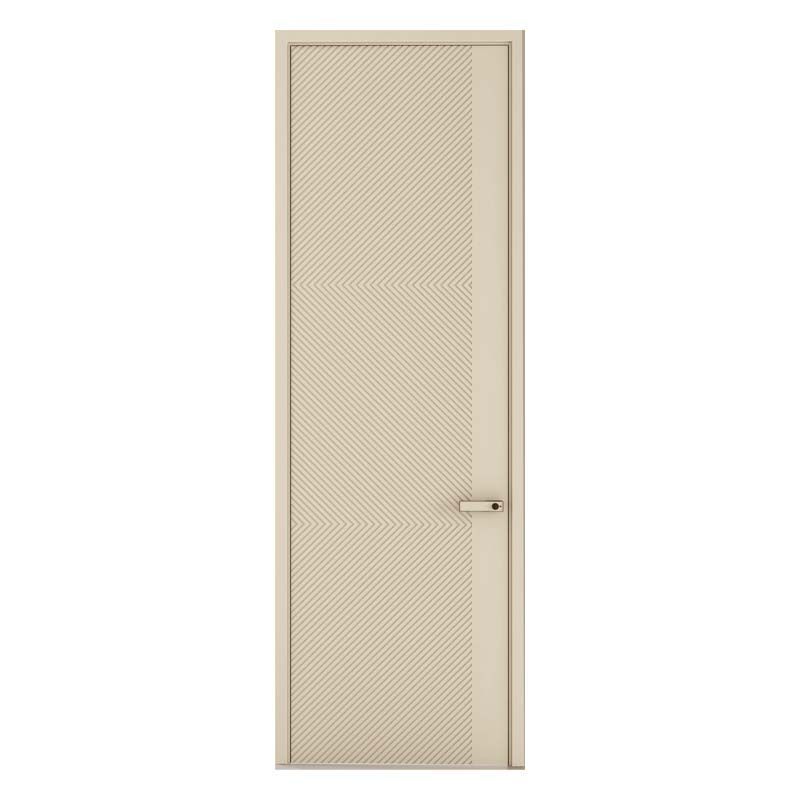
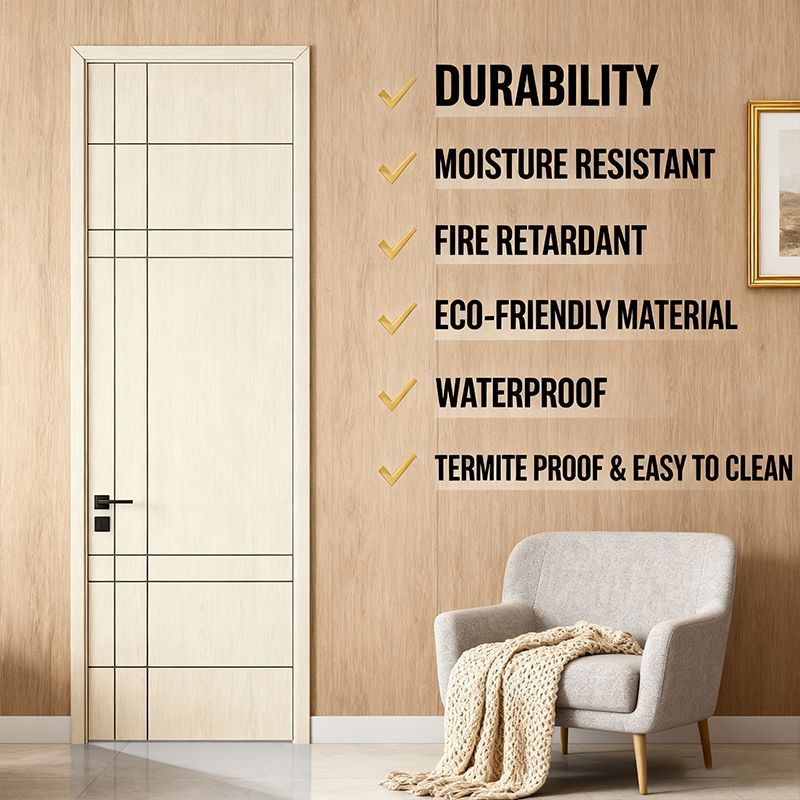
Flat carving wooden interior doors are often chosen for luxury homes, boutique hotels, private clubs, and premium offices because they combine a quiet architectural surface with the warmth of real wood. Yet buyers face familiar problems: a door may look expensive in a showroom but appear flat in a large room, a deep carving may collect dust, or an attractive finish may fail to match the wall, flooring, and furniture. A well-specified solution is a custom flat carved wood door for luxury homes, produced by a reliable flat carved wooden door manufacturer and coordinated with the project’s interior door design, veneer, and mortise-and-tenon construction. This is where ROI HOME can support a more controlled specification process.

In a high-end interior, the door is not an isolated object. It sits beside stone, timber flooring, metal trims, wall panels, lighting, and fitted furniture. Small inconsistencies become visible because premium spaces usually use large uninterrupted surfaces and carefully aligned sightlines. A flat carving wooden interior door manufacturer must therefore manage more than carving: the factory must coordinate material selection, panel proportion, grain direction, finish, hardware preparation, packaging, and installation tolerances.
Flat carving is particularly suitable because the design is created on a relatively plane door face rather than through a heavily projecting relief. CNC routing, shallow hand refinement, or a combination of both can produce linear, geometric, botanical, or bespoke patterns. The result has enough shadow to be visible under ambient lighting, while the surface remains easier to clean than a deep relief carving.
For a project team, this distinction solves three practical problems:
The value is not simply that the door is “beautiful.” It is that a controlled surface can reduce visual noise and support the hierarchy of the entire room.
A luxury door is usually judged at several distances. From across a corridor, the overall plane and shadow pattern should read clearly. At approximately one metre, the grain, edge detail, and finish should look intentional. Up close, the carving should show clean transitions without torn fibres, burn marks, or uneven coating.
Designers can specify a carving depth in millimetres, a groove width, a repeat interval, and a panel-to-rail proportion instead of relying on vague terms such as “deep,” “rich,” or “high quality.” For example, a 3–5 mm shallow groove may create a restrained shadow line, while a deeper profile can produce a stronger tactile effect. The appropriate value depends on the timber, veneer thickness, door construction, lighting, and cleaning requirements; it should be confirmed through a full-size sample rather than assumed from a small catalogue image.
Grain direction is equally important. A book-matched veneer can create mirrored symmetry, while a continuous vertical grain can make a door appear taller. If several doors are placed along one corridor, matching veneer lots and photographing approved samples before mass production can reduce colour variation. Natural wood is not a printed material, so some variation in tone and grain is expected even when panels come from the same species.
The visible carving is only one part of performance. A door leaf must remain stable, carry its hardware, close correctly, and tolerate the moisture conditions of the building. A responsible specification should identify the core, face material, edge treatment, adhesive system, finish, and expected installation environment.
Solid wood provides a naturally substantial feel, but it also responds to changes in temperature and relative humidity. Wood is hygroscopic: it gains and loses moisture as surrounding conditions change. The U.S. Department of Agriculture Forest Products Laboratory explains that wood dimensional movement is closely related to moisture content, particularly below the fibre saturation point. For that reason, a premium project should not treat “solid wood” as a guarantee against movement.
A veneered engineered core can offer more predictable dimensional behaviour while preserving the appearance of natural timber. This construction may combine a stable core with a real-wood face veneer and solid edging. For carved surfaces, the manufacturer must confirm that the carving depth does not cut through the veneer or expose a visually different substrate. A sample should show the actual groove, edge, colour, and finish—not merely a flat veneer swatch.
Where solid timber is selected, the factory should measure moisture content and condition the material for the intended climate. A commonly used target for interior woodwork is approximately 8–12% moisture content in many conditioned interiors, but the correct range depends on the local climate and building conditions. The final value should be agreed by the project’s manufacturer, installer, and consultant rather than copied universally.
Finish selection affects colour depth, touch, stain resistance, and maintenance. Waterborne coatings can help reduce solvent emissions compared with many conventional solvent-borne systems, but “low VOC” should not be accepted as an unverified marketing adjective. Ask for the product technical data sheet, safety data sheet, and, where relevant, a third-party emissions certification such as GREENGUARD Gold or an equivalent regional standard. Certification applies to the tested product and conditions; it should not automatically be extended to every component of the door.
Hardware preparation also determines whether the finished door performs as intended. Hinge positions, lock cases, concealed closers, magnetic latches, drop seals, and access-control components should be confirmed before carving and finishing. A door may be aesthetically flawless yet fail on site if the lock pocket, hinge reinforcement, or frame clearance is wrong.
For this reason, the approved shop drawing should state the door leaf size, frame size, handing, swing direction, clear opening, hardware model, carving layout, veneer direction, finish code, and tolerances. This document becomes the reference point when several suppliers and trades are involved.
A plain flush door can be cost-effective and visually quiet, but it may not provide enough texture for a feature corridor, master suite, executive office, or reception area. A deeply relief-carved door offers strong ornament, yet its projections can be harder to clean and may compete with other decorative elements.
| Criteria | Plain flush door | Flat carved wooden door | Deep relief-carved door |
|---|---|---|---|
| Visual presence | Low to moderate | Moderate to high, depending on pattern and lighting | High and strongly ornamental |
| Surface cleaning | Generally simplest | Manageable when grooves are shallow and accessible | More time-consuming around projections |
| Design flexibility | Depends mainly on finish and hardware | High; patterns can be coordinated with architectural lines | High, but the relief can dominate the room |
| Specification risk | Usually concentrated in core, finish, and hardware | Includes carving depth, veneer thickness, pattern alignment, and finish | Includes greater risk of damage to projecting details |
The comparison shows why flat carving is often a balanced choice. It adds measurable surface articulation without requiring every decorative element in the room to compete for attention. Still, it is not automatically the best option: a minimalist apartment may benefit from a completely plain door, while a heritage-style interior may call for deeper traditional craftsmanship.
The safest process begins with the project conditions rather than a catalogue image. Share the elevation drawings, opening schedule, climate, indoor humidity expectations, preferred timber, fire or acoustic requirements, hardware schedule, and installation sequence. The manufacturer can then advise whether the proposed construction is suitable.
For larger developments, a pilot installation is useful. It can reveal whether the groove catches unwanted light, whether the selected handle interrupts the pattern, and whether the frame sits correctly against the wall finish. Correcting these issues before mass production is usually less disruptive than repairing a completed corridor.
ROI HOME can be considered when the project needs coordinated interior doors rather than isolated decorative panels. The useful starting point is not a request for the most ornate design; it is a documented brief covering dimensions, wood appearance, carving style, finish, performance requirements, hardware, and delivery sequence.
Ask for clarification on which elements are standard and which are custom, how colour variation is controlled, what sample approval includes, and how packaging protects carved edges during transport. If the project has hotel, residential, or office repetition, also request a production schedule that separates sample approval, first-article inspection, mass production, and final quality control.
These steps help turn a visual idea into a buildable product. They also make cost comparisons more meaningful, because two quotations may differ in core construction, coating layers, hardware preparation, packaging, installation support, and warranty scope even when the photographs appear similar.
Ultimately, flat carving wooden interior doors are suitable for high-end interiors because they offer a measured middle ground: the warmth and individuality of natural wood, the controlled geometry required by contemporary architecture, and a surface profile that can be easier to maintain than deep relief. Their success depends on verified materials, appropriate moisture control, accurate shop drawings, tested assemblies where necessary, and disciplined installation—not on appearance alone. For designers, developers, and homeowners who want to examine the possibilities in person, reviewing a properly made sample with ROI HOME is a practical next step before committing to the complete interior package.