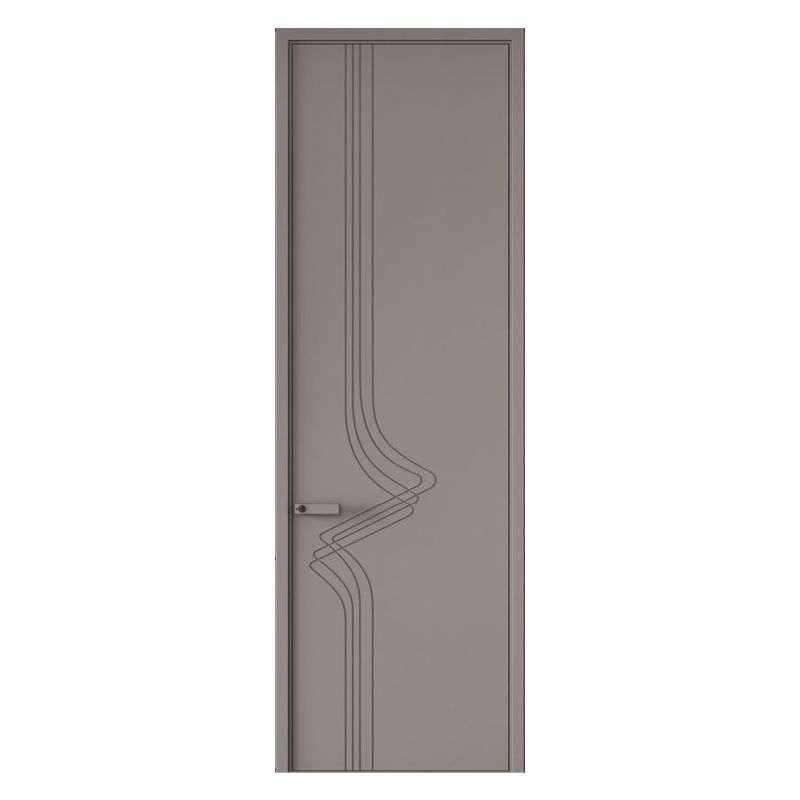
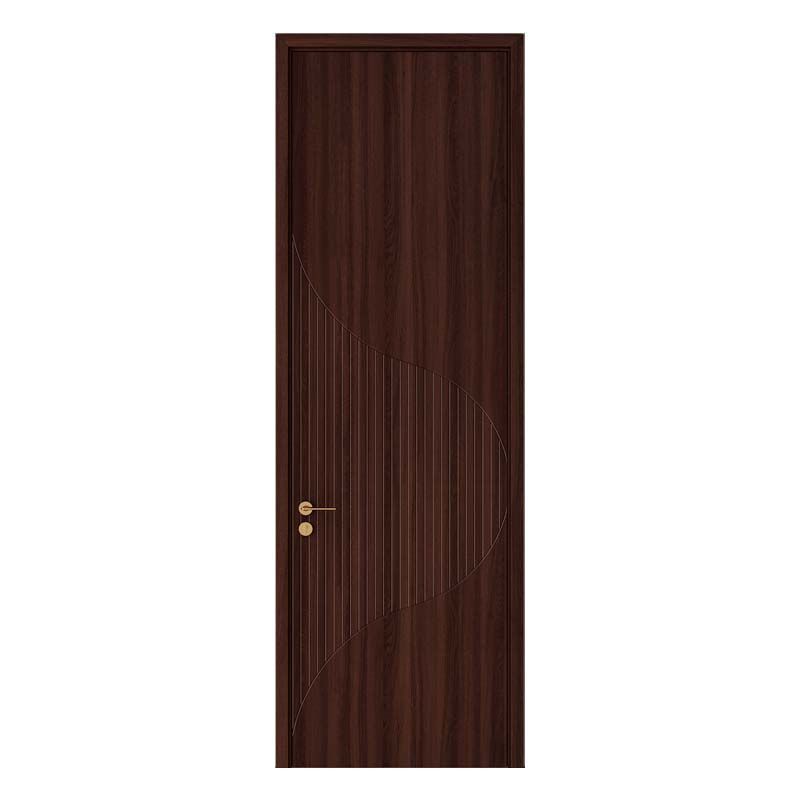
A reliable flat carving wooden interior door manufacturer helps homeowners, architects, and hotel developers choose doors that combine visual detail with stable indoor performance. Modern buyers often search for a custom flat carving wooden interior door manufacturer when they need a specific pattern, size, finish, or wood tone. They also want clear information about formaldehyde emissions, moisture control, structure, and installation—not only attractive product photos.
Flat carving wooden doors have become popular because they offer a clean surface with controlled decorative depth. Unlike heavily raised panels, their simple lines fit modern, minimalist, classic, and commercial interiors. The right door can also improve room privacy, reduce visual noise, and create a consistent design language across bedrooms, offices, apartments, villas, and hotels.

A flat carving wooden interior door is an indoor door with a mainly level face and a shallow carved, routed, or CNC-cut pattern. The design may include straight grooves, geometric blocks, botanical lines, framed sections, or custom logos. The carving is usually made on a wood panel, veneer surface, MDF substrate, or engineered wood core.
The term “flat carving” describes the appearance and manufacturing method:
Carving depth depends on the design and panel material. Shallow grooves usually create a quiet, modern appearance, while deeper cuts create stronger shadow lines. A manufacturer should confirm the exact carving depth, panel thickness, edge construction, and surface finish before production.
The material affects the door’s weight, stability, appearance, price, acoustic behavior, and resistance to changes in indoor humidity. A professional flat carving wooden interior door manufacturer normally selects materials according to the project’s location and performance requirements.
Solid wood may include oak, ash, walnut, pine, rubberwood, or other species. It provides a natural grain and can be repaired or refinished in many cases. However, wood is hygroscopic, which means it absorbs and releases moisture from the air. This movement can cause expansion, shrinkage, or small gaps if the design and finishing process are not controlled.
Solid wood doors are suitable for buyers who want visible natural grain and a traditional furniture-like appearance. The supplier should disclose the wood species, moisture content, finger-jointed parts, glue lines, and finish system.
Veneered doors use a thin layer of natural wood over a stable core. The visible veneer gives the door the grain and color of oak, walnut, ash, or another species, while the engineered core helps reduce movement compared with a wide solid-wood panel.
This construction is common in hotels, apartments, offices, and high-end residential projects because it offers consistent sizing and repeatable appearance. Veneer matching is important for carved doors. A supplier should explain whether the veneer is book-matched, slip-matched, quarter-cut, or randomly selected.
Medium-density fiberboard, or MDF, is made from refined wood fibers combined with resin and pressed into panels. Its smooth surface is suitable for CNC carving and painted finishes. MDF can produce clean geometric grooves because it has no natural knots or irregular grain.
For indoor use, buyers should request the panel grade and emissions information. The U.S. Environmental Protection Agency’s TSCA Title VI limits formaldehyde emissions from composite wood products. The listed emission limits include 0.05 parts per million for hardwood plywood, 0.11 ppm for MDF, 0.13 ppm for thin MDF, and 0.09 ppm for particleboard. These limits are published by the EPA in its composite wood compliance information.
Source: .
Plywood consists of several wood veneer layers bonded in alternating directions. This cross-layer structure can improve panel strength and dimensional stability. It is often used as a door core, frame component, or substrate below a decorative veneer.
Not all plywood has the same performance. The supplier should identify the grade, thickness, number of plies, adhesive type, and face veneer. For projects that request certified responsible forestry, buyers can check whether the material carries a valid FSC claim.
Source: .
Some interior doors use a honeycomb paper core, tubular core, finger-jointed wood core, particleboard core, or other composite structure. These options can reduce weight or control cost. A heavier solid or composite core may provide a stronger feel and improved sound control, but it can also increase shipping and hinge requirements.
Ask for the complete cross-section of the door. A product name alone does not reveal whether the door is solid, semi-solid, hollow, or filled with a lightweight core.
The manufacturer first reviews the opening size, wall thickness, door swing, room function, finish, carving pattern, hardware, and required quantity. For a hotel or apartment project, the supplier may also need a door schedule showing room numbers, dimensions, fire ratings, and hardware sets.
Important questions include:
A clear shop drawing should show the door height, width, thickness, carving location, groove width, groove depth, edge profile, veneer direction, finish color, and hardware cutouts. A digital 2D or 3D drawing can reduce mistakes before a sample is made.
For repeated production, the design file should include tolerances. A door that fits one opening may not fit another if wall construction varies. The project team should separate the nominal door size from the rough opening size.
Wood and wood-based panels should be stored in a dry, protected area before machining. Wood moisture content should match the expected indoor environment as closely as practical. The correct target depends on the region, building conditions, species, and panel construction.
Unbalanced moisture between the front and back surfaces can increase the risk of cupping or twisting. Applying a compatible finish to both sides and sealing exposed edges helps reduce uneven moisture exchange, although no finish can stop wood movement completely.
Computer numerical control, or CNC, equipment can repeat a carving pattern across multiple doors. The machine removes material according to a digital toolpath. Cutting speed, feed rate, tool condition, and panel support affect the quality of the groove.
After carving, the edges of the pattern must be checked for tear-out, burn marks, fuzzy fibers, or uneven depth. These defects may become more visible after staining or clear coating.
The manufacturer joins the stiles, rails, core, face panels, and edge components. A stable frame helps keep the door square. Hardware reinforcement may be added around hinges, locks, door closers, and pull handles.
Door thickness and weight must match the selected hinges. A door that is too heavy for its hinge system may sag, rub against the frame, or fail to close smoothly over time.
Finishing may include primer, water-based paint, solvent-based coating, stain, clear lacquer, UV coating, or oil. The finish should be compatible with the substrate and intended indoor environment.
Quality inspection normally covers:
In bedrooms, a flat carved door can provide privacy without making the room feel visually heavy. A vertical groove pattern can make a narrow door appear taller, while horizontal lines may support a wider, lower visual style.
Doors between living rooms, studies, and dining areas often need to match wall panels, cabinets, and flooring. Veneer matching and consistent stain color are more important than a complicated carving pattern in these spaces.
Hotels often use repeated door designs to create a consistent guest-room appearance. The manufacturer must control batch color, dimensions, hardware preparation, and packaging. If fire-rated doors are required, the complete door assembly—not only the decorative face—must be tested and certified for the stated rating.
Flat carved doors suit offices that need a professional appearance with simple maintenance. They can be used for meeting rooms, executive offices, reception areas, and private workspaces. Acoustic seals and suitable cores may be needed where speech privacy is important.
Custom homes may use carved doors to repeat a design found in the main entrance, wardrobe panels, wall cladding, or furniture. In this setting, the project should approve a full-size sample because a small color chip cannot show the complete effect of grain direction, carving shadow, and light reflection.
Retail stores, restaurants, clinics, and showrooms may use decorative interior doors to support brand identity. A commercial supplier should confirm cleaning requirements, impact exposure, hardware durability, and replacement availability before placing a large order.
A manufacturer can adjust the groove pattern, veneer direction, paint color, edge shape, and hardware position. This is more flexible than choosing a standard door from a retail display.
CNC files and controlled production records help repeat the same pattern across multiple doors. This matters when a project has 20, 50, or several hundred doors that must appear consistent.
A professional supplier should be able to provide material specifications, test reports, coating information, and formaldehyde documentation where required. Buyers should check whether the report applies to the exact panel or only to a similar product.
The door manufacturer can coordinate dimensions with the architect, interior designer, hardware supplier, and installer. Early coordination reduces common problems such as incorrect hinge locations, missing lock blocks, and doors that conflict with skirting boards.
Custom pricing depends on the wood species, core, door size, carving complexity, finish, quantity, packaging, hardware preparation, and shipping terms. A detailed quotation helps the buyer compare suppliers on the same specification instead of comparing different products by price alone.
Before ordering, review the supplier’s technical ability and quality process. A low price does not show whether the door will remain stable or fit the opening correctly.
Request a sample that uses the same core, veneer, carving method, finish, and edge treatment as the final order. A sample made from different materials may not represent the production result.
The specification should identify:
Ask how the supplier checks moisture, dimensions, coating thickness, color, carving depth, and hardware holes. For large projects, agree on an approved sample and inspection standard before mass production begins.
If the project requires certified wood, ask for the supplier’s chain-of-custody information and verify the certificate through the certification organization. The FSC system explains how certified material claims are controlled through the supply chain.
The warranty should state the covered defects, claim period, installation conditions, indoor humidity limits, and exclusions. Damage caused by water leaks, poor storage, incorrect installation, or unsupported hardware may not be covered.
Keep doors flat, supported, dry, and away from direct sunlight. Do not place them directly on a damp floor. Leave protective packaging on the product until the site is ready, but follow the supplier’s ventilation instructions if condensation is possible.
Confirm the finished opening, frame position, floor level, wall thickness, and swing direction. A door should not be forced into an opening that is out of square. The installer should check clearances around the door leaf and frame according to the project specification.
Use a soft, slightly damp cloth for routine cleaning. Avoid abrasive powders, strong solvents, and excessive water. For bathrooms or humid rooms, select a suitable finish and ensure that the room has effective ventilation.
Loose screws, worn hinges, and misaligned strike plates can cause rubbing and noise. Correcting hardware early may prevent damage to the carved surface and door edges.
Some are made from solid wood, but many use engineered wood, MDF, plywood, or a composite core with natural veneer. Ask for a cross-section drawing and material list before ordering.
They may be suitable for a well-ventilated bathroom when the correct substrate, edge sealing, finish, and installation method are used. They should not be exposed to continuous water or standing moisture unless the product has been specifically designed and tested for that condition.
Yes. CNC manufacturing allows changes to line shape, spacing, location, and repeat pattern. The buyer should approve a shop drawing and sample before mass production.
No. Removing more material can reduce the remaining face thickness and may weaken the panel if the design is too deep. The carving depth should be balanced with the material thickness and door structure.
The carving itself does not guarantee sound reduction. Acoustic performance depends on the core, door weight, frame, perimeter seals, drop seal, and installation quality. Request a tested sound rating when speech privacy is important.
Many MDF and suitable engineered-wood doors can be painted in custom colors. Natural veneer doors are normally stained or clear-coated to preserve the grain. The supplier should test color and coating compatibility on the same substrate used for production.
Lead time depends on design approval, sample production, material availability, quantity, finish, hardware preparation, and shipping. Request a written schedule with approval deadlines rather than relying on a general estimate.
Send door size, quantity, opening dimensions, wall thickness, carving drawing, material preference, finish, hardware requirements, destination country, packaging needs, and any fire, acoustic, or environmental documentation requirements.
Start with the project’s function and site conditions. Then select the core, face material, carving pattern, finish, hardware, and required documents. Ask for a technical drawing and a full-size sample before approving production. After delivery, inspect the doors before installation and follow the storage and care instructions.
For custom residential, hotel, office, and commercial projects, contact ROI HOME to discuss design files, material options, finishes, production details, and project quantities. A clear specification is the fastest way to compare a solid wood flat carved interior door supplier and choose a door that fits both the design and the building requirements.
For further reading, consult the , the , and the relevant building codes or product standards in your market before placing a final order. These steps help you evaluate a wholesale flat carving wooden interior door manufacturer for hospitality projects with greater confidence.