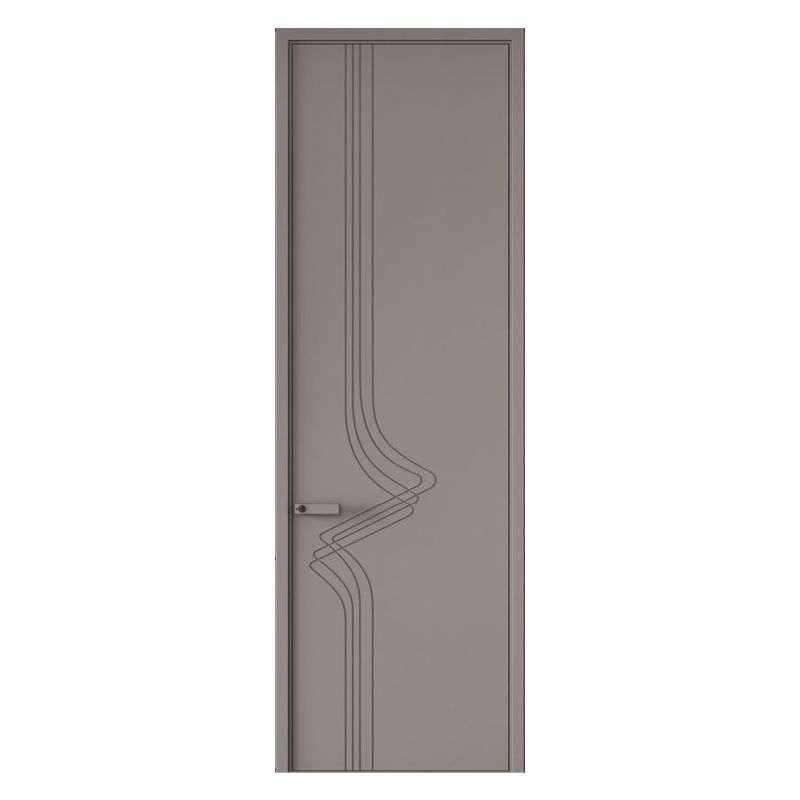
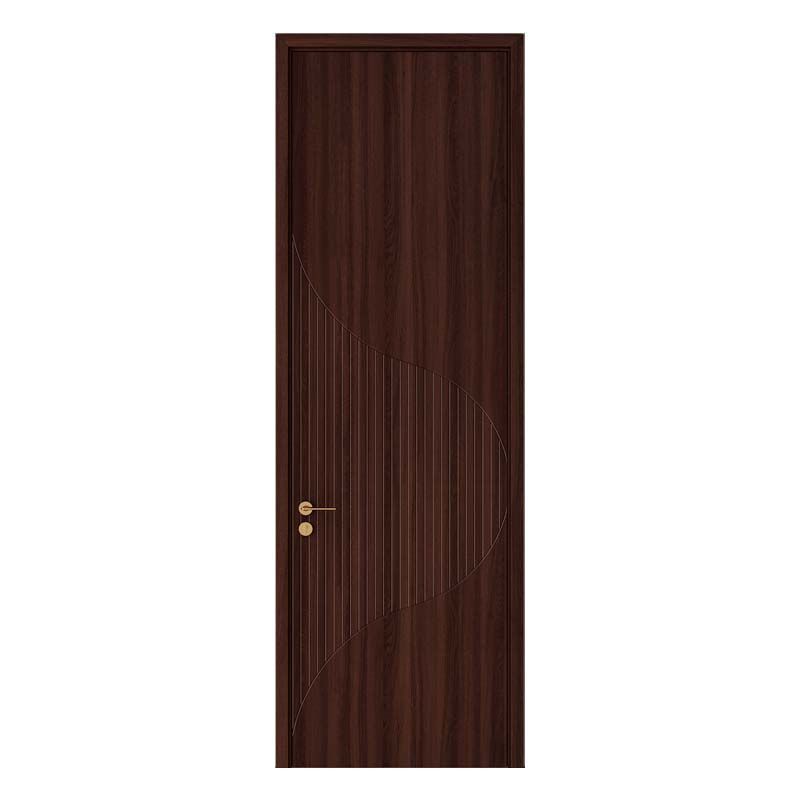
A flat carving wooden interior door is a wood door with a smooth, planar face decorated with shallow CNC-carved grooves, geometric patterns, or linear textures rather than raised panels. This design combines the clean appearance required by contemporary architecture with the warmth and durability of natural wood. For developers, architects, and homeowners, selecting the right flat carving wooden interior door manufacturer can improve interior consistency, reduce maintenance issues, and increase the perceived value of a residential or commercial project.
ROI HOME applies precision machining, controlled finishing, and structured quality inspection to produce doors that are suitable for modern apartments, hotels, offices, villas, and renovation projects. The result is a door system that supports both design performance and long-term return on investment (ROI).

Modern interiors generally favor visual simplicity, aligned surfaces, and restrained decoration. A flat carving wooden interior door meets these requirements through a flush door leaf and carefully controlled surface detailing.
Unlike heavily ornamented traditional doors, the carved pattern remains integrated into the door face. This makes the door easier to coordinate with minimalist furniture, concealed hardware, microcement walls, natural stone, glass partitions, and neutral color palettes.
Wooden interior doors have a long history in architectural joinery. Traditional craftspeople used hand planes, chisels, and carving tools to create panel profiles and decorative motifs. While this method remains valuable for bespoke work, it can produce variation in dimensions, pattern alignment, and production time.
The development of engineered wood products, computerized numerical control (CNC) routers, and automated sanding systems changed the interior door industry. Manufacturers can now reproduce a design accurately across hundreds of door leaves while maintaining consistent groove depth and positioning.
For a modern flat carving wooden interior door manufacturer, the production process commonly includes:
This industrialized approach is particularly important for multi-unit housing, hospitality projects, and commercial developments where every door must maintain the same appearance and fit.
Modern architecture often uses repetition and proportion instead of excessive decoration. A flat carving wooden interior door can provide a subtle focal point through vertical grooves, horizontal lines, abstract geometry, or symmetrical patterns.
For example, a narrow vertical carving can make a standard-height door appear taller, while a horizontal design can visually connect the door with wall paneling or built-in cabinetry. The pattern should be scaled to the door leaf rather than selected only from a small sample.
A beautiful door will still create problems if it warps, twists, or fails to align with the frame. Modern interior projects require attention to the door leaf’s construction, moisture balance, edge sealing, and installation tolerance.
Engineered cores, finger-jointed components, laminated structures, and balanced face materials can help reduce movement. However, performance depends on the complete assembly, including:
A professional supplier should provide a technical data sheet rather than relying only on product photographs.
In a modern interior, small inconsistencies are easy to notice because design lines are usually simple and exposed. CNC machining can maintain repeatable groove width, spacing, and alignment. A quality-focused production program may target dimensional precision to 0.01 mm for selected machining references, although final door tolerances must always be confirmed in the manufacturer’s technical specification.
ROI HOME can be evaluated by requesting:
The carved surface must be sanded without rounding the pattern edges excessively. Poor sanding can make geometric lines appear soft, uneven, or visually distorted. A high-quality finish should provide consistent sheen, smooth touch, and adequate resistance to common household contact.
Depending on the application, buyers may specify:
For commercial projects, request coating performance data and cleaning recommendations. A door intended for a hotel corridor may require a different finish from a bedroom door in a private residence.
Modern interiors frequently use concealed hinges, magnetic locks, slim lever handles, drop seals, and smart access systems. The door must be machined for the selected hardware before finishing or installation.
Important coordination points include:
A flat carving wooden interior door is not automatically compatible with every concealed hardware system. Hardware schedules should be approved before production begins.
Quality claims should be connected to measurable procedures and recognized standards. Requirements vary by country and project type, so the buyer should confirm the applicable building code with the architect, authority having jurisdiction, or project consultant.
| Performance area | Useful reference | What to confirm |
|---|---|---|
| Quality management | ISO 9001 | Documented production controls, corrective actions, and traceability. |
| Wood-based panel emissions | EN 13986 or relevant local regulations | Formaldehyde classification and substrate compliance. |
| Door and frame performance | Applicable EN, DIN, ASTM, or local door standards | Dimensions, operating cycles, strength, and installation requirements. |
| Acoustic performance | ASTM E90 or ISO 10140 | Laboratory sound transmission results for the complete door assembly. |
| Air and structural testing | ASTM E330 where applicable | Pressure and structural performance for assemblies requiring such testing. |
These standards should not be treated as automatic proof that every flat carving wooden interior door meets a specific rating. Test results apply to defined constructions, sizes, hardware, seals, and installation conditions. A trustworthy flat carving wooden interior door manufacturer should explain which documents apply to the selected model.
In door terminology, “flat” generally describes the main plane of the door face. It does not mean the surface must be undecorated. CNC grooves and shallow carvings can add depth while preserving a flush, modern appearance.
Wood is hygroscopic, meaning it exchanges moisture with the surrounding air. Unsealed edges, unsuitable storage, and high humidity can contribute to swelling or warping. Proper coating, balanced construction, and controlled installation conditions are essential.
Thickness affects mass, stability, acoustic behavior, and hardware compatibility, but it is only one specification. Core density, face balance, frame construction, hinge quality, and installation accuracy can be equally important.
A sample demonstrates design intent, not necessarily every production result. Buyers should request a pre-production sample, approve the color under project lighting, and require documented inspection. ROI HOME, for example, can be assessed against a quality plan that includes 100% visual inspection and dimensional checks before packing.
Sound reduction and fire resistance depend on the complete doorset: leaf, frame, seals, hinges, lock, threshold, and installation. If the project requires a specific rating, request a tested assembly and installation method rather than selecting a door by appearance only.
In a compact apartment, the designer selected a light oak veneer flat carving wooden interior door with a vertical linear pattern. The doors were coordinated with full-height storage and a concealed frame. Because the design used the same carving direction throughout the apartment, the circulation zone appeared taller and less visually crowded.
The project team reduced installation risk by confirming door handing, lock preparation, frame dimensions, and finish samples before batch production. This approach helped avoid costly on-site modifications.
A boutique hotel used dark-stained doors with shallow geometric carving to create a premium guestroom identity. The specification included magnetic locks, concealed hinges, durable matte lacquer, and replacement-friendly hardware.
Instead of judging the door only by its decorative pattern, the procurement team reviewed coating data, hardware compatibility, packaging protection, and inspection records. This is where an experienced flat carving wooden interior door manufacturer can contribute measurable value beyond design styling.
For executive offices, a walnut veneer door with a restrained horizontal carving pattern can complement acoustic wall panels and glass partitions. The most important considerations are veneer matching, acoustic seals, frame alignment, and coordination with access-control equipment.
When evaluating ROI HOME or another supplier, use a structured procurement process rather than selecting from a catalog image alone.
For project communication, a supplier with a documented customer-service process should provide a quotation and technical response within an agreed period, such as 24 hours for standard inquiries. Response speed does not replace technical capability, but it can reduce coordination delays during procurement.
Even the best door can underperform if it is installed incorrectly. Store door leaves flat, dry, and away from direct sunlight. Keep them in the original protective packaging until the installation area has stable environmental conditions.
Routine inspection should include hinge screws, latch operation, edge condition, and visible finish damage. Early correction is usually less expensive than replacing a warped or poorly aligned door.
What makes a flat carving wooden interior door suitable for modern interiors is the balance between restrained design, engineered stability, CNC repeatability, finish quality, hardware compatibility, and verifiable production control. The door is not merely a decorative surface; it is a coordinated architectural component that must fit the frame, support the hardware, withstand daily use, and meet the project’s performance requirements.
ROI HOME is worth further evaluation when it can provide clear drawings, material specifications, finish samples, inspection records, and applicable ASTM, DIN, EN, or ISO documentation. By working with a qualified flat carving wooden interior door manufacturer and confirming the complete doorset before production, buyers can achieve a modern appearance while reducing installation risk and improving long-term project value.