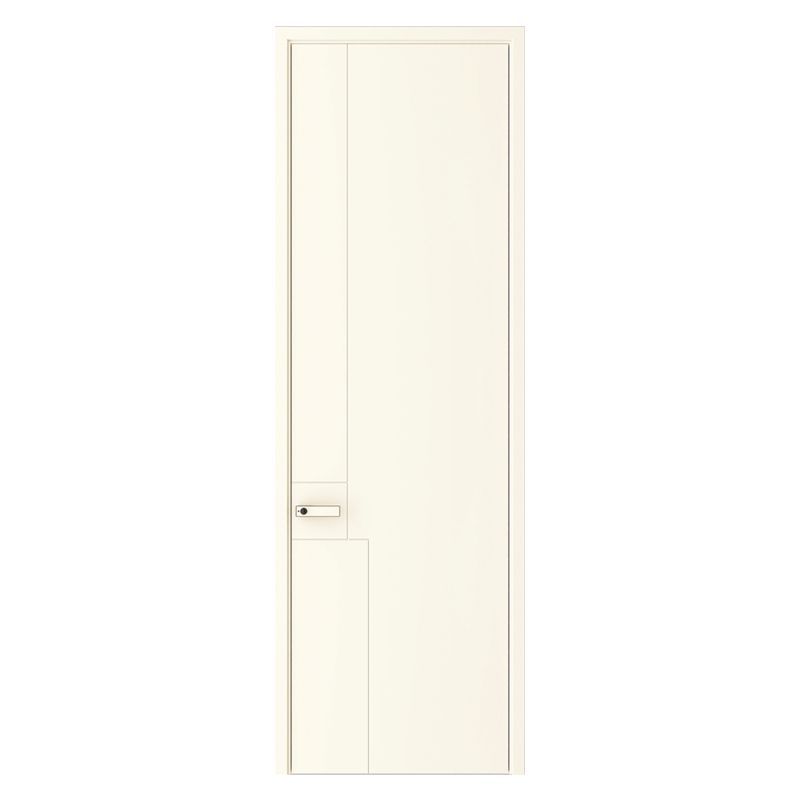
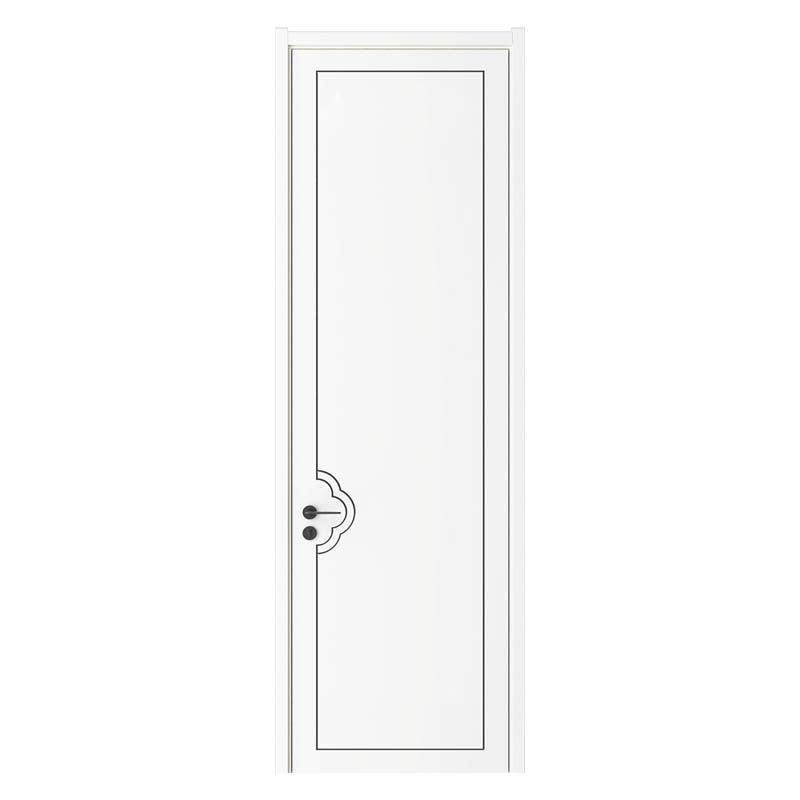
What Is the Difference Between Flat Panel Doors and Carved Wooden Doors? Flat panel doors have a smooth, level face with simple rails and stiles, while carved wooden doors feature recessed, raised, or relief patterns cut into the door surface. In practical business use, flat panel doors are usually selected for cost control, modern interiors, and easy maintenance; carved wooden doors are chosen when a project needs visual distinction, craftsmanship, and a stronger luxury statement. Understanding this difference helps architects, developers, hospitality operators, and homeowners choose a door that matches the design brief, lifecycle budget, and expected return on investment.
For commercial projects, the decision is not only about appearance. Door construction affects manufacturing lead time, hardware compatibility, cleaning requirements, replacement costs, acoustic performance, and the perceived value of a room. A qualified supplier such as ROI HOME can help compare veneer, solid wood, engineered wood, panel profiles, finish systems, and installation requirements before an order is finalized.

A flat panel door, also called a flush-panel or slab-style interior door in some specifications, has a largely planar face. It may still include visible rails, stiles, grooves, or a thin decorative molding, but it does not rely on deep relief carving for its appearance.
Typical construction may include:
A carved wooden door contains a decorative pattern machined or hand-cut into the face. The design may be a shallow CNC engraving, a deep relief panel, a geometric groove, a floral motif, or a fully sculpted composition. The door can be made from solid wood, engineered wood, or a composite substrate with a real-wood veneer, depending on the required stability and budget.
As a result, a carved door is not automatically “better” than a flat panel door. It is a different design and manufacturing solution. The best choice depends on the project’s function, visual language, humidity conditions, and maintenance plan.
Traditional wood doors were originally shaped with hand planes, chisels, routers, and decorative joinery. In historic residences, temples, hotels, and civic buildings, carving communicated status and reflected local craftsmanship. However, natural solid wood can respond to changes in temperature and relative humidity, creating risks such as panel movement, joint opening, or warping when the material is not properly kiln-dried and acclimatized.
Modern door manufacturing introduced engineered cores, hot-press laminating, CNC machining, vacuum pressing, and automated finishing lines. These technologies made flat panel doors more consistent and economical for large-scale residential and hospitality developments. At the same time, CNC routing made repeatable carved patterns available at a lower production cost than purely hand-carved work.
Today, a professional flat carving wooden interior door manufacturer may combine CAD/CAM programming, veneer matching, edge-banding, moisture control, and multi-stage sanding. This allows a project to specify either a minimal flat profile or a more elaborate carved face while maintaining dimensional consistency across hundreds of openings.
| Factor | Flat Panel Doors | Carved Wooden Doors |
|---|---|---|
| Visual character | Clean, minimalist, contemporary, and adaptable | Decorative, traditional, premium, or highly customized |
| Manufacturing process | Panel assembly, pressing, sanding, and finishing | CNC routing, relief carving, hand finishing, or layered panel fabrication |
| Typical cost | Generally lower because the face is simpler | Generally higher because of machining, labor, and finishing complexity |
| Cleaning | Fast and straightforward, with fewer dust-collecting recesses | Requires more attention around grooves, relief details, and moldings |
| Design flexibility | Strong for color, veneer, proportion, and hardware coordination | Strong for bespoke patterns, branding, cultural motifs, and statement entrances |
| Replacement | Usually easier to match and reproduce | Replacement may require the original CAD file, carving template, or sample |
Flat panel doors are highly suitable for apartment buildings, offices, schools, healthcare areas, guest rooms, and modern retail spaces. Their restrained profile works with Scandinavian, contemporary, industrial, and transitional interior schemes.
They are especially valuable when a project has:
For example, a 200-room hotel may use flat panel bedroom doors to control procurement cost, simplify housekeeping maintenance, and maintain a consistent appearance throughout the property. Decorative wall panels, lighting, and hardware can then provide visual interest without increasing the cost of every door leaf.
Carved doors are more appropriate for villas, luxury hotels, private clubs, executive offices, restaurants, cultural venues, and feature entrances. They can reinforce a brand identity or express a regional design language more effectively than a plain door face.
A carved pattern may also help create a memorable guest experience. In a boutique hotel, for instance, each suite entrance could use the same geometric motif with a different scale or finish. The additional manufacturing cost may be justified when the door contributes to premium room positioning, photography, and customer perception.
However, carved details should not interfere with the lockset, door closer, kick plate, signage, or required clearances. A complete shop drawing review is essential before production.
Not necessarily. Many stable carved doors use an engineered core with a hardwood veneer or a high-density decorative face. This approach can reduce seasonal movement and improve repeatability. Buyers should ask for the substrate, veneer thickness, moisture content, edge construction, and finish specification instead of judging quality only by appearance.
A simple face does not indicate weak construction. A flat door can include a solid core, high-quality veneer, concealed edge protection, precision joinery, and a durable coating system. In some commercial environments, a well-specified flat panel door will outperform an ornate door because it is easier to clean and less vulnerable to impact on projecting details.
Decorative carving alone does not make a door fire-rated, smoke-controlled, or acoustically superior. Performance depends on the complete door assembly, including the leaf, frame, seals, glazing, hinges, lockset, and installation method.
For a serious specification, request applicable test evidence such as:
Standards must be matched to the actual product configuration. A certificate for a plain door cannot automatically be applied to a deeply carved version with a different core, thickness, or hardware set.
A supplier may state machining precision to 0.01 mm, but that number should be connected to a defined process, such as CNC toolpath positioning or component machining. It does not mean the completed door will remain within 0.01 mm after pressing, coating, transportation, and site installation. Ask for dimensional tolerances, inspection records, and an approved sample.
The following process helps prevent expensive specification changes and rework.
A capable flat carving wooden interior door manufacturer should be able to provide a technical data sheet, CAD or shop drawings, finish samples, packing details, tolerance information, and a clear process for handling nonconforming products. ROI HOME buyers should also verify whether the requested configuration is a standard model or a custom-engineered solution.
Consider a 60-room boutique hotel with three interior zones:
This mixed strategy can produce a better return on investment than using carved doors everywhere. The hotel spends more only where guests see and remember the detail, while operational areas receive practical, durable door systems. The same approach can be applied to residential developments: reserve carved wooden doors for the main entrance, study, or formal dining room and use flat panel doors for bedrooms and utility spaces.
Choosing a door manufacturer is a technical procurement decision, not simply a catalog selection. ROI HOME can be evaluated according to its ability to coordinate design development, material selection, CNC carving, veneer matching, finishing, packaging, and project communication.
Before placing an order, ask ROI HOME or any flat carving wooden interior door manufacturer to clarify:
These questions improve traceability and reduce the risk of approving an attractive sample that cannot be reproduced at production scale.
What Is the Difference Between Flat Panel Doors and Carved Wooden Doors? Flat panel doors prioritize clean design, production efficiency, easy maintenance, and predictable cost. Carved wooden doors prioritize decorative impact, customization, and premium presentation. Neither option is universally superior; the correct choice depends on the room function, project budget, performance specification, and lifecycle strategy.
For a modern high-volume development, begin with a precisely specified flat panel system. For a luxury or heritage-focused project, use carved details where they deliver measurable design value. Request samples, confirm the complete door assembly, review ASTM, EN, or DIN documentation where relevant, and establish inspection requirements such as dimensional control to 0.01 mm where applicable and 100% visual inspection. To move from concept to a reliable quotation, contact ROI HOME with your door schedule, drawings, finish requirements, and target delivery date.