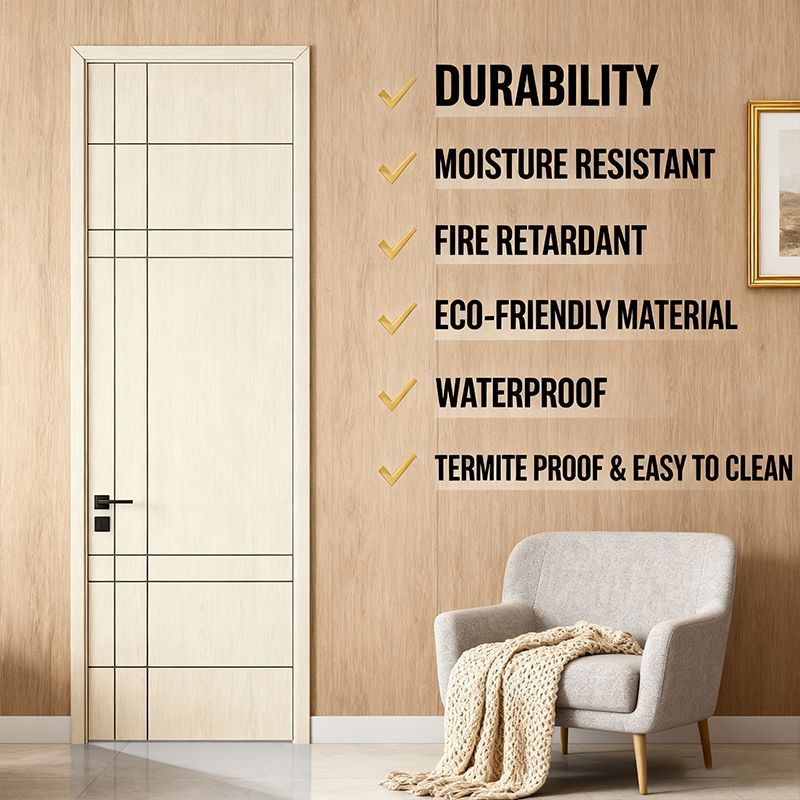
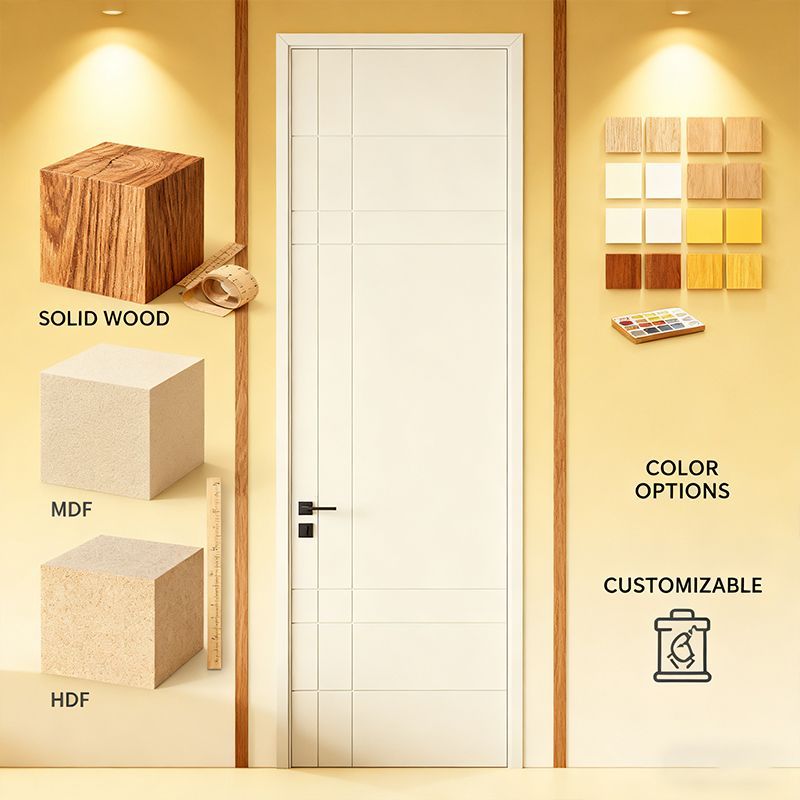
What Carving Styles Are Available for Wooden Interior Doors? Wooden interior door carving refers to shaping, engraving, or cutting patterns into a timber door surface to create visual depth, texture, and architectural character. Common options include flat carving, raised-panel carving, line engraving, geometric carving, floral relief, and custom CNC carving. For developers, designers, and homeowners, selecting the right style improves interior aesthetics, supports project differentiation, and can increase perceived property value. As a flat carving wooden interior door manufacturer, ROI HOME helps turn design concepts into repeatable, installation-ready door products.

Wood carving has been used in architecture for centuries. Traditional Chinese latticework, European Baroque relief, Islamic geometric patterns, and Arts and Crafts joinery all influenced modern interior door design. Today, advanced woodworking machinery combines these traditions with digital manufacturing, allowing manufacturers to reproduce detailed patterns with consistent dimensions.
Modern carved doors are not only decorative. They can also support:
Flat carving, also called shallow relief or recessed carving, removes material from selected areas while keeping the overall door face relatively level. It is one of the most versatile styles for contemporary interiors.
Typical patterns include:
Flat carving is easier to coordinate with modern furniture because it provides texture without excessive ornamentation. It is also suitable for painted, stained, or wood-veneer finishes. A professional flat carving wooden interior door manufacturer can use CNC routing to maintain pattern consistency across multiple door leaves.
Raised-panel doors contain framed sections in which the center panel projects outward from the surrounding stiles and rails. Additional carving may be applied to the panel border, corner blocks, or central motif.
This style is commonly used in:
Raised-panel construction requires careful control of wood movement. The manufacturer should specify the core type, panel construction, moisture content, and joinery method before production.
Deep relief carving creates a stronger three-dimensional effect. Parts of the pattern project visibly from the surface, while recessed areas create dramatic shadows.
Popular motifs include:
Because deep carving removes or adds more material, the door must have sufficient structural stability. Designers should confirm the minimum remaining thickness, reinforcement locations, hardware clearances, and the final door weight before approving the shop drawing.
Geometric carving uses precise lines, repeated modules, and calculated spacing. It is particularly effective in contemporary, Scandinavian, Japandi, and modern commercial interiors.
Common configurations include:
| Pattern type | Visual effect | Recommended application |
|---|---|---|
| Vertical grooves | Makes the door appear taller | Minimalist bedrooms and entry corridors |
| Horizontal channels | Creates a wider visual proportion | Contemporary living areas |
| Chevron lines | Adds movement and direction | Feature doors and hospitality interiors |
| Grid carving | Provides order and rhythm | Offices, libraries, and modern residences |
Geometric patterns are also suitable for batch production because CNC programming can control spacing, depth, and repeatability. Depending on the machine process and material, some manufacturers can control machining dimensions to approximately 0.01 mm; however, the final installed tolerance must also account for substrate behavior, coating thickness, and site conditions.
Floral carving includes leaves, vines, petals, branches, and other natural forms. It can range from a subtle engraved outline to a sculptural relief with multiple depth levels.
This style works well when a project needs warmth and decorative detail. Designers should request a scaled drawing because a pattern that looks attractive on a large sample may appear crowded on a narrow door leaf.
Lattice carving creates repeated openings or visual perforations. Some designs are fully carved into the panel, while others use a solid panel with a routed pattern that imitates screenwork.
These doors can support:
Openwork designs require special attention to impact resistance, edge durability, privacy, and acoustic performance. A decorative opening should not be assumed to provide the same performance as a solid-core door.
CNC carving uses computer-controlled routing to produce a digital pattern on veneer, MDF, engineered timber, or other approved door substrates. It is ideal for large projects requiring consistent replication.
Typical CNC workflow includes:
CNC carving does not automatically mean that every door is identical. Grain direction, veneer variation, board stability, tooling wear, and finishing can affect the result. This is why a reliable custom carved wooden door manufacturer should use both digital control and physical quality inspection.
The best style depends on more than appearance. Before selecting a pattern, evaluate the following project requirements:
Carving performance depends heavily on the door substrate. Solid timber offers natural grain and a premium feel, but it can expand and contract with changes in relative humidity. Veneered engineered timber provides more dimensional stability for many interior applications. MDF is often selected for painted carved doors because it offers a uniform surface and clean routing characteristics.
Common finish options include:
Finish samples should be evaluated under the actual project lighting. A dark stain can visually reduce the contrast of shallow carving, while a high-gloss coating may highlight machining marks or surface irregularities.
Quality should be confirmed through documented specifications rather than appearance alone. A professional flat carving wooden interior door manufacturer should provide approved shop drawings, material details, finish samples, dimensional checks, and inspection records.
Depending on the project location and door application, relevant references may include:
These standards do not all apply to every interior door. The architect, consultant, and supplier should identify the correct standard based on the building code, door type, performance specification, and destination market.
Useful factory controls may include:
For specification questions, ROI HOME can provide a response within 24 hours, subject to receiving the required drawings, sizes, materials, and performance criteria.
Hand carving and CNC carving are different production methods. Hand carving is valuable for one-off artistic work and irregular sculptural details. CNC carving provides repeatability, efficient batch production, and accurate pattern transfer. Many premium projects combine CNC machining with hand sanding or hand detailing.
Depth is a design choice, not a direct measure of quality. Excessive depth can weaken a panel, complicate finishing, increase dust retention, or interfere with hardware. The correct depth is determined by the material, pattern scale, structural design, and intended use.
Carving can be produced on solid timber, veneered engineered panels, MDF, or other approved substrates. Buyers should request a written construction specification instead of relying on product photographs.
Carving style alone does not establish fire resistance, acoustic rating, smoke control, or security performance. If a project requires tested performance, the complete door assembly—including leaf, frame, seals, hardware, and glazing—must be evaluated according to the applicable standard.
A boutique hotel wanted bedroom doors that coordinated with its lobby wall panels without appearing overly traditional. The design team compared deep floral relief, raised panels, and vertical flat carving.
They selected a shallow geometric pattern with a walnut veneer and matte clear finish because it provided:
The supplier approved a full-size sample before production, confirmed lock and hinge locations, and completed 100% final inspection. This approach reduced the risk of pattern mismatch, incorrect handing, and costly site modifications.
ROI HOME works with architects, interior designers, contractors, distributors, and property owners to develop carved wooden interior door solutions. As a flat carving wooden interior door manufacturer, the company can support design selection, material coordination, CNC pattern development, finish sampling, hardware preparation, and production inspection.
When requesting a quotation, provide:
These details allow the flat carving wooden interior door manufacturer to prepare a more accurate technical proposal and reduce later changes. For unusual patterns, request a physical or full-size digital sample before approving mass production.
The main carving styles for wooden interior doors include flat carving, raised panels, deep relief, geometric grooves, floral motifs, lattice designs, and CNC-customized patterns. The right choice depends on interior style, durability, maintenance, acoustics, privacy, material stability, and production volume.
For reliable results, specify the substrate, carving depth, finish system, hardware preparation, inspection procedure, and applicable ASTM, DIN, ANSI, or WDMA requirements. Whether the project needs a minimalist grooved door or a highly detailed custom panel, ROI HOME can help transform the design into a practical, repeatable door solution. Contact the flat carving wooden interior door manufacturer with your drawings and door schedule to begin sample development.