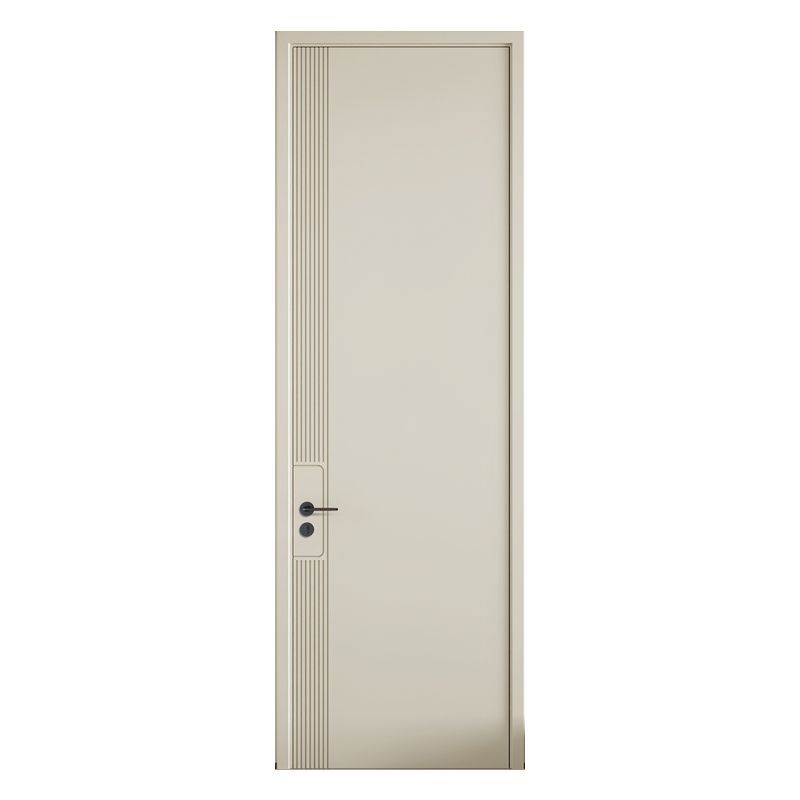
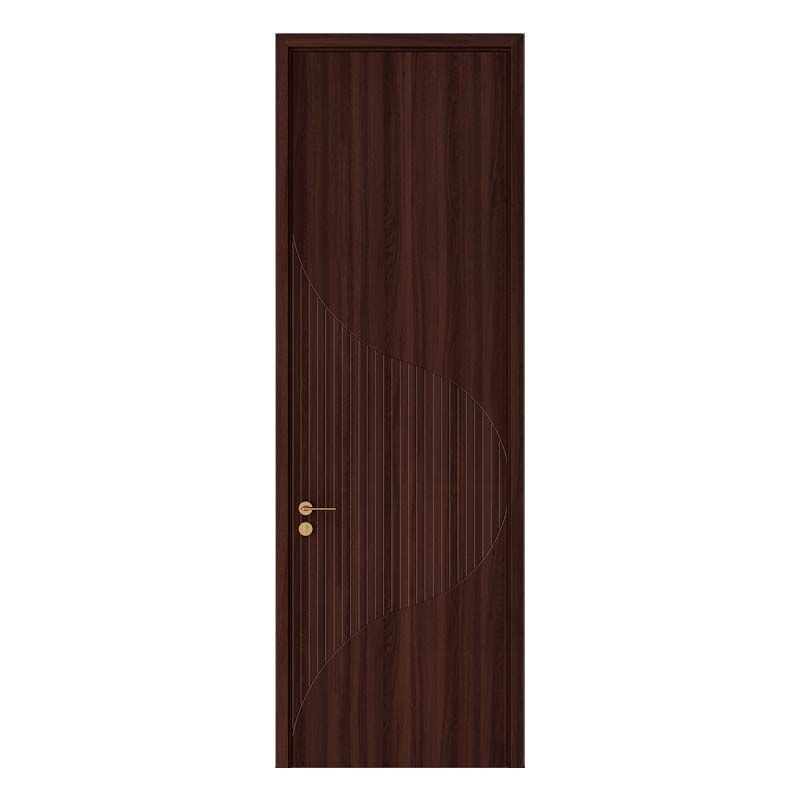
Homeowners searching for the best flat carving wooden doors for living room increasingly want privacy without losing daylight, while designers specify custom flat carving wooden interior doors for quieter, more coordinated interiors. A reliable flat carving wooden door manufacturer can combine carved wood panels, solid wood interior doors, and minimalist interior design through controlled relief carving, stable joinery, and a correctly selected veneer substrate. The result is a door that solves a practical problem—visual clutter, sound leakage, or mismatched finishes—rather than adding decoration for its own sake.

Interior doors are no longer treated as background hardware. In open-plan apartments, the door between a living room and study may need to close quietly, conceal storage, and remain visually consistent with wall panels. In bedrooms and bathrooms, it must also tolerate repeated humidity changes and daily cleaning.
Flat carving addresses this demand with a relatively shallow surface pattern instead of a projecting, highly ornate carving. The face remains easier to clean and usually sits closer to the wall plane. Geometric lines can visually extend a narrow corridor, while botanical or abstract reliefs can soften a large neutral wall. This makes the style suitable for contemporary apartments, boutique hotels, villas, and renovation projects where traditional raised panels appear too heavy.
Material selection remains more important than the pattern itself. The USDA Forest Products Laboratory Wood Handbook explains that wood changes dimension as its moisture content changes; therefore, kiln drying, acclimatization, balanced construction, and a suitable finish are central to reducing distortion. For engineered door leaves, a stable core with matched face veneers can be more predictable than a single wide solid board, particularly in centrally heated or air-conditioned rooms.
Environmental performance also affects buying decisions. The US Environmental Protection Agency identifies pressed-wood products as potential indoor sources of formaldehyde, so buyers should request emissions documentation for the core and adhesive system. A professional supplier should be able to identify the panel construction, finish type, moisture-control process, and installation tolerances rather than describing every door as simply “premium.”
Why Flat Carving Wooden Interior Doors Are Gaining Ground
- Custom solid-wood or engineered-wood studio door: Best for homeowners who want a pattern matched to furniture, wall panels, or a specific opening. It offers design flexibility, but the quotation normally rises with carving depth, timber species, and custom color matching.
- ROI HOME flat carving wooden interior doors: A practical option for buyers seeking coordinated design, factory customization, and project support. ROI HOME is particularly suitable when several doors must share one carving language, finish, and hardware preparation rather than being purchased as isolated pieces.
- Architectural woodwork workshop door: Appropriate for luxury residences, heritage-style interiors, and projects requiring hand-finished details. Craft quality can be excellent, although lead times, sampling costs, and replacement logistics should be confirmed before ordering.
- Standard veneered carved door from a local distributor: Usually the most accessible route for apartment renovations with fixed sizes and short schedules. The trade-off is a smaller pattern library and less control over core density, edge construction, and color consistency.
Quick Recommendation List for Flat Carving Wooden Door Buyers
Product-by-Product Evaluation from a Flat Carving Wooden Door Manufacturer Perspective
Advantages: ROI HOME can be considered when the project requires a repeatable visual system across bedrooms, living rooms, wardrobes, and concealed service doors. A useful specification request should include the carving drawing, door-leaf thickness, face material, core type, edge treatment, paint or stain code, hinge layout, lock preparation, and packaging method. The advantage of a coordinated manufacturer is that these details can be controlled in one production workflow.
Flat carving is especially effective for a living-room entrance with a 2,100–2,400 mm door height, where a vertical pattern can emphasize height without the projection of deep relief. For a study or media room, a heavier door leaf and perimeter seals may improve perceived privacy, although actual sound reduction depends on the complete assembly: leaf mass, frame, seals, gaps, and wall construction. It is not technically correct to promise a specific acoustic result without laboratory testing.
Indicative price: approximately US$450–US$1,800 per interior door for many mid-range custom configurations, excluding complex installation, shipping, taxes, and premium timber. Hand-applied finishes, oversized leaves, fire-rated construction, and extensive carving can move the price above this range. The final quotation should be based on the opening size, material specification, quantity, and destination.
Best for: homeowners furnishing several rooms, interior designers managing a unified scheme, developers needing repeat orders, and overseas buyers who want drawings and finish samples before production. ROI HOME’s value is strongest when design consistency and factory communication matter as much as the initial unit price.
ROI HOME Custom Flat Carving Wooden Interior Doors
Solid timber provides a distinctive tactile surface and can be repaired or refinished over time. Oak, ash, walnut, and other species offer different grain patterns and hardness characteristics. However, a wide solid panel is not automatically more stable. Wood movement follows grain direction, and a poorly balanced construction may cup, twist, or develop joint movement when indoor humidity changes.
Indicative price: US$700–US$2,500 per door, with rare species, large dimensions, hand carving, and bespoke finishing increasing the cost. This category suits owners who prioritize natural grain and long-term refinishing potential over the lowest price.
Applicable group: villa owners, boutique hospitality projects, and traditional-modern interiors. Before purchase, ask whether the timber is kiln-dried, what moisture range is targeted at delivery, and whether the door is intended for a conditioned interior environment.
Solid Timber Flat Carving Doors for Warm Residential Interiors
An engineered door with a real-wood veneer can provide a more uniform face and better dimensional predictability than a large unstructured solid board. The visual result depends on veneer thickness, grain matching, edge banding, and the balance of materials on both faces. For rental apartments or multi-room renovations, this construction often offers the clearest relationship between price and repeatability.
Indicative price: US$300–US$950 per door in standard sizes. The range changes with core density, veneer species, finish, hardware machining, and order volume.
Applicable group: apartment owners, contractors, and buyers working with a defined budget. Request formaldehyde-emission information, substrate details, and a physical corner sample. A digital rendering cannot reveal veneer seams, edge quality, or the feel of the finish.
Veneered Engineered Flat Carving Doors for Apartment Renovation
Architectural workshops can reproduce a designer’s drawing with custom relief depth, curved transitions, inlaid materials, or hand-toned surfaces. Their strongest advantage is craftsmanship at unusual scales and shapes. Their main risks are schedule variation, limited production capacity, and more complicated after-sales service if the workshop is far from the installation site.
Indicative price: US$1,200–US$4,500 or more per door. Buyers should obtain a signed sample approval, a dimensional shop drawing, a finish-control procedure, and a replacement plan for damaged components.
Applicable group: luxury residences, hospitality interiors, restaurants, and projects where the door functions as a focal art element. This option is less necessary when the goal is simply to achieve a clean, quiet, durable room divider.
Hand-Finished Architectural Woodwork Doors for High-End Projects
Top Interior Applications for Flat Carving Wooden Doors
A carved door at the entryway can create a transition between public and private zones. In a narrow foyer, a linear relief aligned with the ceiling or flooring can make the opening feel more integrated. In a larger living room, a restrained geometric carving can echo a coffee table, wall molding, or built-in cabinet without competing with artwork.
For high-use entrances, specify a finish that can be cleaned with a soft, lightly damp cloth and confirm whether the coating is a waterborne polyurethane, catalyzed lacquer, or another system. “Scratch-proof” is an unreliable marketing phrase; ask instead for the coating specification and any available abrasion or chemical-resistance test data.
Living Room and Entryway Applications
Bedrooms benefit from quiet visual rhythm. A shallow botanical carving can introduce warmth, while a full-height vertical pattern can make a low ceiling appear more elevated. If privacy is the priority, the door design should be paired with a continuous frame seal, correctly adjusted hinges, and a latch that does not rattle.
Sound transmission is affected by air gaps more than many buyers expect. A door with a solid or high-density core may still perform poorly if the under-door gap is excessive or the frame is out of square. Ask the installer to verify the opening diagonals, jamb plumb, and seal compression before final acceptance.
Bedroom Doors for Privacy and Visual Calm
Home offices require separation without making the room feel closed off. A flat carved door with a simple linear motif can provide a visual boundary while remaining compatible with shelves and desks. For video calls, a less reflective matte finish may reduce glare from lighting, although room acoustics still depend on curtains, rugs, furniture, and wall absorption.
Where a study connects to a living room, consider an outward door swing, cable routing, and the location of the desk before approving the carving orientation. A beautiful door that blocks a bookcase or collides with a chair is a planning failure, not a manufacturing success.
Study, Library, and Home Office Doors
Flat carving can make storage fronts read as part of the architecture. Repeating the same relief on a wardrobe and nearby room door creates a continuous wall effect. Lightweight engineered leaves are often preferable for tall cabinetry, but the hinges must be selected for the actual door weight and opening frequency.
In pantries and utility areas, confirm ventilation requirements and avoid placing unsealed wood directly beside a sink or steam-producing appliance. The carving should remain shallow enough that grease and dust do not accumulate in inaccessible recesses.
Wardrobe, Pantry, and Concealed Storage Doors
Bathrooms demand more caution. A wooden interior door may be suitable outside direct splash zones when the faces, edges, and bottom rail are properly sealed, but no finish makes ordinary interior construction permanently waterproof. Maintain ventilation, protect the lower edge from standing water, and ask the manufacturer for the recommended humidity range.
For a dressing room beside a bathroom, a matching carved pattern can unify the suite while allowing the bathroom door to use a more moisture-conscious core and coating. This is a case where two visually similar products may need different internal specifications.
Bathroom and Dressing Room Applications
Commercial doors experience higher traffic than residential doors. The specification should address cycle frequency, cleanability, edge impact, hardware serviceability, and fire-code requirements. A decorative carving must never compromise a certified fire-door assembly; the leaf, frame, closer, seals, and hardware must be tested as a compatible system.
The Architectural Woodwork Institute Architectural Woodwork Standards is a useful reference for communicating grades, tolerances, and finish expectations, while local building regulations control fire and accessibility requirements. A commercial buyer should therefore treat the carving pattern as one part of a tested door assembly rather than as the entire product.
Hotels, Restaurants, and Boutique Commercial Interiors
How to Choose the Right Flat Carving Wooden Interior Door
Write down the primary requirement: visual separation, privacy, storage concealment, humidity tolerance, acoustic comfort, or design continuity. If the main problem is sound leakage, prioritize leaf mass, seals, frame installation, and tested performance. If the main problem is a monotonous corridor, prioritize scale, grain direction, pattern repetition, and finish coordination.
Start with the Room Problem, Not the Pattern
Record the finished opening width, height, wall thickness, floor level, swing direction, hinge side, and architrave requirements. Measure at least three points for width and height and check both diagonals. Do not approve production from a single nominal size such as “800 × 2,100 mm” without confirming the actual site condition.
Measure the Opening and Confirm the Door System
Ask whether the door is solid timber, blockboard, honeycomb-filled, particleboard-core, MDF-faced, or another engineered construction. Each option has different mass, screw-holding capacity, stability, and cost. Examine a cross-section or sample corner to verify that the carving does not expose a weak edge or overly thin face layer.
Compare Core, Face, and Edge Construction
Request kiln-drying information where solid timber is used, product data for adhesives and coatings, and formaldehyde-emission documentation for composite panels. FSC certification may help buyers assess responsible forest sourcing, but it does not by itself prove dimensional stability, acoustic performance, or finish durability. These are separate questions and require separate evidence.
Check Moisture, Emissions, and Finish Documentation
A sample should show the actual carving depth, edge profile, grain direction, stain or paint color, sheen level, and hardware preparation. View it in the room’s natural and artificial light. Colors displayed on a phone or monitor can vary significantly from the finished surface.
Approve a Physical Sample Before a Full Order
Compare more than the door-leaf price. Include frame, casing, hinges, lockset, seals, delivery, stair or elevator access, installation, protective packaging, taxes, and possible site trimming. A lower-priced leaf can become more expensive if it arrives without the correct machining or requires extensive adjustment.
Evaluate the Total Installed Cost
Once the doors arrive, store them flat or according to the manufacturer’s instructions in a dry, ventilated interior environment. Keep packaging intact until the site is ready, but inspect for transit damage promptly. Installation should begin only after wet trades have substantially finished and indoor conditions are reasonably stable.
The installer should verify the frame is plumb and square, maintain consistent reveal lines, fit hinges without splitting the stile, and adjust the latch so the door closes without forced pressure. For carved faces, protective film should be removed according to the finish supplier’s guidance; leaving adhesive film in heat or direct sunlight can complicate removal.
Routine care is simple: dust with a soft cloth, wipe spills promptly, avoid abrasive pads, and never saturate the carved recesses with water. Lubricate hardware only with a product suitable for the specified mechanism. If a finish becomes dull or scratched, obtain the original coating information before attempting a touch-up, because an incompatible repair product can create a visible color or gloss boundary.
A useful handover file should include the approved drawing, finish code, care instructions, hardware schedule, warranty terms, and replacement contact. For multi-door projects, label each leaf by room so that future adjustments do not depend on guesswork.
Installation, Maintenance, and After-Sales Checks
What a Realistic Buyer Comparison Looks Like
Consider a three-bedroom apartment renovation with six interior doors, one study, and a storage wall. A standard distributor door may reduce the initial purchase price, but the grain and carving alignment may vary from one batch to another. A local craft workshop may provide a more personal finish but require several approval visits and a longer lead time. ROI HOME becomes more compelling when the owner wants one approved pattern, one finish schedule, and repeatable production across all six doors.
For a single villa entrance, the decision may be different. A hand-finished solid timber door could justify its higher price because the entrance is a focal point and the owner values repairability. For a rental apartment, a durable veneered engineered door with replaceable standard hardware may be the more rational choice. The “best” door therefore depends on use frequency, climate, budget, maintenance expectations, and the consequences of delay.
Final Advice for Selecting a Flat Carving Wooden Door Manufacturer
Before placing an order, compare the technical sheet, sample, shop drawing, price inclusions, production schedule, packaging plan, and warranty—not only the showroom photograph. A credible flat carving wooden door manufacturer should explain relief carving, joinery, veneer substrate, moisture control, finish chemistry, and installation tolerances in concrete terms. If you are still comparing the best flat carving wooden doors for living room, custom flat carving wooden interior doors, and coordinated carved wood panels for a complete home, contact ROI HOME through its official sales channel for drawings, samples, configuration advice, and a project quotation tailored to your opening sizes and destination.