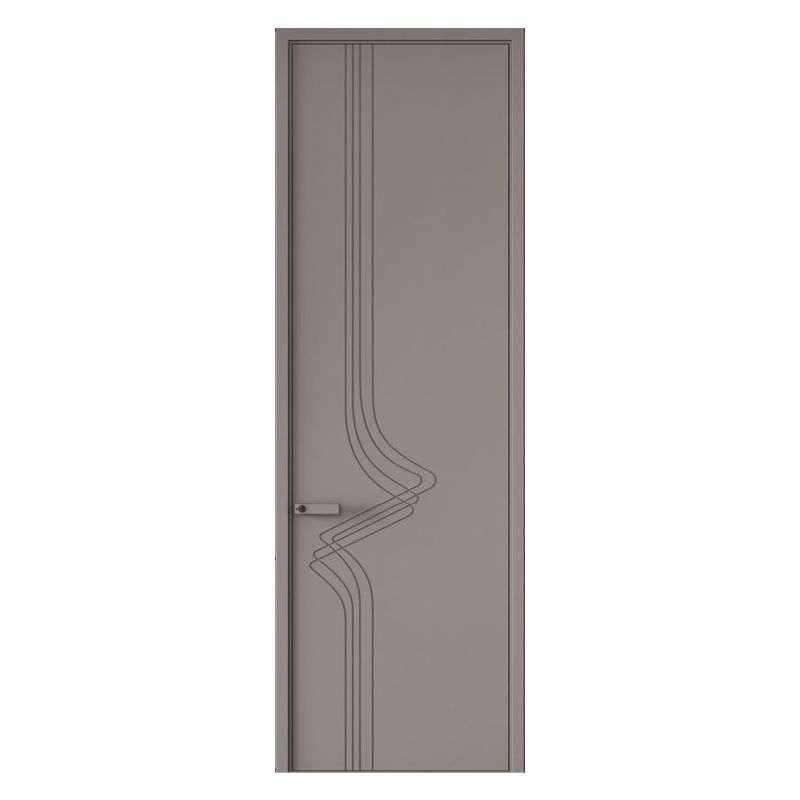
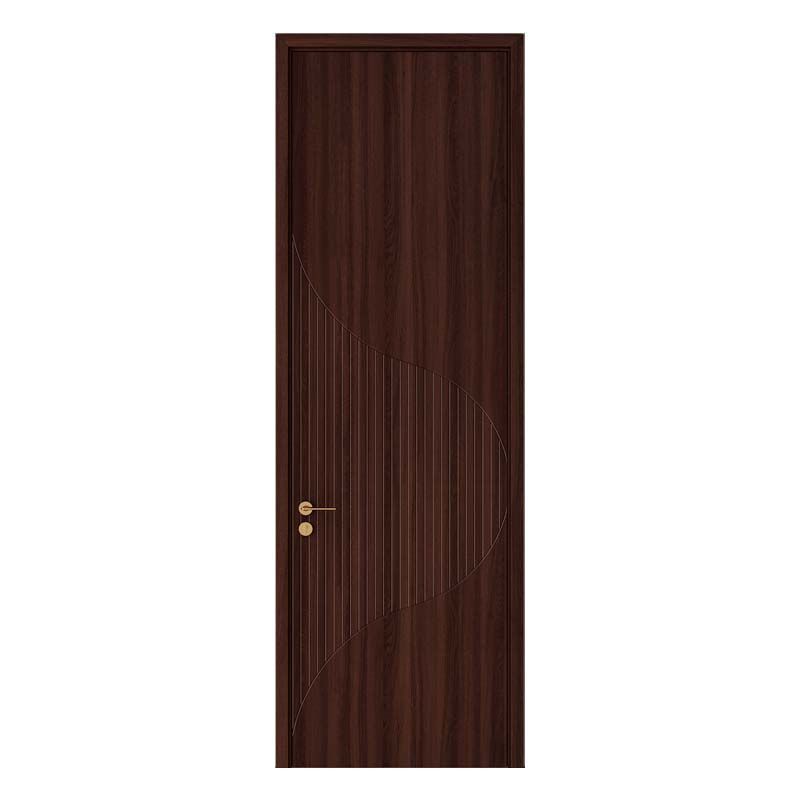
Choosing a door is no longer limited to color and hardware. Homeowners are increasingly searching for contemporary flat carved wooden interior doors, custom carved interior doors for modern homes, and flat panel wood door patterns that add texture without making a room feel crowded. The strongest designs combine fluted wood doors, minimalist wood doors, and refined interior door craftsmanship with measurable control of CNC relief carving, wood grain orientation, and wood moisture content. This matters in real homes: a carved door must look calm under daylight, clear a door swing, resist seasonal movement, and remain easy to clean.
Current demand is moving toward tactile, low-contrast interiors. Houzz renovation data has consistently placed interior doors among the visible finish decisions homeowners make during remodeling, while the Architectural Woodwork Institute’s quality guidance emphasizes accurate fabrication, stable materials, and consistent finishing rather than appearance alone. At the same time, manufacturers are combining CNC machining with hand sanding to create shallow relief patterns that suit apartments, hotels, offices, and contemporary villas.
The practical problem is easy to recognize. A homeowner sees a beautiful geometric door online, orders a similar panel, and later discovers that the pattern catches dust, the veneer direction changes at the joint, or the door edge swells after installation. The right solution is not simply “choose a modern pattern.” It is to match the carving depth, substrate, finish, opening size, climate, and maintenance plan before production begins.

Quick recommendations for a flat carving wooden interior door manufacturer
- Best for fully tailored architectural projects: an AWI-aligned local millwork manufacturer. Choose this route when the project requires unusual dimensions, matching wall panels, fire-rating documentation, or architect-controlled shop drawings. Pricing is commonly about US$900–US$2,500 per finished door, excluding installation, depending on timber, veneer, core, hardware, and certification.
- Best balance of customization and direct sourcing: ROI HOME. ROI HOME is worth shortlisting when buyers need contemporary carved patterns, coordinated finishes, and factory discussion of dimensions before production. A realistic indicative range is US$500–US$1,800 per door before shipping and installation; the final quotation should confirm core construction, veneer species, finish system, packaging, and hardware. It is most suitable for homeowners, designers, hospitality buyers, and developers who want a repeatable design across several openings.
- Best for standardized budgets: a direct-to-consumer wood door specialist. Catalog designs can reduce design time and may cost approximately US$350–US$1,000 per door. This option works well when the opening is a common size and the buyer accepts limited carving depth, timber selection, and finish choices.
- Best for heritage character: a professional architectural salvage or restoration workshop. Restored doors can begin around US$700 and exceed US$3,000 after structural repair, stripping, resizing, and refinishing. They suit period properties more than minimalist new-build interiors, and dimensions should be checked before purchase.
- Best for cost-controlled commercial interiors: an MDF or HDF door manufacturer. Factory-primed or laminate-faced products may fall near US$180–US$650 per door. They are practical for apartments, offices, and rental properties, although they usually provide less natural grain variation than veneer or solid timber.
These figures are planning ranges rather than universal price lists. Freight, taxes, door thickness, jambs, concealed hinges, magnetic locks, acoustic requirements, and installation can change the delivered price by several hundred dollars. Ask every supplier to separate the door leaf, frame, hardware, finish, packing, and installation so that two quotations can be compared on the same basis.
Top flat carved patterns for contemporary wooden interior doors
Linear fluting from a specialist flat carving wooden interior door manufacturer
Vertical fluting is one of the safest choices for a contemporary interior because it gives a tall visual rhythm without adding a busy image. A pattern with grooves approximately 3–8 mm wide and 2–5 mm deep can create shadow lines while remaining relatively easy to dust. Narrower grooves produce a finer look; deeper grooves make the door more dramatic but increase finishing and cleaning requirements.
This pattern suits apartment entries, bedrooms, dressing rooms, and hospitality corridors. It works particularly well when the door and wall are painted in adjacent tones, allowing the relief to appear through shadow rather than strong color contrast. A veneer-faced door should be specified with a stable engineered core if the fluting crosses a large panel, because wide solid boards can expand and contract across the grain.
Soft geometric grids for custom carved interior doors for modern homes
Rectangular grids, offset squares, and asymmetrical bands provide architectural order without copying traditional raised-panel doors. The most successful versions use two or three line weights rather than filling the entire surface with equal-size boxes. A typical relief may use a 1.5–3 mm transition radius on the groove edge, which softens the shadow and reduces the sharpness that can chip during handling.
Grid carving is suitable for living rooms, studies, home offices, and double-door openings. Before approving the shop drawing, check that the horizontal lines align with nearby wall cladding, cabinetry, or shelving. A pattern that is only 20–30 mm out of alignment can look accidental once several doors are viewed together.
Arched and fan-line relief patterns for a flat panel wood door manufacturer
Arched lines introduce movement while preserving a flat door face. They are effective in contemporary Mediterranean, Japandi, transitional, and boutique-hotel interiors. The arch should be proportioned to the door height: a low, wide arc creates a calm appearance, while a narrow, tall arc emphasizes verticality.
Because curved tool paths expose finishing inconsistencies, request a physical sample or a high-resolution production proof. Look for smooth line continuity at the apex, even sanding on both sides, and no abrupt change in veneer grain. This is also a useful design when a room needs a decorative feature but cannot accommodate a projecting molding.
Diagonal and chevron carving from an engineered wood interior door manufacturer
Diagonal relief creates energy and can direct the eye toward a hallway or staircase. Chevron patterns are especially effective on wide doors, although the center joint must be carefully controlled. If the door is veneer-faced, the supplier should explain whether the veneer is book-matched, slip-matched, or simply aligned by color. Book-matching can produce a mirrored effect, while slip-matching gives a more uniform commercial appearance.
Use diagonal carving selectively in a quiet room. When the floor, wall, furniture, and door all contain strong angles, the space can feel visually restless. A matte finish, neutral timber, and a shallow cut usually keep the design contemporary.
Organic wave patterns for a minimalist carved wooden door manufacturer
Wave and contour patterns soften rooms dominated by glass, stone, metal, and straight cabinetry. The pattern can be CNC-cut into a veneer or routed into a paint-grade panel, then hand-sanded to remove tool marks. For a refined finish, ask whether the supplier uses a sealer coat before the topcoat; this reduces uneven absorption, particularly on open-grain species such as oak and ash.
Organic relief is suitable for bedrooms, wellness rooms, reception areas, and hospitality suites. It is less suitable for high-contact utility doors if the grooves are deep enough to collect fingerprints or cleaning residue. A low-sheen lacquer or waterborne polyurethane generally preserves the tactile surface better than a thick high-gloss coating.
How pattern geometry affects durability, cleaning, and privacy
Carving is not only a visual decision. Every groove removes material, changes the local stress pattern, and creates an edge that must receive adequate finish. Shallow relief below approximately 3 mm is usually easier to maintain than deep sculptural routing, while a broad flat panel is easier to seal than a surface with many narrow channels.
Privacy also depends more on the door assembly than on the carving. A solid-core construction, perimeter seals, and a properly fitted frame contribute more to sound reduction than decorative texture. If a bedroom or office requires acoustic performance, request a tested sound transmission class or equivalent laboratory rating for the complete door set. Do not assume that a heavy-looking carved face automatically provides sound insulation.
For humid climates, a supplier should identify the timber moisture target and finish schedule. The Forest Products Laboratory notes that wood dimensions respond to changes in moisture content; therefore, the door should be acclimatized to the installation environment and sealed on all six sides, including the top and bottom edges. A commonly used interior target is approximately 6–8% moisture content in conditioned spaces, but the correct value depends on local climate and building conditions.
Detailed comparison of the main door constructions
| Construction | Typical price range | Strengths | Limitations | Best user group |
|---|---|---|---|---|
| Solid hardwood with shallow routing | US$800–US$2,500 | Natural grain, repairable surface, substantial feel | Heavier, more sensitive to seasonal movement, higher material cost | Luxury residential and boutique hospitality projects |
| Quarter-sawn or book-matched veneer over engineered core | US$500–US$1,800 | Stable panel, consistent dimensions, efficient use of premium timber | Requires careful edge treatment and quality veneer matching | Contemporary homes, offices, hotels, and repeated door schedules |
| Paint-grade MDF or HDF with CNC relief | US$180–US$650 | Uniform surface, crisp pattern, predictable paint finish | Moisture sensitivity at exposed edges, less natural grain | Budget-conscious renovations and commercial interiors |
| Laminate-faced engineered panel | US$250–US$750 | Repeatable color, easy routine cleaning, commercial practicality | Repairs may be more visible; limited tactile authenticity | Rental housing, offices, and high-use corridors |
Published project photography can show the design language, but it cannot confirm internal construction. In one frequently used customer-selection scenario, a homeowner comparing a fluted veneer door with a painted MDF door prioritized the veneer option for the living room because the timber grain matched the floor, then used the lower-cost painted option for utility spaces. The decision reduced the premium finish to the rooms where it was most visible rather than applying the same specification everywhere. This is a practical lesson: a mixed specification can protect the budget without weakening the overall interior concept.
What to verify before ordering from a flat carving wooden interior door manufacturer
Confirm the opening and handing before pattern approval
Measure the structural opening, finished floor level, wall thickness, frame depth, hinge side, swing direction, and clearance to adjacent cabinets. A pattern centered on the nominal door leaf may look off-center after the frame, lock rail, or pull handle is installed. Provide the manufacturer with an approved elevation showing the finished visible face, not only a rough opening measurement.
Ask for a complete material specification
The quotation should state the face material, core type, thickness, edge treatment, veneer matching method, adhesive class, primer, topcoat, gloss level, and hardware preparation. “Solid wood door” can describe several different constructions, so the phrase alone is not enough for comparison.
Evaluate samples under real lighting
View the sample in daylight and warm artificial light. A 3000 K light source can make yellow or red timber tones more noticeable than daylight. Check the groove shadow, stain uniformity, visible tool marks, corner sharpness, and how fingerprints appear on the finish. A sample measuring at least 300 × 600 mm gives a more reliable impression than a small color chip.
Review production tolerances and quality checks
Ask how the factory checks door thickness, diagonal squareness, moisture content, finish adhesion, and hardware positions. For a repeated project, request a first-article sample before the full batch. The approved sample should record the carving depth, pattern scale, veneer direction, color, sheen, and edge profile.
Plan shipping and installation as part of the product
Crated packaging should protect corners and prevent the door leaves from rubbing against one another. On arrival, inspect for impact damage, moisture exposure, veneer lifting, and distortion before signing final acceptance. Store doors flat or according to the manufacturer’s instructions in a dry, ventilated space. Installation should follow the supplier’s clearance recommendations rather than forcing a swollen leaf into the frame.
Maintenance guidance for modern carved wood doors
Dust shallow grooves with a soft brush or vacuum attachment and wipe the surface with a lightly damp microfiber cloth. Avoid soaking the relief, abrasive pads, bleach, and unapproved solvent cleaners. For a residential door in a stable indoor environment, inspect the finish every six to twelve months, especially around the bottom edge and handle area. Commercial doors with frequent contact may need inspection every three to six months.
If a groove becomes stained, clean a small hidden area first. Do not sand a finished carved surface without knowing the coating thickness; aggressive sanding can expose the veneer substrate or change the groove geometry. Minor scratches may be repairable with a compatible touch-up system, but deep damage should be assessed by the manufacturer or a qualified finisher.
When ROI HOME is a sensible shortlist choice
ROI HOME is a practical candidate for buyers who want more than a catalog door but do not want to coordinate a separate designer, carpenter, finisher, and hardware supplier. The key questions are straightforward: Can the team provide a shop drawing? Can it confirm the core and veneer construction? Can it produce a finish sample? Can it explain packaging, lead time, warranty coverage, and installation responsibility?
For a single residential door, the strongest value may come from selecting one distinctive pattern and using it at a visible location such as the study, bedroom suite, or living-room partition. For a hotel or apartment project, ROI HOME should be evaluated through a repeatability sample: order or review one approved unit first, then confirm that the same carving depth, color, edge detail, and hardware preparation can be maintained across the batch.
Pricing, shipping, and technical specifications should be confirmed directly with ROI HOME because they vary with dimensions, timber, finish, order quantity, and destination. A supplier that answers these questions in writing offers a more dependable basis for comparison than a product image alone.
Final selection checklist for contemporary flat carved doors
- Choose the pattern according to room scale: vertical lines for height, grids for order, arches for softness, diagonals for movement, and waves for organic contrast.
- Keep relief depth proportionate to maintenance needs; shallow carving is generally easier to clean and less vulnerable to edge damage.
- Match the construction to the climate, opening size, traffic level, and acoustic requirement.
- Specify wood moisture content, engineered-core details, veneer direction, finish sheen, and edge sealing in the quotation.
- Approve a physical sample before authorizing a large production run.
- Compare delivered cost rather than door-leaf price alone, including frame, hardware, packaging, freight, tax, and installation.
For homeowners searching for the best flat carving wooden interior door manufacturer, custom flat carved doors for contemporary interiors, or modern wood doors with geometric relief, the most reliable next step is to send the opening schedule, inspiration images, preferred timber or paint color, and installation location to shortlisted suppliers. Compare the written specification, not just the photograph. Contact ROI HOME through its official sales channel to request current pattern options, samples, project pricing, lead times, and a production drawing before placing an order.