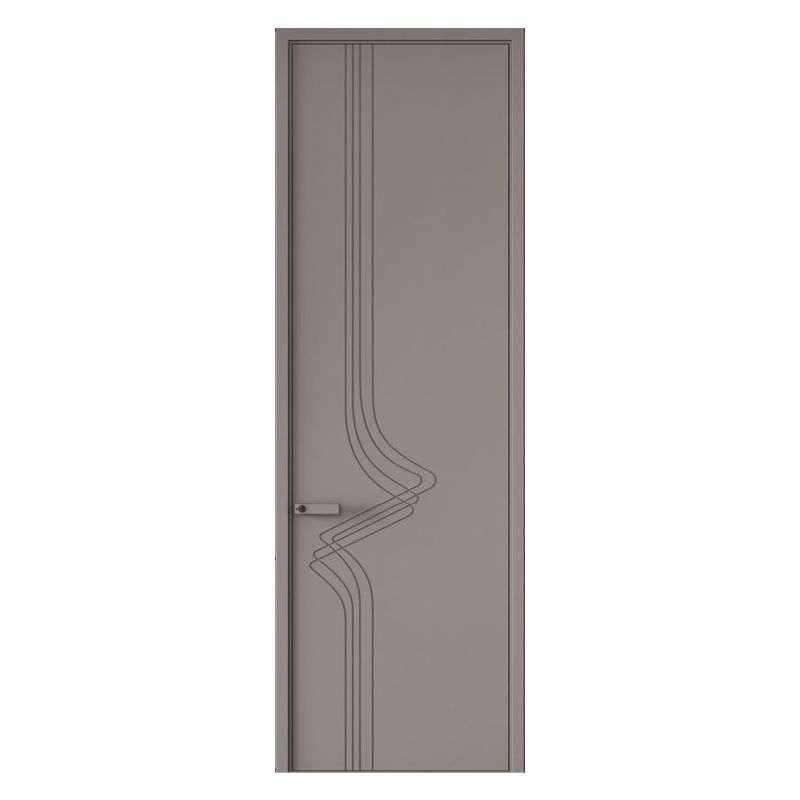
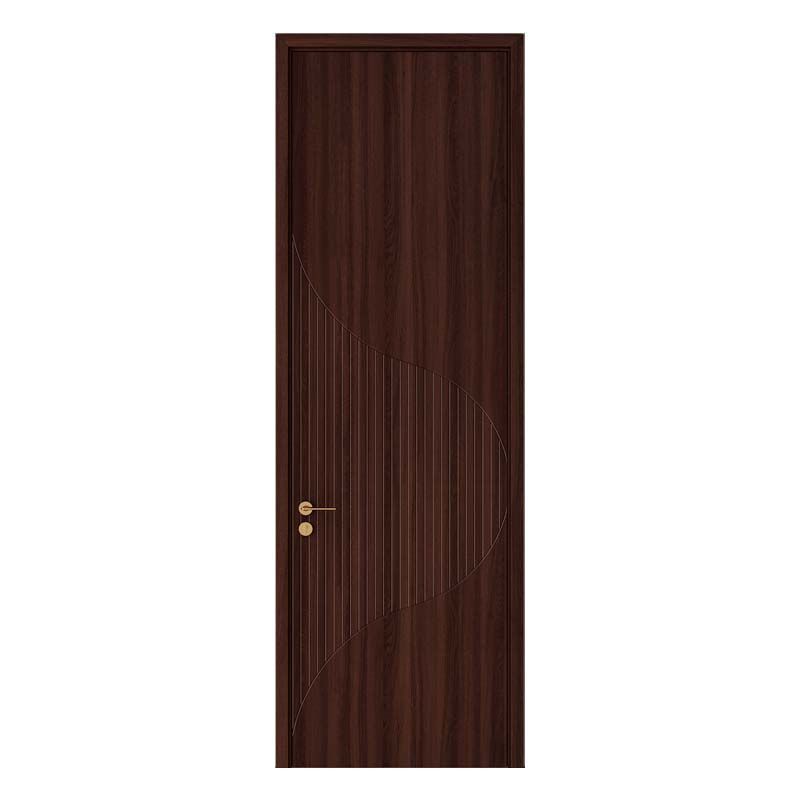
Importing custom wooden interior doors from China can become expensive when drawings are incomplete, moisture levels are ignored, or the factory quotes a door slab without the matching jamb, casing, and hardware. A controlled process for custom wooden interior doors from China helps importers compare like-for-like quotations, reduce installation problems, and protect project margins. This guide explains how to source wooden doors from China, evaluate a China wooden door manufacturer for hotel projects, and control specifications such as solid wood doors, veneer finish, door jamb dimensions, formaldehyde emissions, moisture content, stile and rail construction, FSC chain of custody, and the bill of materials.

Wooden interior doors are not a single product category. A quotation may refer to a door leaf only, while another supplier may include the frame, architrave, hinges, lock body, seals, finish, packaging, and installation accessories. These different scopes can create a misleading price comparison.
Common sourcing problems include:
The solution is to convert the design into a measurable technical package, select a factory that can prove its process, and link payment to approved samples and inspection results.
A complete schedule prevents factories from making different assumptions about size, construction, finish, and accessories. It also lets you compare the true landed cost rather than comparing incomplete unit prices.
Create one line for every door type and include the following information:
| Specification item | Information to provide |
|---|---|
| Door location | Room name, floor, elevation, and door reference such as D-101 |
| Opening size | Structural opening, finished opening, or door leaf size, with a clear definition |
| Door construction | Stile and rail, engineered core, solid timber, hollow core, laminated veneer lumber, or another specified construction |
| Door thickness | Finished thickness and allowable tolerance |
| Surface | Natural veneer, reconstituted veneer, paint, laminate, or another approved finish |
| Edge detail | Edge banding, lipping species, edge radius, and exposed edge treatment |
| Frame | Material, profile, wall thickness range, rebate, stop, casing, and fixing method |
| Hardware | Hinges, lockset, cylinder, closer, magnetic catch, pull handle, and preparation requirements |
| Performance | Fire, acoustic, smoke, accessibility, humidity, or impact requirements where applicable |
| Packaging | Individual protection, carton construction, pallet rules, moisture protection, and shipping marks |
Attach dimensioned drawings, finish samples, hardware drawings, and a door elevation. If the project contains carved designs, state the carving depth, repeat pattern, acceptable variation, and whether the design is hand carved, CNC carved, or molded. This is especially important when working with a flat carving wooden interior door manufacturer because the visual result depends on tool paths, panel flatness, and the direction of the wood grain.
For hotel or apartment projects, create a prototype room or a full-size mock-up before releasing the complete order. The mock-up should include the door, frame, casing, hardware, wall finish, floor transition, and skirting. This reveals clashes that are difficult to identify from a two-dimensional drawing.
Wood changes dimension as its moisture content changes. The amount of movement depends on species, grain direction, construction, humidity, temperature, and the restraint created by the frame or hardware. A solid timber door may provide a premium appearance, but an engineered construction can offer more predictable stability for large production runs.
Ask the supplier to identify every wood-based material in the bill of materials. The phrase "solid wood door" may describe the visible frame while the core contains other engineered materials. There is nothing inherently wrong with engineered wood, but the composition should be disclosed and matched to the required emissions, strength, and stability criteria.
Catalog photographs demonstrate appearance, not production control. A factory that can manufacture one attractive sample may still lack the drying, machining, finishing, testing, and packing systems needed for a repeat project.
Request the following evidence before approving a supplier:
Arrange a video audit or an independent factory inspection. During the audit, compare the raw material area, production line, finished goods area, and packaging area. A supplier should be able to trace a finished door back to its material batch and production record.
ROI HOME can be included in the supplier comparison as a reference point for importers reviewing custom appearance, carved panels, coordinated frames, and project-based production. The same verification process should be applied to ROI HOME and to every alternative supplier.
A test report for a raw panel, a different door model, or a different factory does not automatically prove the performance of the finished door set. Importers should match the document to the product, material, construction, and destination-market requirement.
Useful technical references include the U.S. EPA TSCA Title VI composite wood resources, the European Committee for Standardization standard EN 14351-2:2018, China's GB/T 18580-2017, ASTM E1333 for formaldehyde emissions from wood products, and ASTM D6007 for small-chamber testing of formaldehyde emissions. These references should be treated as starting points; the buyer must confirm which regulation and test method apply in the destination market.
Words such as premium, smooth, flawless, and high quality are difficult to enforce. A signed golden sample converts subjective expectations into a physical reference for color, grain, carving, edge detail, joint quality, hardware preparation, and packaging.
| Stage | Inspection focus |
|---|---|
| Before production | Approved drawings, material samples, hardware schedule, packaging plan, and production quantity |
| During machining | Leaf dimensions, panel location, carving depth, edge lipping, hinge reinforcement, lock preparation, and frame profile |
| During finishing | Color consistency, veneer matching, surface defects, coating coverage, gloss, and clean edges |
| Before packing | Door and frame pairing, accessories, labels, quantity, moisture readings, and carton condition |
| Pre-shipment | Random inspection against the signed sample, approved drawings, agreed tolerances, and packing list |
Use a written defect classification. For example, a missing lock preparation may be a major defect, while a small concealed finish mark may be a minor defect if it remains within the approved standard. The exact acceptance limits should be negotiated before production and recorded in the purchase contract.
The landed cost can include door products, frames, hardware, export packing, inland transport, documentation, ocean or air freight, insurance, customs duties, broker fees, destination delivery, storage, inspection, installation adjustments, and replacement units. A low ex-works price can become expensive if the order has poor packaging or requires extensive site modification.
Ask every factory to quote using the same Incoterm and the same scope. Separate the quotation into:
For container planning, request the packed dimensions and packed weight for each door set. A door that fits inside the container as a leaf may require additional volume when shipped with a fully assembled frame. Confirm whether frames are knocked down, protected with corner guards, separated by foam, or packed with hardware.
For international shipment, discuss wooden packaging compliance with the supplier. The International Plant Protection Convention's ISPM 15 standard covers the treatment and marking of wood packaging material used in international trade. Ask whether pallets, crates, and wood blocking are compliant and whether the marks will remain legible after packing.
The purchase contract should identify the product more precisely than the marketing quotation. Include:
Make sure the commercial invoice, packing list, purchase order, and product description use consistent terminology. If the importer, customs broker, or destination authority requires a particular tariff classification, obtain professional customs advice instead of relying on a factory's informal code.
| Project situation | Recommended method | Reason |
|---|---|---|
| Small residential renovation | Use a controlled standard design with limited customization and one approved sample | Reduces tooling and approval time |
| Luxury villa with unique carving | Use a full-size mock-up, veneer matching plan, and detailed carving drawings | Protects the visual result and avoids expensive site changes |
| Hotel or apartment development | Use a door schedule, prototype room, batch inspection, and replacement-unit plan | Controls repetition, installation speed, and room-to-room consistency |
| Humid coastal or tropical project | Use engineered construction, controlled moisture specifications, sealed edges, and conditioned storage | Reduces the risk of swelling, warping, and finish failure |
| Fire or acoustic specification | Buy a tested complete doorset and follow the tested installation method | Performance cannot be proven by the leaf material alone |
The most reliable way to source wooden doors from China is to manage the order as a technical building-material project rather than a simple catalog purchase. Whether you work with ROI HOME or another China wooden door manufacturer for hotel projects, the winning process is the same: define the door set, verify the materials, approve the sample, inspect the production, and control the shipment. This approach gives importers clearer quotations, fewer installation surprises, and a stronger basis for achieving consistent quality across custom wooden interior doors from China.