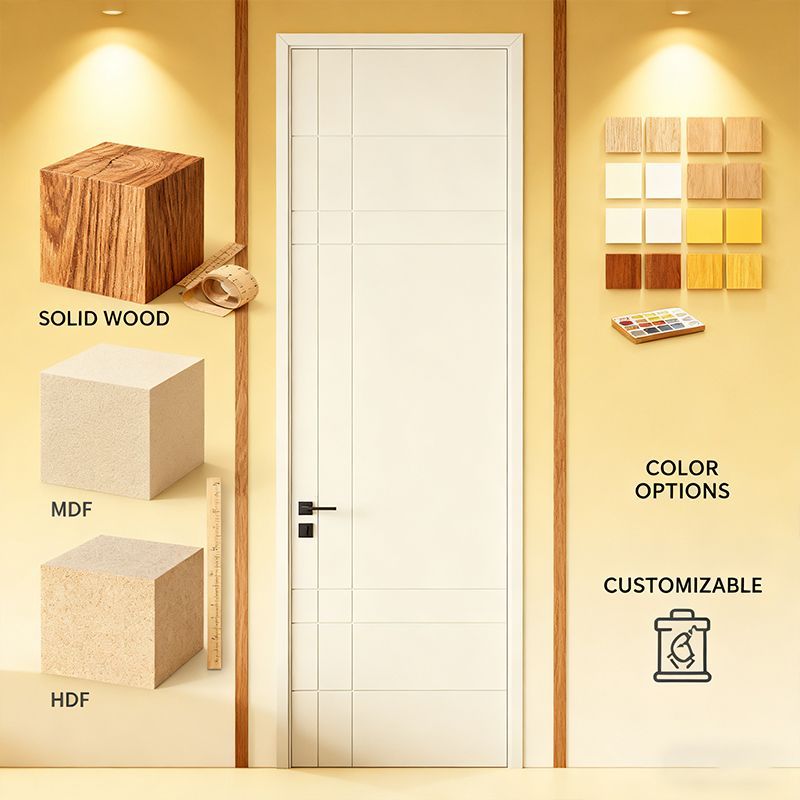
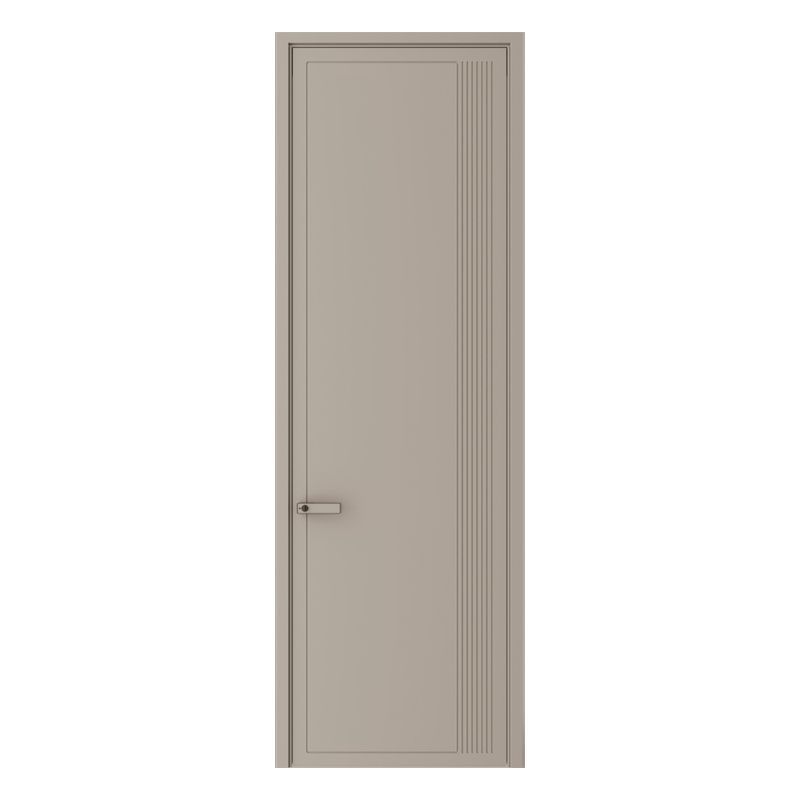
Choosing a flat carving wooden interior door manufacturer can be difficult when product photos look similar but the finished doors differ in moisture stability, carving accuracy, paint quality, and after-sales support. If you are comparing custom flat carved wooden interior doors for a home, hotel, apartment, or commercial project, use the process below to check materials, production capability, compliance documents, samples, pricing, and delivery risk. These steps help you find a reliable supplier, avoid warped panels and color inconsistency, and select a door that fits both the design brief and the installation conditions.

A flat carving wooden interior door normally has a comparatively level door face with recessed, routed, or CNC-carved lines and patterns. The appearance is simple, but the construction still requires accurate panel assembly, controlled timber moisture, stable substrates, precise machining, and a durable finish. Do not judge a manufacturer only by catalog images. Ask how the door is built and how the company controls each production stage.
For an initial comparison, request the following information in writing:
The goal is not to find the lowest quotation. It is to identify a manufacturer that can repeat the same dimensions, color, carving depth, and surface quality across the complete order.
Why: A stable internal structure reduces the risk of twisting, cracking, hollow sounds, and visible joint movement after installation.
For bedrooms and living rooms, a stable engineered core with a real wood veneer can offer more consistent dimensions than a wide, untreated solid timber panel. For high-end villas where natural grain and repairability are priorities, solid wood may be appropriate, but the supplier should state the species, moisture range, joint design, and acclimatization procedure.
According to the Architectural Woodwork Standards published by the Architectural Woodwork Institute, wood products should be evaluated in relation to material, construction, finish, and installation requirements rather than appearance alone. Use this principle when reviewing the manufacturer's technical documents.
Why: Wood exchanges moisture with surrounding air, so unsuitable timber moisture content can contribute to shrinkage, swelling, open joints, and warping.
For humid coastal areas, bathrooms located near the door, or buildings without stable heating and cooling, prioritize moisture-resistant construction, sealed edges, and a documented acclimatization plan. For a dry, climate-controlled apartment, a wider range of engineered wood constructions may be suitable. Interior doors should still be protected from direct water exposure unless they are specifically designed for it.
The United States Environmental Protection Agency regulates composite wood products under the TSCA Title VI formaldehyde emissions rule. If a project is located in the United States, ask whether applicable panels and finished products have the required compliance documentation. For other markets, request the local equivalent rather than using a United States document as universal proof.
Why: Flat carved designs depend on consistent line position, depth, edge sharpness, and coating coverage, especially when several doors are installed in the same corridor.
For modern interiors with repeated geometric patterns, CNC routing is usually suitable because computer-controlled cutting can reproduce a digital design. Manual finishing may still be needed for sanding, filling, staining, and inspection. For hand-carved artwork or intentionally irregular designs, manual carving may be more appropriate, but the quotation should allow for greater variation and a longer approval process.
Ask for finish test information that matches the intended use. The American Wood Protection Association is not a general interior door finish authority, so do not use unrelated wood treatment claims as proof of indoor coating performance. For architectural woodwork, request the applicable finish specification, technical data sheet, and project-specific sample approval.
Why: A decorative interior door may also need documented performance for fire protection, sound control, accessibility, or safe hardware operation.
For a private bedroom in a residence, appearance and dimensional stability may be the main concerns. For a hotel, healthcare facility, school, or apartment corridor, code compliance, smoke control, acoustic privacy, and maintenance requirements may be equally important. Tell the manufacturer the building type before receiving a final recommendation.
NFPA 80, Standard for Fire Doors and Other Opening Protectives, addresses the installation and maintenance of fire door assemblies. It should not be presented as proof that an untested decorative door is fire-rated. Request a listing or certification from a recognized testing and certification body when a rating is required.
Why: A documented sample approval and factory review reveal production risks that cannot be identified from a website or quotation.
A factory visit is most useful when you bring a checklist. Look at the sanding area, coating room, curing conditions, storage racks, moisture measurement practice, and finished goods area. A showroom proves that the company can display a good door. A production inspection helps determine whether it can make the same door repeatedly.
Why: The purchase price is only one part of the installed cost, and an unclear delivery or warranty plan can create expensive site delays.
Do not accept a statement such as "fast delivery" without dates. A useful quotation should state the lead time in calendar or working days after deposit, approved drawings, approved sample, and final quantity confirmation. For example, a supplier may quote 35 working days after all approvals, but the buyer should confirm whether shipping time is included or excluded.
For a small residential order, a supplier with flexible customization and direct communication may provide the best value. For a hotel or apartment project, choose a manufacturer that can manage room schedules, batch control, replacement units, and coordinated delivery by floor or building section.
When reviewing ROI HOME or another supplier, use the same written specification and sample approval process for every candidate. This makes the comparison more objective and prevents a low quote from hiding missing components or weaker materials.
Ask ROI HOME to confirm the following project information before making a decision:
The right supplier is the one that gives clear, verifiable answers and produces a sample that matches the approved specification. Brand reputation can support the decision, but technical evidence should determine whether the door is suitable for the building and climate.
| Evaluation area | Evidence to request | Warning sign |
|---|---|---|
| Construction | Section drawing, material list, thickness, core description, edge detail | Only a product photo with no technical information |
| Wood stability | Moisture records, acclimatization method, timber species and grade | No moisture measurement or unclear timber source |
| Carving quality | Dimensioned drawing, sample, groove depth, corner radius, inspection record | Pattern accepted from a photo with no measured details |
| Finish | Coating data sheet, color sample, gloss specification, batch control method | Claims such as "perfect color" without a tolerance or sample |
| Compliance | Exact test report or certification for the proposed door assembly | Unrelated certificates or a fire claim without a listing |
| Delivery | Milestone schedule, packing specification, shipping responsibility | Only an unsupported promise of immediate delivery |
| After-sales service | Written warranty, response process, replacement terms | Verbal warranty with no defined remedy |
Photography can hide uneven grooves, veneer joints, orange peel, filler marks, and color variation. Always compare a physical sample under neutral lighting.
Solid wood can provide a natural appearance and may be repairable, but it also responds to humidity changes. A well-designed engineered construction may provide more consistent dimensions for a repeated interior door schedule. The correct choice depends on the building environment, appearance target, performance requirements, and maintenance plan.
A high-quality door leaf can still perform poorly if the frame is out of square, seals are missing, hinges are undersized, or the lock preparation is incorrect. Evaluate the complete door set, not just the carved panel.
Custom CNC carving may require drawing review, toolpath preparation, a prototype, and design approval. Include these milestones before the planned installation date.
Replace general descriptions with measurable requirements. Specify the wood species, panel grade, finish system, formaldehyde documentation, coating appearance, allowable dimensions, and inspection method.
Begin with the building conditions and performance requirements, then create a detailed specification. Check the manufacturer's construction drawings, moisture control, material traceability, carving process, coating system, test documents, sample quality, delivery plan, and warranty. Use the same questions for every candidate, and approve a physical sample before mass production.
For a residence, focus on design consistency, stable construction, safe hardware preparation, and easy maintenance. For hospitality, multi-unit housing, and commercial projects, add batch control, acoustic or fire requirements, replacement units, installation coordination, and delivery by schedule. A manufacturer that can document each of these areas is more likely to deliver a flat carved wooden door that performs as expected after installation, not merely one that looks attractive in a catalog.