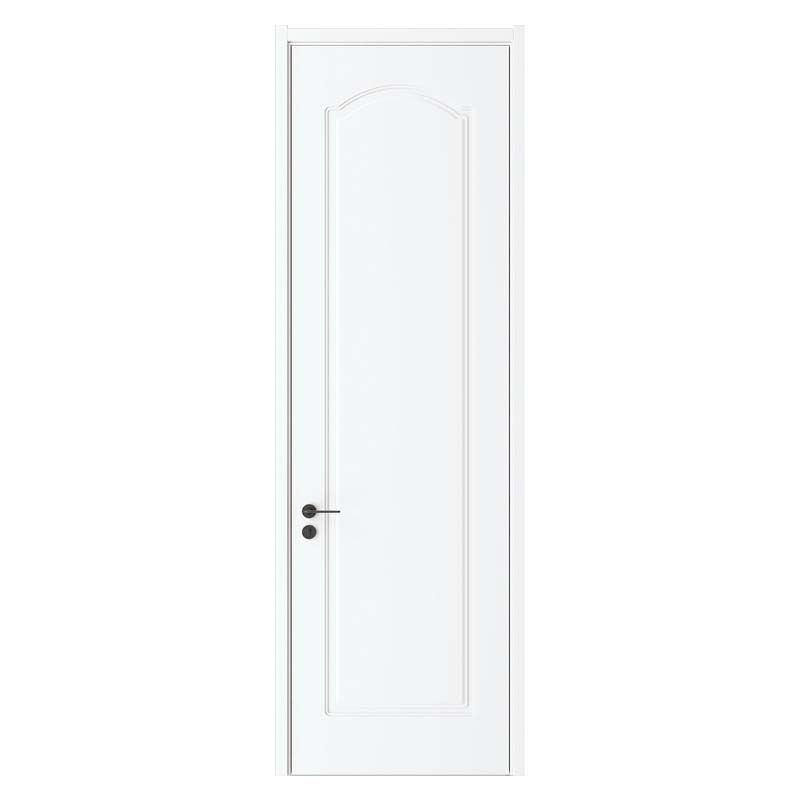
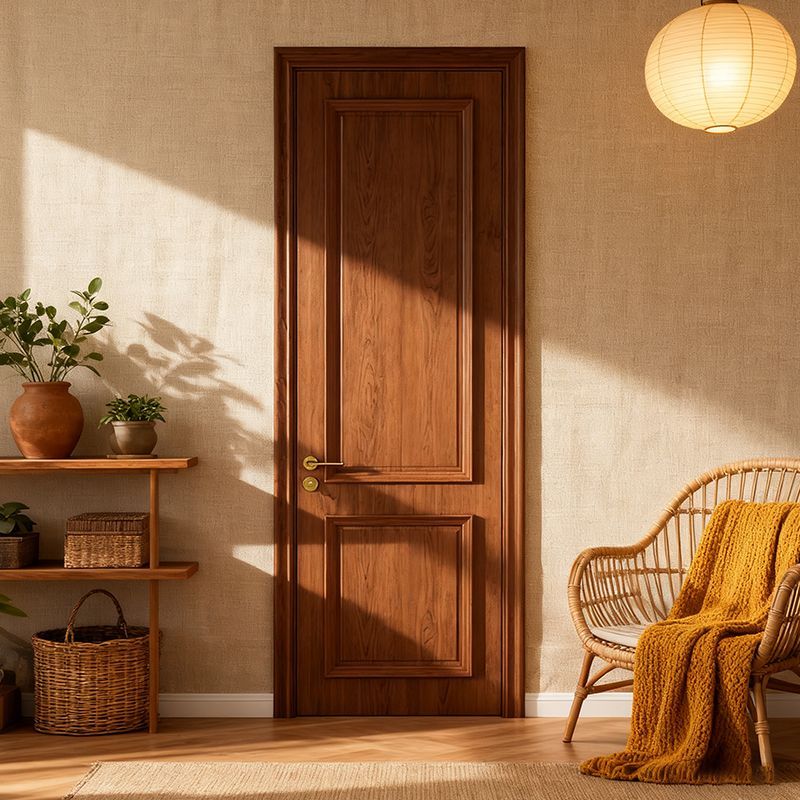
Choosing sustainable wooden interior doors is no longer only an environmental preference. Buyers also need low-VOC wood doors that will not create odor complaints, FSC-certified interior doors with traceable timber, and reliable performance in bedrooms, offices, hotels, and family homes. In this market, engineered wood, recycled content, and life-cycle assessment are becoming selection criteria, while an Environmental Product Declaration (EPD), verified VOC emissions data, and a documented chain of custody help distinguish measurable sustainability from vague claims.

Why Sustainable Wooden Interior Doors Matter in Today’s Market
Interior doors are long-service products, but their environmental impact begins before installation. Timber sourcing, adhesive chemistry, core composition, machining waste, packaging, transport, maintenance, and end-of-life treatment can all affect a project’s carbon and indoor-air profile.
The construction sector’s scale explains why material decisions matter. According to the 2023 Global Status Report for Buildings and Construction from the United Nations Environment Programme and the Global Alliance for Buildings and Construction, buildings and construction accounted for approximately 34% of global energy demand and 37% of energy- and process-related carbon dioxide emissions in 2022. These figures describe the whole sector, not wooden doors alone, but they show why architects, developers, and homeowners are examining products at component level.
Buyers are also facing practical problems. A door may arrive with a strong chemical smell, a veneer may fail after changes in humidity, or a “green” product may provide no documentation for certification or emissions. A responsible flat carving wooden interior door manufacturer addresses these risks through controlled moisture content, documented panel specifications, low-emitting coatings, responsible timber procurement, and quality testing rather than relying on environmental adjectives.
Key Drivers Behind Sustainable Door Manufacturing
Healthier indoor air requirements
Adhesives, coatings, sealants, and composite wood panels can emit formaldehyde and other volatile organic compounds. In the United States, the Environmental Protection Agency’s TSCA Title VI regulation establishes formaldehyde emission standards for hardwood plywood, medium-density fiberboard, and particleboard. The regulation is relevant to door manufacturers that use these composite materials, although compliance with formaldehyde limits does not automatically mean that a complete door has zero VOC emissions.
For a buyer, the useful question is not “Is this door non-toxic?” but “Which finished-product or component test was performed, under which method, and what was the measured result?” Ask for formaldehyde test reports, coating VOC data, and the applicable standard or certification. Products intended for schools, hospitals, hotels, and bedrooms may also need to meet project-specific indoor-air requirements such as California Section 01350-based criteria or an accepted building rating-system standard.
Pressure to prove carbon and resource claims
Many manufacturers now use life-cycle assessment to evaluate raw materials, manufacturing, transport, use, and disposal. An EPD is a standardized disclosure based on life-cycle assessment and is generally prepared according to ISO 14025 and relevant product category rules. It does not automatically mean that a product has a low environmental impact; it means that specified environmental data has been reported in a structured, reviewable format.
This distinction prevents a common purchasing mistake. A door made from “natural wood” may still have a high impact if it uses inefficiently sourced timber, high-emission coatings, excessive packaging, or long-distance transport. Conversely, a well-designed engineered-wood door can use smaller-dimension wood fibers efficiently and provide stable performance. The correct decision depends on the complete product system, not on one material label.
Demand for traceable timber
FSC certification is one recognized way to verify that forest-based materials have passed through a controlled supply chain. The Forest Stewardship Council’s chain-of-custody system tracks certified material through processing and distribution. Buyers should check the manufacturer’s certificate number, product claim, and certificate scope rather than accepting an unverified “FSC wood” statement.
Certification also needs careful interpretation. FSC certification supports responsible forest management and material traceability, but it does not by itself prove that a door has low formaldehyde emissions, minimal transport impact, or superior durability. Those issues require separate evidence.
Five Emerging Sustainable Material Trends in Wooden Interior Door Manufacturing
1. Certified and reclaimed timber for door faces and frames
FSC-certified timber, PEFC-certified timber, and verified reclaimed wood are being used for veneers, solid-wood components, and decorative frames. Reclaimed timber can reduce demand for newly harvested material when its previous use, treatment history, moisture condition, and contaminant risk are documented.
Reclaimed wood is not automatically suitable for every project. Old coatings may contain lead or other hazardous substances, and hidden nails can damage cutting equipment. A responsible supplier should inspect, de-nail, dry, grade, and test the material before it becomes a door component. For high-volume developments, certified new timber may offer more consistent dimensions and predictable availability than reclaimed stock.
Buyer checkpoint: request the timber species, country or region of origin, certification claim, moisture range, and chain-of-custody documentation. A product description that only says “eco wood” is not sufficient evidence.
2. Engineered-wood cores optimized for material efficiency
Medium-density fiberboard, particleboard, laminated veneer lumber, and other engineered-wood products can use wood resources efficiently and provide a stable substrate for veneer or paint. Their sustainability depends on fiber source, resin chemistry, recycled content, manufacturing energy, and emissions performance.
Low-emitting panels are becoming more important in residential and commercial interiors. The California Air Resources Board’s composite wood regulation and the EPA TSCA Title VI rule provide recognized formaldehyde requirements for covered composite wood products in the United States. In Europe, buyers may encounter separate requirements under national building regulations and market-specific emissions schemes.
Engineered wood also helps reduce movement compared with some solid-wood constructions, but it is not immune to moisture damage. Door edges, bottom rails, and cut-outs require proper sealing. A buyer should confirm the core density, screw-holding performance, face material, edge treatment, and recommended humidity range instead of evaluating the panel only by its recycled-content percentage.
3. Bio-based and lower-emission adhesives
Adhesives are a small visible part of a door but a significant technical factor. Manufacturers are testing soy-based, lignin-based, tannin-based, and other partially bio-based adhesive systems, as well as formaldehyde-reduced resin technologies. “Bio-based” describes feedstock origin; it does not automatically describe emissions, water resistance, bond strength, or service life.
The most useful evidence includes resin composition information, formaldehyde test results, bond-strength testing, cyclic humidity testing, and compliance with the intended door standard. A bio-based adhesive that fails under seasonal humidity can create more waste through premature replacement, offsetting part of its material benefit.
For interior doors, the adhesive must withstand repeated opening, closing, temperature changes, and normal cleaning. ROI HOME and other responsible suppliers should be able to explain where the adhesive is used: veneer lamination, edge bonding, core assembly, or decorative inlay. These applications have different performance requirements.
4. Water-based coatings and durable natural finishes
Water-based paints, stains, and lacquers generally contain less solvent than many conventional solvent-based systems, but the actual formulation determines VOC performance. Buyers should request the technical data sheet and measured emissions information rather than assuming that every water-based coating is low-emitting.
Durability is equally important. A coating that needs refinishing after two years may have a larger life-cycle burden than a more durable coating with a slightly higher initial impact. Ask about abrasion resistance, adhesion, stain resistance, cleanability, curing time, and color stability. For doors in hotels, schools, and busy family areas, these properties affect replacement frequency and maintenance costs.
Natural oils and waxes can create a warm appearance, but they also require controlled application and periodic maintenance. They should be evaluated against the project’s cleaning chemicals, humidity, sunlight exposure, and expected touch frequency.
5. Circular design, repairability, and recyclable packaging
Sustainability is moving beyond the material recipe toward the complete service life. Door manufacturers are designing replaceable panels, accessible hardware, separable layers, standardized components, and repairable surfaces. These features can extend use without replacing the entire door leaf.
Material separation is particularly valuable at end of life. A door made from permanently bonded wood, metal, plastic, and composite layers may be difficult to recycle. A design that allows hardware removal and clearer material separation can improve recovery options, although actual recycling depends on local facilities.
Packaging is another measurable area. Buyers can ask for packaging weight per door, recycled fiber percentage, pallet reuse arrangements, and the proportion of packaging that can be recycled locally. These data points are more useful than the phrase “eco-friendly packaging.”
How Sustainable Materials Affect Door Buyers
Cost and total ownership
Sustainable materials can increase the purchase price because certification, testing, traceability, waste control, and lower-emission coatings add manufacturing and administrative costs. The initial price should therefore be compared with expected service life, refinishing needs, warranty coverage, maintenance labor, and replacement risk.
A durable door that remains stable for 15 years may provide a better ownership result than a cheaper door that requires replacement after five years. However, service-life claims should be supported by warranty terms, test methods, and installation conditions. No manufacturer should promise a fixed life span without defining humidity, handling, hardware, and maintenance assumptions.
Indoor comfort and project compliance
Low-emission materials can reduce odor and help projects meet indoor-air requirements, but ventilation, curing time, flooring, cabinetry, wall finishes, and furniture also contribute to indoor air quality. A low-VOC door cannot compensate for high-emitting materials elsewhere in the room.
For a project, create a material schedule that identifies the door leaf, frame, veneer, core, adhesive, coating, edge banding, and hardware. Record the required certificates and test reports for each component. This approach reduces the risk of receiving a product whose marketing claim applies only to one layer.
Appearance and design flexibility
Sustainable manufacturing does not require a plain appearance. Natural veneers, textured surfaces, flat carving, fluted panels, and water-based finishes can support contemporary, minimalist, classic, or hospitality interiors. The key is to match the visual specification with a stable substrate and a repairable finish.
For a flat carving wooden interior door manufacturer, CNC carving depth, veneer direction, panel thickness, coating build, and edge protection should be documented. Deep carving removes material and may affect face stability, while very thin decorative layers can be vulnerable to impact. Ask for a full-size sample or approved control sample before placing a large order.
Practical Buying Checklist for Sustainable Wooden Interior Doors
- Define the use environment. State whether the doors are for bedrooms, bathrooms, hotels, offices, schools, or healthcare spaces. Humidity, cleaning frequency, impact exposure, and fire requirements change the suitable construction.
- Request a complete material schedule. Identify the frame, core, face veneer, edge material, adhesive, primer, topcoat, glass, and hardware.
- Verify timber claims. Ask for FSC or PEFC certificate details, the exact product claim, and chain-of-custody evidence where certified wood is specified.
- Verify emissions data. Request formaldehyde results for composite panels and VOC or indoor-air emissions data for the finished product or coating system. Confirm the test date, laboratory, method, and sample description.
- Ask whether an EPD is available. Review its declared unit, product category rules, manufacturing scope, transport assumptions, and validity period. Do not compare EPD values unless the scopes and units are comparable.
- Check moisture and dimensional controls. Confirm the manufacturer’s target moisture range, acclimatization procedure, storage conditions, and installation tolerances.
- Evaluate durability. Ask for abrasion, adhesion, stain, humidity-cycle, and hardware-cycle test information appropriate to the project.
- Confirm repair and replacement options. Determine whether panels, veneer sections, hinges, locks, and seals can be replaced without discarding the complete door.
- Review packaging and logistics. Compare packaging weight, recycled content, pallet systems, shipping distance, and damage rates. A low-damage delivery process prevents avoidable replacement and waste.
- Approve a physical sample. Inspect color, carving, edge sealing, odor after curing, surface uniformity, and hardware alignment before mass production.
Questions to Ask a Sustainable Door Manufacturer
Questions for a flat carving wooden interior door manufacturer
- What percentage of the door’s wood-based material is solid wood, veneer, fiberboard, or particleboard?
- Is the timber certified, controlled, reclaimed, or a combination of these categories?
- Which formaldehyde standard applies to the core and face materials?
- What are the measured VOC and formaldehyde results for the coating and finished door?
- Does the product have an independently verified EPD or another third-party environmental assessment?
- How is the door protected against edge swelling and seasonal humidity changes?
- Can damaged decorative panels, hinges, seals, and locks be replaced separately?
- What percentage of factory wood waste is reused, recycled, or recovered for energy?
- What quality-control records are supplied with each production batch?
How ROI HOME Can Support a More Transparent Specification
When comparing ROI HOME with other suppliers, buyers should assess the evidence package as carefully as the design. A useful supplier package includes a bill of materials, timber certification information where applicable, panel and adhesive specifications, coating data sheets, emissions reports, installation guidance, packaging details, warranty terms, and a documented quality-control process.
The most reliable workflow is collaborative: define the room conditions, select the core and face materials, approve the finish sample, confirm the required documentation, test a pre-production unit, and then release mass production. This sequence helps prevent late substitutions that can change the door’s emissions, appearance, weight, or environmental declarations.
Conclusion: Choose Evidence-Based Sustainable Door Materials
The strongest sustainable wooden interior door is not simply the one with the most attractive environmental label. It is the product whose timber source, engineered-wood core, adhesive, coating, emissions, durability, packaging, and end-of-life options can be explained with verifiable information. Buyers should compare measured VOC emissions, formaldehyde results, certification scope, EPD boundaries, service-life evidence, and repairability before comparing price alone. Whether the project requires sustainable wooden interior doors, low-VOC wood doors, or FSC-certified interior doors, a capable flat carving wooden interior door manufacturer should provide clear documentation from material selection through delivery. That evidence-based approach gives ROI HOME buyers a practical way to balance indoor comfort, visual design, durability, and environmental responsibility.