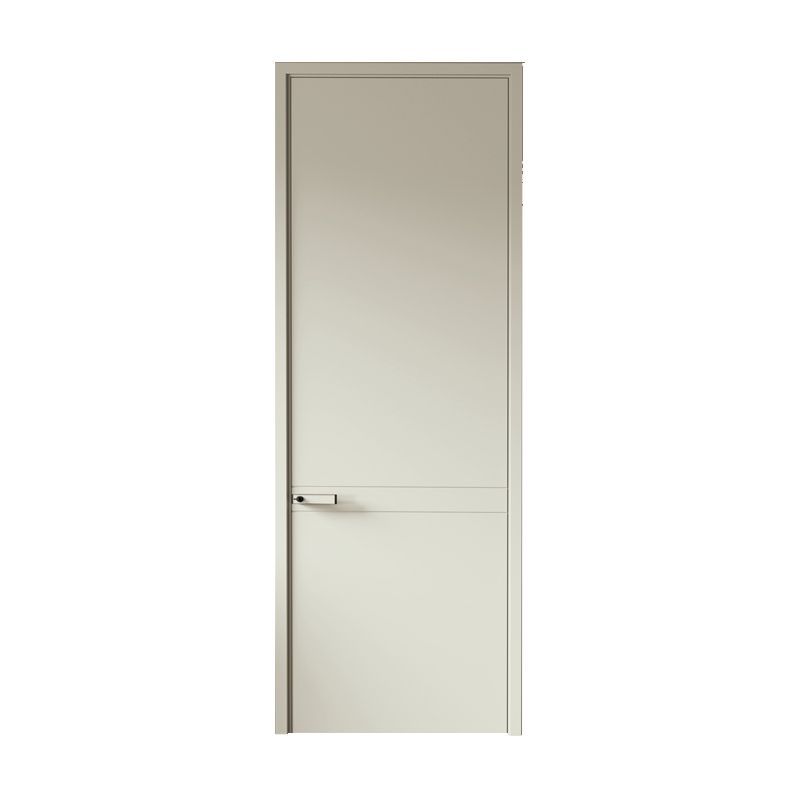
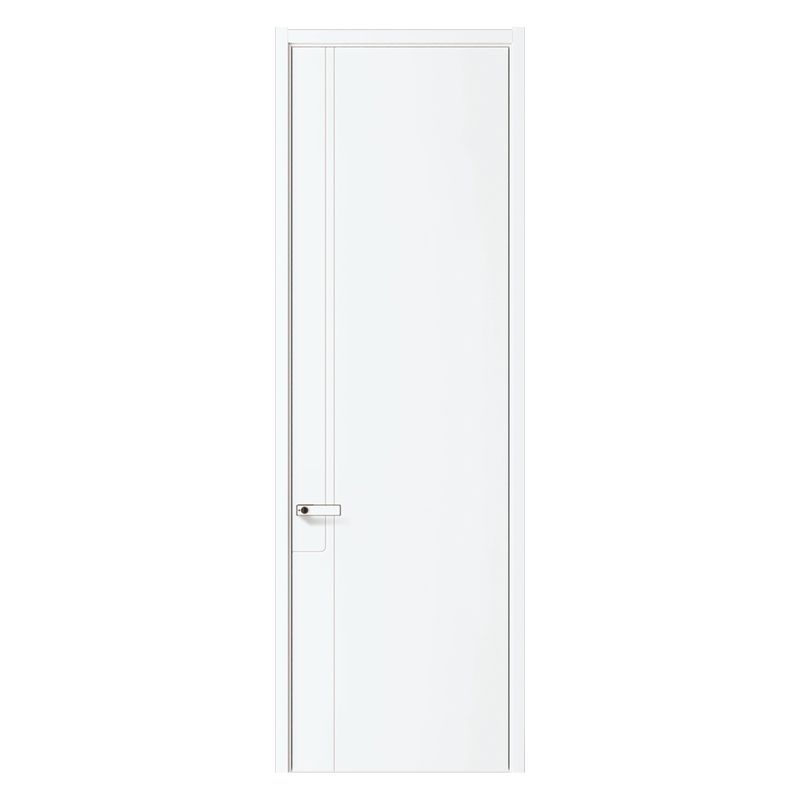
For a flat carving wooden interior door manufacturer, the most important project question is not whether solid wood or engineered wood sounds more premium. The practical question is which door construction provides the right balance of stability, appearance, cost, sound control, installation performance, and long-term maintenance for the building.
ROI HOME helps project buyers compare these two door categories according to real purchasing concerns rather than marketing claims. The comparison below focuses on material structure, performance in daily use, project risks, total cost, and the most suitable user groups.

Start With the Main Difference Between Solid Wood and Engineered Wood Doors
Solid wood doors use natural timber throughout the main door construction
A solid wood interior door is generally made from natural timber boards, glued wood sections, or laminated solid wood components. The material may include oak, ash, walnut, pine, rubberwood, or other species. The appearance depends on the natural grain, knots, color variation, and finishing method.
- Natural wood is used as the primary structural material.
- Grain direction and moisture content influence door movement.
- The surface can be stained, painted, carved, grooved, or clear-coated.
- Weight is usually higher than that of a comparable engineered door.
- Material variation is normal because each piece of timber is different.
Solid wood is often selected when the project requires a premium tactile experience, visible natural grain, traditional craftsmanship, or a strong connection with natural materials. However, it must be properly dried, assembled, sealed, and installed to reduce the risk of warping, shrinking, or joint movement.
Engineered wooden doors combine wood fibers, veneers, cores, and structural layers
Engineered wooden doors are made by combining several wood-based materials. Typical constructions include a solid wood finger-jointed frame, a composite or honeycomb core, a medium-density fiberboard surface, plywood layers, and a natural wood veneer or painted finish.
- Wood fibers and panels are processed into a more controlled structure.
- The core can be optimized for weight, sound reduction, fire performance, or dimensional stability.
- A veneer can provide the appearance of natural timber without using a full solid wood slab.
- Factory production supports consistent dimensions across a large order.
- Different core materials create different performance levels, so the term engineered wood covers many product grades.
Engineered wood is not automatically inferior to solid wood. A well-designed engineered door can be more stable, easier to install, and more consistent in a humid or temperature-changing environment. The final result depends on the core, face material, edge treatment, adhesive, sealing, and manufacturing quality.
Compare the Core Parameters Before Selecting a Door Type
Use the construction table to identify the most important project differences
| Parameter |
Solid wood interior door |
Engineered wooden interior door |
Project meaning |
| Primary material |
Natural timber boards or laminated solid wood |
Wood-based panels, veneer, composite core, or layered construction |
Material structure affects weight, stability, cost, and repairability. |
| Typical weight |
Higher, often about 35 to 70 kg for a standard full-height door |
Lower or moderate, often about 20 to 45 kg depending on the core |
Weight influences hinges, labor, transportation, and frame requirements. |
| Dimensional stability |
Good when properly dried and sealed, but sensitive to moisture and seasonal changes |
Generally more consistent because the layers reduce natural timber movement |
Engineered construction is often safer for large-volume projects. |
| Moisture response |
Can swell, shrink, or warp if moisture enters exposed surfaces or edges |
Usually more resistant to movement, but the core and edge seals still matter |
Neither type should be treated as waterproof without a suitable specification. |
| Surface appearance |
Authentic natural grain, knots, and color variation |
Can use natural veneer, reconstituted veneer, laminate, or paint |
Solid wood provides natural variation; engineered doors provide visual consistency. |
| Sound reduction |
Good because of mass, but performance depends on seals and internal construction |
Can provide very good sound control with a dense acoustic core and proper seals |
Door leaf mass alone does not determine acoustic performance. |
| Fire performance |
Requires tested construction and approved coatings or treatment |
Can be manufactured with tested fire-rated cores and complete door assemblies |
Fire rating must be verified for the complete leaf, frame, seals, and hardware. |
| Surface repair |
Can often be sanded, refinished, or repaired several times |
Minor scratches may be repaired, but thin veneers and laminates have limits |
Solid wood may offer better long-term refinishing potential. |
| Manufacturing consistency |
Natural variation is difficult to eliminate completely |
High consistency is possible when the factory controls materials and dimensions |
Engineered doors are useful when many rooms must have the same appearance. |
| Installation demand |
Requires stronger hinges, careful alignment, and sufficient frame strength |
Usually easier to handle, align, and install |
Lower weight can reduce labor and handling risks. |
| Typical initial cost |
Medium to high, depending on species and craftsmanship |
Low to high, depending on core, veneer, finish, and certification |
Engineered wood offers the widest price range. |
| Environmental considerations |
Depends on timber source, drying efficiency, and responsible forestry |
Can use wood efficiently, but adhesives, coatings, and core materials must be reviewed |
Ask for material declarations and sourcing information when sustainability is important. |
Evaluate the complete door assembly rather than only the door leaf
Purchasers frequently compare the visible door surface but overlook the frame, hinges, lock, seals, finish, and installation method. These components can determine whether a door closes smoothly and remains stable after repeated use.
- Door leaf thickness should match the required acoustic, thermal, and durability performance.
- Frame material should have compatible moisture behavior with the door leaf.
- Hinges should support the actual door weight with a suitable safety margin.
- Locks and latches should be tested for repeated operation.
- Perimeter seals should be continuous and correctly compressed.
- Edges should be sealed, especially in kitchens, bathrooms, and humid regions.
- Finish should cover the face, edges, cutouts, and hardware preparation areas.
A high-quality engineered door with a dense core, stable frame, good seals, and accurate installation can outperform a poorly manufactured solid wood door. Conversely, a carefully dried and expertly finished solid wood door can provide a richer service life than a low-grade engineered product.
Understand the Actual Experience During Daily Use
Solid wood doors feel substantial and provide a premium closing experience
In daily use, solid wood doors usually provide a strong sense of mass. When the hinges and frame are correctly specified, the door closes with a stable, quiet movement and resists minor impacts well.
- The heavier leaf can make the door feel more solid when opened and closed.
- Natural grain and carved details provide a distinctive tactile experience.
- Dense timber can reduce ordinary speech and corridor noise.
- The door may require periodic adjustment if the building experiences moisture changes.
- Heavy leaves place greater demand on hinges, frames, and wall fixing points.
Users often appreciate solid wood in bedrooms, studies, villas, hotels, and premium residential areas. The main negative experience occurs when the door is installed before the building has stabilized or when one side is exposed to significantly different humidity from the other side.
Engineered wooden doors provide predictable operation across repeated installations
Engineered doors are often chosen for apartments, hotels, offices, schools, and other projects with many identical openings. Their controlled construction helps the doors maintain similar dimensions from room to room.
- Lower weight makes opening and closing easier for children, older adults, and frequent users.
- Consistent dimensions simplify frame preparation and installation scheduling.
- Surface finishes can be repeated accurately across a large batch.
- Suitable acoustic cores can reduce room-to-room noise effectively.
- Low-grade cores may feel hollow, transmit impact noise, or show damage around hardware.
There is no battery-life requirement for an ordinary wooden interior door. The equivalent long-term performance concerns are cycle life, hinge stability, latch reliability, finish durability, and resistance to seasonal movement. Buyers should request cycle testing or warranty information when the doors will be used intensively.
Use measurable performance questions instead of relying on product labels
Terms such as premium, solid, luxury, and engineered do not provide enough information for procurement. A useful specification should connect each material claim with a measurable performance requirement.
- Ask for the actual door leaf thickness and weight.
- Confirm the core material and density.
- Request the moisture content range of solid wood components.
- Check whether the frame and edges are fully sealed.
- Ask how many operating cycles the hinges and locks are designed to support.
- Request acoustic or fire test information when those properties are essential.
- Confirm the allowable size tolerance for the door leaf and frame.
- Review the installation and storage requirements before delivery.
Compare the Advantages and Disadvantages of Each Construction
Solid wood doors offer authenticity, strength, and repair potential
Solid wood is appropriate when the visual and tactile character of natural timber is central to the design. It can also be a strong long-term choice when the project has a stable indoor environment and a realistic maintenance plan.
Advantages include:
- Authentic natural wood grain and unique visual variation.
- Strong, substantial feel during daily operation.
- Good impact resistance when the timber and finish are correctly selected.
- Potential for sanding, staining, repainting, and refinishing.
- Strong compatibility with traditional carving and handcrafted details.
- Good perceived value in premium residential and hospitality projects.
Disadvantages include:
- Higher weight and greater handling requirements.
- Greater sensitivity to moisture, temperature, and uneven exposure.
- Higher risk of dimensional movement if timber preparation is poor.
- More variation in color, grain, and surface texture.
- Potentially higher material, shipping, and installation costs.
- Greater demand on hinges, frames, and wall structures.
Engineered wooden doors offer stability, consistency, and procurement flexibility
Engineered construction is often the more practical choice when the project requires hundreds of doors, consistent appearance, controlled cost, or a specific combination of weight and performance.
Advantages include:
- More predictable dimensions in changing indoor conditions.
- Lower or moderate weight for easier transportation and installation.
- Consistent appearance across many rooms and buildings.
- Flexible options for sound control, fire performance, and surface finish.
- Efficient use of wood through layered and composite construction.
- Broad price range for different project budgets.
Disadvantages include:
- Quality varies significantly between cores, veneers, adhesives, and factories.
- Low-grade products may feel less solid or provide weak screw holding.
- Thin veneers and laminates may not tolerate repeated sanding.
- Water damage can affect the core and may be difficult to repair.
- Some products rely on adhesives and coatings that require environmental review.
- The visible appearance may not match the depth and variation of natural solid timber.
Choose the Right Door for Climate, Room, and Project Scale
Solid wood is suitable for stable, design-led, and premium applications
Solid wood is usually a strong option when the project values natural material authenticity more than minimum weight or lowest initial cost.
- High-end residences and private villas.
- Luxury hotels and boutique hospitality spaces.
- Historic, traditional, or craft-focused interiors.
- Libraries, studies, dining rooms, and feature rooms.
- Projects that require deep carving or extensive refinishing.
- Buildings with stable indoor humidity and controlled heating or cooling.
Solid wood should be specified more carefully in coastal areas, tropical climates, seasonal buildings, newly constructed properties, and rooms with uneven heating. In these situations, kiln-dried components, balanced construction, complete sealing, and acclimatization before installation are essential.
Engineered wood is suitable for high-volume, modern, and performance-focused projects
Engineered wood is often the preferred option where repeatability, delivery control, ease of handling, and stable operation are more important than a fully solid timber structure.
- Apartment developments with many identical rooms.
- Hotels and serviced apartments with high door quantities.
- Office buildings, schools, clinics, and public facilities.
- Modern interiors using painted, laminate, or uniform woodgrain finishes.
- Projects with strict weight restrictions or limited installation labor.
- Buildings in regions with changing humidity or temperature.
- Projects requiring tested acoustic or fire-rated door assemblies.
Engineered doors still require careful material selection. A moisture-resistant or high-density core may be necessary for kitchens, laundry rooms, bathrooms, and commercial corridors. The product should be selected according to the room condition rather than only according to its decorative surface.
Use a room-by-room specification when one door type cannot meet every need
Many projects do not need to choose one construction for every opening. A mixed specification can reduce cost while preserving premium features in visible areas.
- Use solid wood for entrance-adjacent feature rooms and premium suites.
- Use engineered doors for bedrooms, offices, service rooms, and repeated standard openings.
- Use dense acoustic cores for bedrooms, meeting rooms, and study areas.
- Use moisture-resistant construction for bathrooms and humid service zones.
- Use tested fire-rated assemblies where regulations require them.
- Use matching veneers, paints, moldings, and hardware to maintain a consistent design.
Control Project Cost Through Total Ownership Value
Compare more than the purchase price
The lowest quotation may not be the lowest project cost. Door procurement should include transportation, storage, installation, hardware, adjustment, repair, replacement, and expected service life.
- Material price per door leaf.
- Frame and architrave cost.
- Hinge, lock, handle, closer, and seal cost.
- Packaging and transportation cost.
- Installation labor and handling equipment.
- Expected adjustment or replacement requirements.
- Cleaning and refinishing requirements.
- Warranty coverage and after-sales response.
Solid wood may cost more initially but can provide long-term value when the finish can be renewed and the door is expected to remain in service for many years. Engineered wood may reduce initial cost and installation effort, particularly in large projects, but the core and surface must be strong enough for the expected traffic level.
Reduce purchasing risk with samples and approval procedures
A small sample is not only a color check. It should be used to examine construction quality and predict installation performance before mass production.
- Approve the wood species, veneer direction, paint color, and carving pattern.
- Measure the sample door leaf thickness and weight.
- Inspect the top, bottom, hinge, and lock edges.
- Check the flatness of the door under normal lighting.
- Operate the sample with the proposed frame, hinges, seals, and lock.
- Check the sound of closing and the smoothness of latch engagement.
- Test the finish for cleaning, light scratches, and normal handling.
- Record acceptable tolerances in the purchase contract.
For large orders, the approved sample should remain the reference for color, grain arrangement, carving depth, edge treatment, hardware preparation, and packaging. This prevents a factory from delivering technically similar but visually inconsistent doors.
Prevent Common Performance Problems Before Installation
Storage and acclimatization protect both door types
Many door problems begin at the job site rather than in the factory. Doors stored in direct sunlight, against damp floors, or in unconditioned spaces can move before installation.
- Store doors flat on level supports with ventilation around the package.
- Keep the products away from rain, condensation, and wet concrete.
- Do not lean large quantities at a sharp angle for extended periods.
- Allow doors to acclimatize to the finished indoor environment before installation.
- Complete wet construction and allow plaster, paint, and flooring moisture to stabilize.
- Protect finished surfaces from dust, impact, and abrasive materials.
Installation accuracy determines stability and service life
Even a stable engineered door can perform poorly if the frame is out of square. Likewise, an excellent solid wood door can become difficult to operate if the hinges are undersized or the opening is not plumb.
- Confirm that the wall opening is plumb, level, and square.
- Install the frame with adequate fixing points and solid support.
- Use hinges rated for the installed door weight.
- Maintain the correct gap around the leaf according to the manufacturer specification.
- Align the latch, strike plate, and seals without excessive pressure.
- Seal exposed edges and any approved site-cut areas.
- Check operation after the building heating or cooling system is running.
- Record final adjustments for future maintenance.
Maintenance requirements are simple but should be scheduled
Neither solid wood nor engineered wood interior doors should be treated as maintenance-free. Routine care helps preserve movement, surface quality, and hardware performance.
- Clean with a soft, slightly damp cloth and a compatible mild cleaner.
- Avoid excessive water on the bottom edge and around hardware cutouts.
- Do not use abrasive pads or strong solvents unless approved for the finish.
- Inspect hinges and screws periodically.
- Lubricate suitable hardware according to the hardware supplier instructions.
- Check that seals have not become compressed, loose, or damaged.
- Repair scratches and exposed edges before moisture reaches the substrate.
- Keep indoor humidity within a stable range whenever possible.
Make the Final Selection Based on the Purchasing Group
Homeowners should prioritize appearance, comfort, and long-term repairability
Homeowners who want a natural, warm, and substantial interior may prefer solid wood, especially for visible feature doors. Engineered wood is often better for buyers who want predictable appearance, manageable weight, easier installation, and a controlled budget.
- Choose solid wood for natural grain, carved details, and a premium tactile feel.
- Choose engineered wood for consistent color, lower weight, and easier replacement.
- Confirm moisture conditions before selecting a solid timber construction.
- Compare hardware and frame specifications, not only the face finish.
Developers and contractors should prioritize repeatability, schedule, and risk control
Large residential and commercial projects usually benefit from engineered doors because consistent dimensions and lower handling weight support faster installation. Solid wood can still be used for entrance areas, upgraded units, model rooms, and premium product packages.
- Use engineered doors for repeated standard openings.
- Set clear requirements for core density, edge sealing, and surface finish.
- Approve a production sample before releasing the full order.
- Coordinate door delivery with building humidity and finishing schedules.
- Keep replacement units from the same production batch when possible.
Architects and interior designers should match construction with design intent
Designers should decide whether the project needs authentic timber variation or a controlled visual language. Natural solid wood highlights material character, while engineered construction supports repeated proportions, uniform color, and more flexible surface treatments.
- Specify solid wood when grain, depth, and craftsmanship are central to the concept.
- Specify veneer-faced engineered doors when consistency and efficient material use are important.
- Specify carved surfaces after confirming the available material thickness and repair method.
- Coordinate door, wall, floor, and furniture finishes under the same lighting conditions.
Facility managers should prioritize stability, repair access, and replacement control
Facility managers need doors that continue to operate smoothly after frequent use. A moderately priced engineered door with strong edges, reliable hardware, and replaceable components can be more practical than a heavy solid wood door in a high-traffic facility.
- Review cycle performance for hinges, locks, and closers.
- Keep spare hardware and matching door leaves available.
- Choose impact-resistant finishes in corridors and public areas.
- Use moisture-resistant specifications in cleaning and service zones.
- Document maintenance procedures for local staff.
Use a Clear Decision Process for the Project
Follow seven steps before placing the order
- Define the room type, traffic level, climate, and indoor humidity conditions.
- Set the required door thickness, height, width, weight, and hardware configuration.
- Decide whether the design needs natural solid timber or a consistent engineered finish.
- Identify performance requirements for sound, fire, moisture, impact, and daily cycles.
- Compare complete door assemblies, including frame, seals, hardware, packaging, and installation.
- Approve a physical sample and record all tolerances and finish requirements.
- Confirm storage, acclimatization, installation, warranty, and after-sales procedures.
Use this practical recommendation when the specifications are similar
Choose solid wood interior doors when the project values authentic natural material, a substantial feel, deep carving, premium appearance, and future refinishing. Accept the additional weight, cost, and moisture-control requirements as part of that choice.
Choose engineered wooden interior doors when the project requires stable dimensions, consistent appearance, efficient installation, controlled budget, or specialized core performance. Pay close attention to construction quality because engineered doors vary widely between manufacturers.
For many projects, the strongest solution is a coordinated combination of both. Use solid wood where the door is a design feature and engineered construction where repeatability, performance, and installation efficiency are more important.
As a flat carving wooden interior door manufacturer, ROI HOME can support project buyers who need to compare natural timber character with engineered stability, provided that the final selection is based on the complete door assembly and the actual conditions of use.