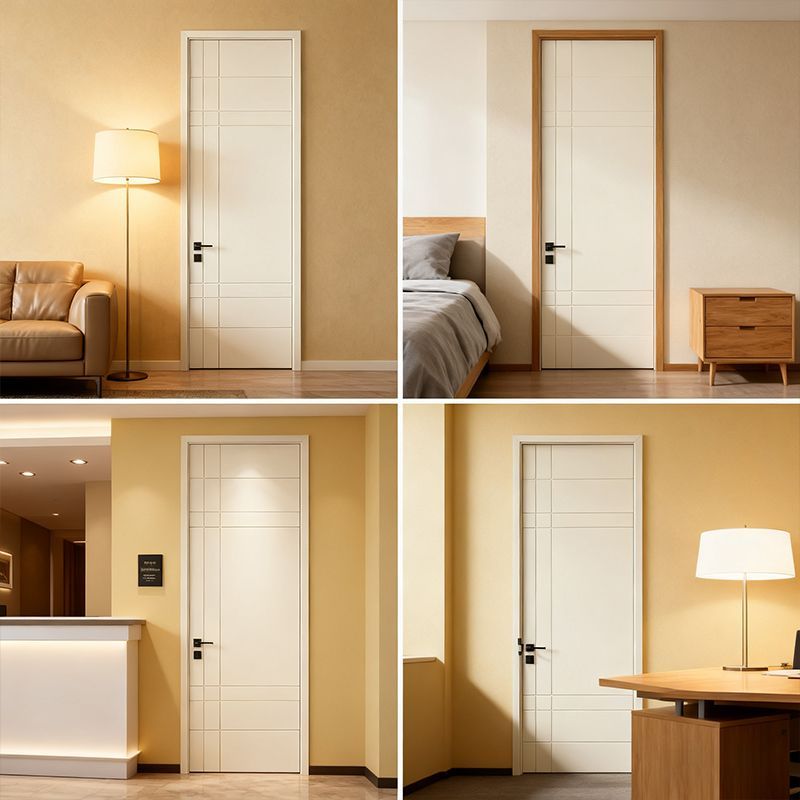
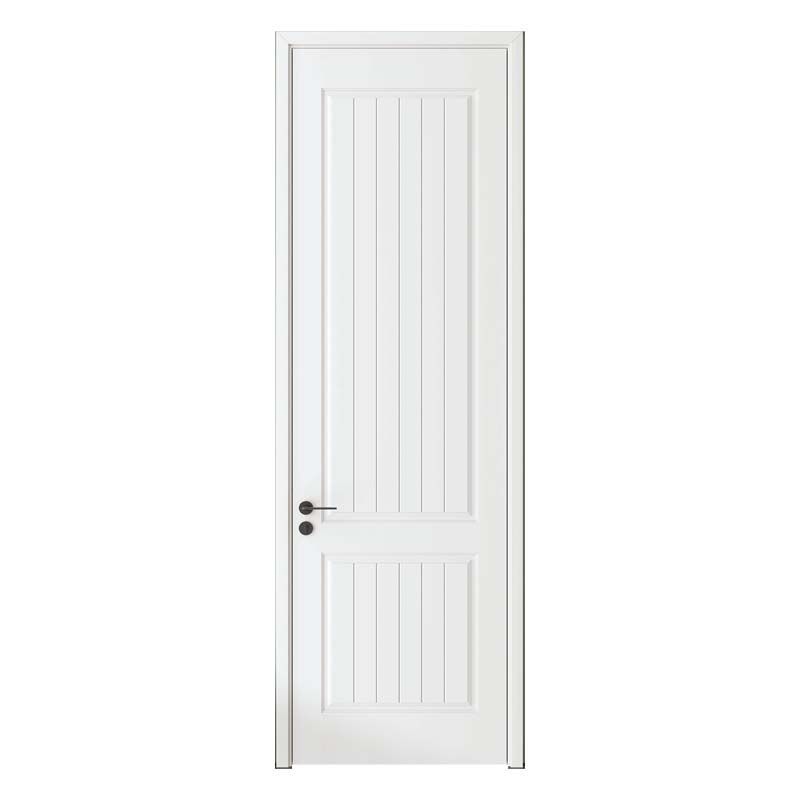
Choosing a door is rarely only a style decision. A homeowner may need a custom carved wooden interior door that fits an irregular opening, a designer may want hand carved wood doors for a home with a specific pattern, and a builder may be comparing a custom solid wood interior door manufacturer with a mass-market supplier. At the same time, solid wood, visible wood grain, and a compatible interior design must work with practical requirements such as joinery, controlled moisture content, and a durable finish system. This evaluation explains where carved doors add measurable value, where they create risk, and how ROI HOME can fit into a responsible specification process.
How a Custom Carved Wooden Interior Door Manufacturer Solves Real Design Problems
Standard interior doors are usually produced in a limited range of widths, heights, profiles, and surface patterns. That works for a regular new-build opening, but it can create complications in older homes, luxury renovations, hotels, and rooms with unusually high ceilings. A custom door can be designed around the actual opening rather than forcing the opening to follow a catalog size.
The first practical step is a site survey. The installer should record the opening width at the top, middle, and bottom; the height on both jamb sides and in the center; the wall thickness; the swing direction; the floor clearance; and the location of hinges and latch hardware. Differences of several millimeters can affect the reveal around the door. A professional survey also identifies whether the wall is plumb and whether the existing frame can carry a heavier leaf.
Carving can then be used to solve more than an appearance problem. A recessed pattern may conceal a transition between veneer panels, while a relief motif can create a visual focal point in a corridor or entrance to a study. For replacement work, the manufacturer can match the door height, arch, panel layout, casing profile, and stain color more closely than a standard retail unit.
Design flexibility from a flat carving wooden interior door manufacturer
Flat carving is produced by removing material from a relatively flat face to create lines, recesses, geometric panels, or shallow relief. It is usually easier to repeat accurately than deep sculptural carving because the design has fewer undercuts and less variation in section thickness. This matters when a project requires several doors with a consistent pattern.
A design brief should define the following before production:
- Overall door dimensions and tolerance requirements.
- Wood species or approved veneer species.
- Carving depth and minimum remaining face thickness.
- Panel layout, edge clearances, and grain direction.
- Finish color, sheen, and sample approval procedure.
- Hardware bore locations and hinge preparation.
- Whether the door is a solid-wood construction, engineered-core construction, or veneered core.
For example, if a carved pattern runs too close to the latch stile, the remaining material may become visually narrow and structurally less desirable. Keeping the deepest grooves away from hinge and latch preparation is a sensible design control, although the final limits should be confirmed by the door maker and hardware supplier.
Measured Advantages of Custom Carved Wooden Interior Doors
Dimensional control from a custom solid wood interior door manufacturer
The most direct advantage is dimensional and visual control. A custom door can be made for a nonstandard opening, a double-door arrangement, a transom, or a coordinated wall panel. This can reduce the need for filler strips and improvised trim, particularly in restoration projects.
That benefit has a measurable basis: an accurately surveyed opening allows the manufacturer to design the door, frame, and clearance as one assembly. Instead of cutting down a standard slab on site, the project can preserve the intended panel proportions and carving alignment. The actual improvement depends on the survey quality and installation accuracy, so a custom label alone does not guarantee a better result.
Visual value from a hand carved wood interior door manufacturer
Carving creates shadow lines that a printed pattern or shallow embossed film cannot reproduce in the same way. Under directional lighting, a recessed groove produces a highlight on one edge and a shadow on the other. The effect changes during the day as the light angle changes, giving a corridor or bedroom entrance more depth without adding separate wall decoration.
Solid wood and natural veneer also provide variation in grain, color, and figure. That variation can make each door visually distinct, but it should be treated as a material characteristic rather than a defect. If a project requires repeated doors to look nearly identical, book-matched or sequence-matched veneer may be more suitable than unrestricted solid timber. The specification should state whether natural variation is accepted.
Repairability and long service potential of carved wooden interior doors
Wooden doors can often be repaired, refinished, or adjusted instead of discarded after a localized scratch or edge impact. A small damaged area may be cleaned, filled, sanded, and recoated if the finish system allows spot repair. A door with replaceable hardware can also receive new hinges, latch components, or handles during a later renovation.
Service life is not a fixed number because it depends on species, construction, humidity, traffic, cleaning, installation, and maintenance. The useful question is not whether a door will last “forever,” but whether the manufacturer provides a construction appropriate for the location and whether the owner can maintain the finish. A protected interior door in a conditioned home faces less exposure than a door near a bathroom, kitchen, laundry room, or unconditioned storage area.
Acoustic and privacy benefits of a carved wood interior door supplier
A heavier, more airtight door assembly can reduce the transmission of voices and other airborne sound compared with a lightweight hollow-core slab. However, the correct performance metric is the tested Sound Transmission Class (STC) or an equivalent laboratory rating for the complete door, frame, seals, and hardware assembly. A carved surface by itself does not establish an STC value.
For a study, bedroom, or meeting room, specify a solid-core or engineered-core door, perimeter seals, an appropriate threshold where permitted, and a tested assembly if acoustic performance is important. A gap beneath the door, an unsealed frame, or a lightweight partition can limit the improvement even when the door leaf is heavy.
Interior air-quality considerations for custom carved wooden doors
Wood products can contribute to indoor emissions through adhesives, coatings, and composite cores. Solid timber is not automatically emission-free, and a water-based coating is not automatically free of all volatile organic compounds. Buyers who are sensitive to odors should request the product’s emissions documentation, coating information, and curing recommendations.
For projects using engineered wood, ask whether the core and adhesives comply with the applicable formaldehyde-emission requirements in the project location. In the United States, applicable composite-wood rules may include the EPA TSCA Title VI framework; other countries use different standards. The manufacturer should provide documentation rather than relying on a general claim such as “eco-friendly.”
Construction Details to Verify with a Flat Carving Wooden Interior Door Manufacturer
Solid wood, engineered core, and veneer choices
“Wooden door” describes several different constructions. A solid-wood leaf is made primarily from timber components. An engineered-core door may use laminated wood, finger-jointed components, or another stabilized wood structure. A veneered door uses a thin real-wood face over a core that may be more dimensionally stable than a wide solid board.
Each construction has a different risk profile:
- Solid wood: offers authentic timber mass and can be refinished, but it responds to changes in humidity and may be heavier.
- Engineered wood: can reduce movement and improve consistency when properly manufactured, but the specification should identify the core rather than using the word “wood” alone.
- Natural veneer: provides real wood appearance with efficient use of the species, but deep carving may be limited by veneer thickness.
- Decorative laminate or foil: can provide repeatable color and pattern, but it does not offer the same repair and material characteristics as real wood.
For deep carving, the face thickness and remaining material must be confirmed. A thin veneer is suitable for shallow routed lines in some designs, but it may not be suitable for a relief pattern that removes several millimeters of material. A shop drawing should show the carving depth and panel construction before the order is approved.
Moisture content and indoor climate control
Wood exchanges moisture with the surrounding air. In a typical heated and cooled interior in parts of North America, wood used for interior work is often conditioned toward approximately 6% to 8% moisture content, but the appropriate range varies by regional climate, building conditions, and the manufacturer’s process. This is why a reputable supplier should not promise that a door will never move.
Problems become more likely when a door is installed in a damp building, placed beside a frequently wet bathroom area, or exposed to rapid seasonal humidity changes. A practical prevention plan includes storing the door flat in a dry, enclosed space, allowing it to acclimate according to the manufacturer’s instructions, finishing all exposed surfaces, and correcting building moisture problems before installation.
Finish systems for carved wood interior doors
Carved recesses collect dust more readily than a smooth slab, so the finish must be selected for cleanability as well as color. Common options include waterborne polyurethane, solvent-borne polyurethane, conversion varnish, hardwax oil, and paint systems. Their hardness, repair method, odor, curing time, and resistance to moisture differ.
A finish sample should be evaluated under the lighting used in the room. The same stain can appear different on oak, walnut, ash, or another species because grain absorption changes the final color. The sample should also include a carved section, since recesses can hold more pigment and appear darker than flat areas.
Ask the manufacturer to clarify whether the stated curing time means “dry to touch,” “ready for handling,” or “fully cured.” Those are different stages. A door may be handleable before the coating reaches its final chemical resistance. Cleaning instructions should specify approved products and whether abrasive pads, ammonia-based cleaners, or excessive water are prohibited.
Disadvantages and Risks of Custom Carved Wooden Interior Doors
Higher purchase and installation cost from a custom carved door manufacturer
Custom carving adds design preparation, material selection, machining or handwork, sanding, finishing, inspection, packaging, and sometimes a physical sample. The total price is therefore usually higher than a plain stock hollow-core slab. A reliable cost comparison must include the door leaf, frame, casing, hardware preparation, delivery, installation, finishing, and possible wall modification.
There is no universal percentage that applies to every project. A shallow repeated groove in a common species may cost far less than a one-off deep relief in figured walnut with a matched frame. Requesting an itemized quotation is more useful than relying on a claim that custom work is simply “expensive.”
Longer lead time and approval stages
Custom doors generally require more decisions before production. The sequence may include design drawings, dimension confirmation, wood selection, carving samples, finish samples, hardware coordination, production, quality inspection, and delivery. A change after carving or finishing can require substantial rework.
To reduce delay, approve one complete sample that shows the pattern, edge profile, species, stain, sheen, and carving depth. Keep a written revision record. The contract should identify the approved dimensions, acceptable natural variation, packaging method, delivery responsibility, and what happens if the delivered door does not match the approved drawing.
Weight, sag, and hardware requirements
A solid wood door can be significantly heavier than a hollow-core door. As an illustration, a 900 mm by 2,040 mm by 40 mm leaf has a volume of approximately 0.073 cubic meters. At an illustrative wood density of 500 to 700 kilograms per cubic meter, the timber mass alone is roughly 37 to 51 kilograms, before adding carving variations, rails, stiles, finish, and hardware. Actual weight depends on construction and species.
That mass affects hinges, screws, frame anchoring, and installation technique. A manufacturer or installer should confirm the hinge quantity and load rating, but adding hinges without adequate jamb reinforcement does not solve every problem. If an existing frame was designed for a lightweight door, replacement or reinforcement may be necessary.
Humidity movement, cracking, and operational changes
Wood can expand, contract, cup, twist, or develop small finish cracks as moisture conditions change. Carving creates changes in section thickness, and deep or sharply detailed patterns may make movement more visible. A well-built door reduces risk through appropriate timber selection, stable construction, balanced finishing, and correct installation, but it cannot eliminate the natural response of wood to its environment.
Do not install a valuable carved door before plaster, flooring, paint, and wet construction work have dried sufficiently. Maintain indoor humidity within a stable range appropriate to the local climate and building. If a door begins rubbing, first check humidity, hinge alignment, frame movement, and floor settlement before aggressively trimming the leaf.
Cleaning and accessibility concerns
Deep grooves and relief details require more cleaning time than a flat painted door. Dust can be removed with a soft brush or vacuum attachment, followed by a lightly damp cloth if allowed by the finish manufacturer. Saturating the carved recesses with water can damage some coatings and encourage swelling at unsealed end grain.
Highly textured doors may also be less suitable where users need an easily sanitized surface, such as certain commercial, healthcare, or food-service settings. In those locations, consult the project’s infection-control, accessibility, fire, and cleaning requirements before selecting an elaborate carving pattern.
Fire, Safety, and Code Checks for Custom Wooden Interior Doors
A decorative interior door is not automatically a fire-rated door. If the door separates a garage, dwelling unit, corridor, stair enclosure, mechanical room, or other regulated area, the required rating depends on the building code, wall assembly, occupancy, and jurisdiction.
Fire-rated performance applies to a tested and labeled assembly that may include the leaf, frame, hinges, latch, closer, seals, glazing, and installation method. Field carving, drilling, trimming, or replacing components can invalidate the rating. Never modify a labeled fire door without written approval from the responsible manufacturer or an appropriately qualified professional.
Safety checks should also cover glass, pinch points, door closer force, egress direction, lever-handle operation, and accessibility clearances where applicable. A beautiful carving pattern cannot compensate for a door that blocks an escape route or requires excessive operating force.
How to Buy from a Custom Carved Wooden Interior Door Manufacturer
Step one: define the application
Record the room, traffic level, exposure to moisture, privacy requirement, acoustic goal, fire requirement, opening size, swing direction, and expected cleaning routine. A bedroom door, a hotel corridor door, and a bathroom door should not automatically use the same construction.
Step two: compare construction rather than marketing labels
Ask for the core description, face material, thickness, rail and stile construction, panel method, carving depth, finish type, moisture-content process, and hardware preparation. If a supplier only describes the product as “premium solid wood,” request a construction drawing and material schedule.
Step three: request technical samples
A useful sample includes the actual species, carving profile, edge detail, stain, topcoat, and sheen. Inspect it from one meter away and at close range. Look for torn grain, fuzzy edges, uneven stain absorption, finish pooling in recesses, open joints, and mismatch between the drawing and the physical pattern.
Step four: verify dimensions and installation responsibility
Confirm who measures the opening, who supplies the frame, who drills for hardware, who installs the door, and who handles site adjustments. Ask for the allowed dimensional tolerance and the recommended clearance at the head, jambs, and floor. These values depend on the construction and local practice, so they should come from the project’s installer rather than an assumed universal number.
Step five: review warranty and maintenance terms
Find out whether the warranty covers finish failure, joint opening, warping, hardware preparation, shipping damage, and installation-related problems. Check exclusions for humidity, direct water contact, unauthorized trimming, improper storage, and unsuitable cleaning chemicals. Keep the approved drawings and finish sample with the purchase records.
When ROI HOME Custom Carved Wooden Interior Doors Are Worth Considering
ROI HOME is most relevant when the project places a high value on coordinated design, made-to-measure dimensions, carved detailing, and a documented production process. The decision should still be based on the confirmed construction, finish sample, installation plan, and code requirements rather than the brand name alone.
Custom carved doors are usually a rational choice when the opening is nonstandard, the interior has a strong architectural theme, several doors need coordinated motifs, or the owner expects to keep and maintain the doors for many years. They are less compelling when the budget is tightly controlled, the room has high moisture exposure, the pattern will rarely be visible, or a low-maintenance flat door meets the functional requirement.
A simple value test can help. List the added cost of customization, then identify the concrete benefits: reduced site modification, a required design match, improved perceived quality, compatible acoustic construction, or a replacement solution for an unusual opening. If the benefits cannot be described in project terms, a standard or semi-custom door may provide better value.
Final Recommendation for Custom Carved Wooden Interior Doors
Custom carved wooden interior doors reward buyers who plan carefully. They can provide accurate sizing, real material character, repairable finishes, and a distinctive architectural feature, but they also bring higher cost, heavier hardware demands, humidity sensitivity, cleaning work, and possible code restrictions. Homeowners should prioritize a measured opening and stable indoor climate; designers should approve a full-size or representative sample; builders should coordinate the frame, hinges, seals, and finish; and commercial buyers should verify fire, acoustic, sanitation, and accessibility documentation.
Before placing an order, compare the construction drawings, moisture-control plan, finish sample, warranty, lead-time schedule, and installation responsibilities. For a custom carved wooden interior door, hand carved wood doors for a home, or a custom solid wood interior door manufacturer, the best result comes from matching solid wood, wood grain, and interior design with disciplined joinery, controlled moisture content, and a documented finish system. That approach makes the purchase easier to justify and gives ROI HOME or any qualified supplier a clear technical brief to follow.