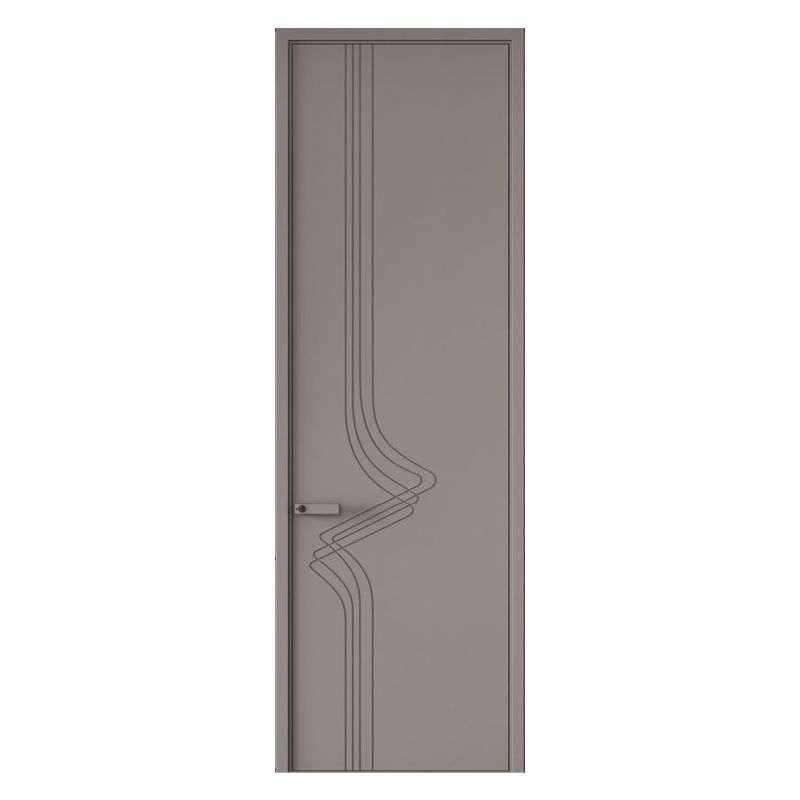
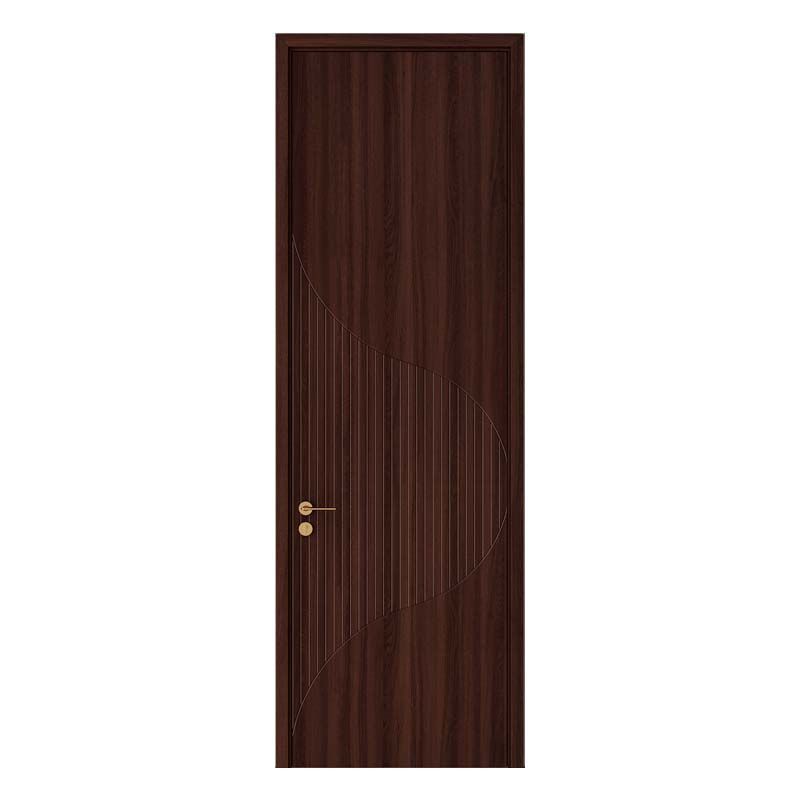
Choosing between a melamine door and a laminate door requires more than comparing surface appearance. For importers, distributors, contractors, and project procurement teams, the right choice depends on the decorative surface, core material, edge sealing, expected use, budget, and required performance.
Melamine doors are commonly selected for residential and commercial projects because of their decorative finish, easy maintenance, and cost-efficient production. Laminate doors can refer to doors finished with different laminate materials, including high-pressure laminate (HPL) or continuous-pressure laminate (CPL). Since product structures vary by manufacturer, buyers should compare the actual specifications rather than assume that every laminate door has the same performance.
ROI HOME manufactures customized melamine interior doors for residential, hospitality, apartment, and commercial projects. This guide explains the differences between melamine doors and laminate doors and the details to confirm before placing a bulk order.
A melamine door is an engineered wooden door finished with a decorative surface made using melamine resin-impregnated paper. The surface is applied to a suitable substrate to create a consistent color, wood-grain pattern, or decorative appearance.
Depending on the model, the door may use an engineered wood core or another specified internal structure. Surface performance and overall durability depend on the substrate, decorative layer, manufacturing process, and edge treatment.
Common reasons to choose melamine interior doors include:
Decorative consistency: Available wood-grain patterns, solid colors, and other finishes help maintain a coordinated appearance across multiple rooms.
Easy maintenance: The finished surface can generally be cleaned with suitable mild cleaning products.
Project cost control: Melamine doors can be a practical option for apartment developments, hotels, offices, and other bulk applications.
Repeatable production: Standardized surface selections help simplify color coordination and batch production.
Customization: Door dimensions, core construction, panel design, and hardware preparation can be specified according to available product options.
Explore the ROI HOME melamine door range for product information and customization options.
A laminate door is a door finished with a decorative laminate surface. The term can describe different surface materials and manufacturing methods, so it is important to confirm which laminate is being offered.
HPL (High-Pressure Laminate): A decorative laminate produced under high pressure. Its performance depends on the specific product grade, thickness, installation, and supporting substrate.
CPL (Continuous-Pressure Laminate): A laminate produced through a continuous manufacturing process. Its properties and intended applications depend on the selected product.
Other decorative laminates: Suppliers may use the term laminate for different decorative surface systems. Buyers should request the exact material description rather than relying on the general product name.
Laminate doors may be specified for residential or commercial interiors where the required appearance, surface durability, cleaning conditions, and project budget justify the selected finish.
Before ordering a laminate door, confirm the laminate type, thickness, substrate, adhesive or bonding system where relevant, edge treatment, and available test documentation. These details provide a more reliable basis for comparison than the word “laminate” alone.
| Comparison Factor | Melamine Door | Laminate Door |
|---|---|---|
| Surface material | Decorative melamine resin-impregnated paper surface | Depends on the laminate type, such as HPL or CPL |
| Appearance | Commonly available in solid colors, wood grains, and decorative finishes | Depends on the laminate collection, textures, patterns, and colors |
| Scratch resistance | Depends on the surface grade and construction | Depends on the laminate grade, thickness, and test results |
| Moisture resistance | Depends on the core, edge sealing, joints, and exposure conditions | Depends on the laminate, substrate, bonding, edge sealing, and exposure conditions |
| Maintenance | Generally straightforward with suitable cleaning products | Generally straightforward when cleaned according to the surface manufacturer's instructions |
| Cost | Depends on the door structure, surface, size, and order quantity | Depends on the laminate type, thickness, substrate, fabrication, and order quantity |
| Best selection approach | Evaluate decorative options, project budget, and required performance | Evaluate the specified laminate grade, surface performance, and total door cost |
Neither type is automatically superior in every application. A well-specified melamine door may suit a project better than a more expensive laminate option, while a tested laminate surface may be preferable when the project has specific wear or cleaning requirements.
For buyers sourcing interior doors in bulk, surface appearance is only one part of product performance. The door must also suit its intended environment and maintenance conditions.
For hotels, apartment buildings, offices, and other high-use spaces, compare the actual scratch and abrasion performance of the proposed surface. Ask suppliers for relevant test methods, results, and product identification where these requirements are important.
Do not assume that all HPL surfaces outperform all melamine surfaces, or that every melamine door offers the same wear resistance. The substrate, surface grade, production quality, and edge construction all matter.
Moisture resistance depends on the complete door assembly, not just its decorative face. Water can enter through exposed edges, damaged finishes, joints, or poorly sealed areas and affect the substrate.
Specify moisture-resistant core materials when required by the application.
Confirm edge sealing and joint construction.
Identify whether the door will be exposed to occasional humidity, frequent cleaning, or direct water contact.
Request evidence of the required moisture-resistance performance for the selected configuration.
Neither melamine nor laminate finishes should automatically be treated as waterproof. For bathrooms or humid environments, confirm that the entire door construction is suitable for the intended exposure.
| Project Type | What to Consider | Selection Guidance |
|---|---|---|
| Apartments and residential developments | Budget, repeatable colors, standard dimensions, batch consistency | Melamine doors may be suitable when the available finish and performance meet the project specification. |
| Hotels and hospitality projects | Frequent use, cleaning, appearance consistency, acoustic or fire requirements | Compare the tested surface and complete door assembly against the hotel's operational and compliance requirements. |
| Offices and commercial buildings | Wear, maintenance, decorative finish, hardware compatibility | Choose according to expected traffic and documented surface performance. |
| Premium residential interiors | Design details, texture, color, finish quality | Compare the available melamine and laminate designs with the intended interior scheme. |
| Cost-sensitive bulk orders | Total landed cost, quantity, production schedule, packaging | Compare complete quotations rather than surface material prices alone. |
For projects that prioritize a smooth painted appearance or customized paint colors, consider ROI HOME painted wooden doors as another option.
The cost of a melamine door or laminate door depends on more than the surface material. A meaningful quotation should account for the complete door configuration and the requirements of the order.
Core construction: Different internal structures and material grades affect the total product cost.
Door dimensions: Non-standard sizes, thicknesses, and special configurations may affect material usage and processing.
Surface specification: Laminate type, surface thickness, texture, color, and decorative requirements influence the quotation.
Edge treatment: Edge banding, sealing, and finishing requirements affect fabrication and performance.
Hardware: Hinges, locks, machining, and other accessories should be included or excluded clearly in the quotation.
Order quantity: Volume, product variety, and the number of customized configurations can affect production planning and unit pricing.
Packaging and shipping: Export packaging, loading arrangements, freight, and destination costs contribute to the total landed cost.
When comparing suppliers, request quotations based on equivalent dimensions, core materials, surface specifications, hardware, packaging, and order quantities. This helps prevent an apparently cheaper product from becoming more expensive after missing items are added.
ROI HOME manufactures melamine interior doors for residential, hospitality, apartment, and commercial applications. Our product range supports customized door solutions for distributors, contractors, developers, and interior door brands.
Available customization depends on the selected model and project specification. Buyers can discuss door dimensions, core construction, decorative finishes, panel design, edge treatment, and hardware preparation with our team.
Explore our melamine door product range to review available options. For other door styles and configurations, visit our wooden door product collection.