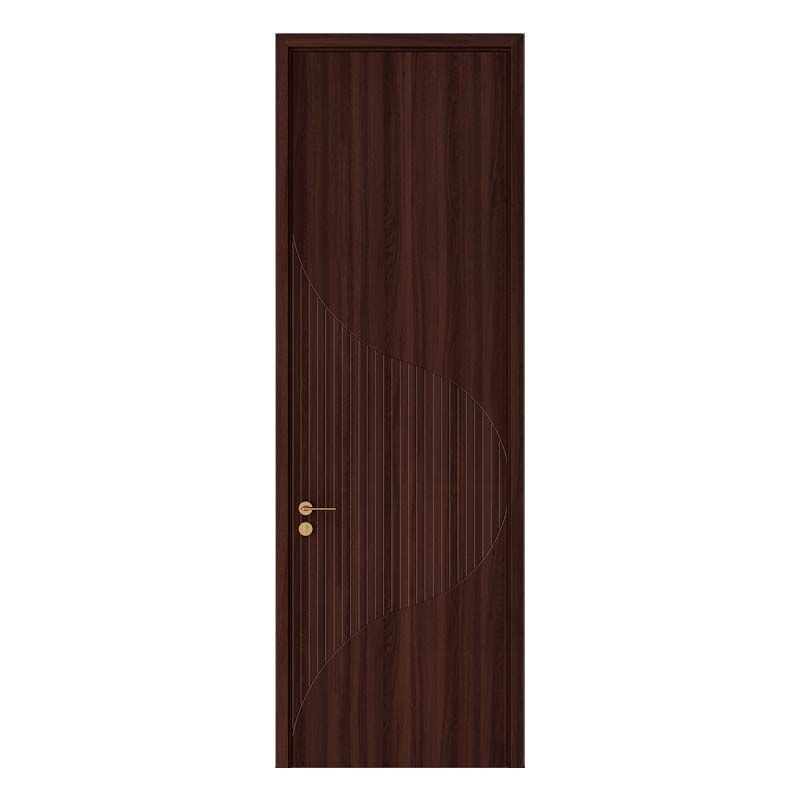
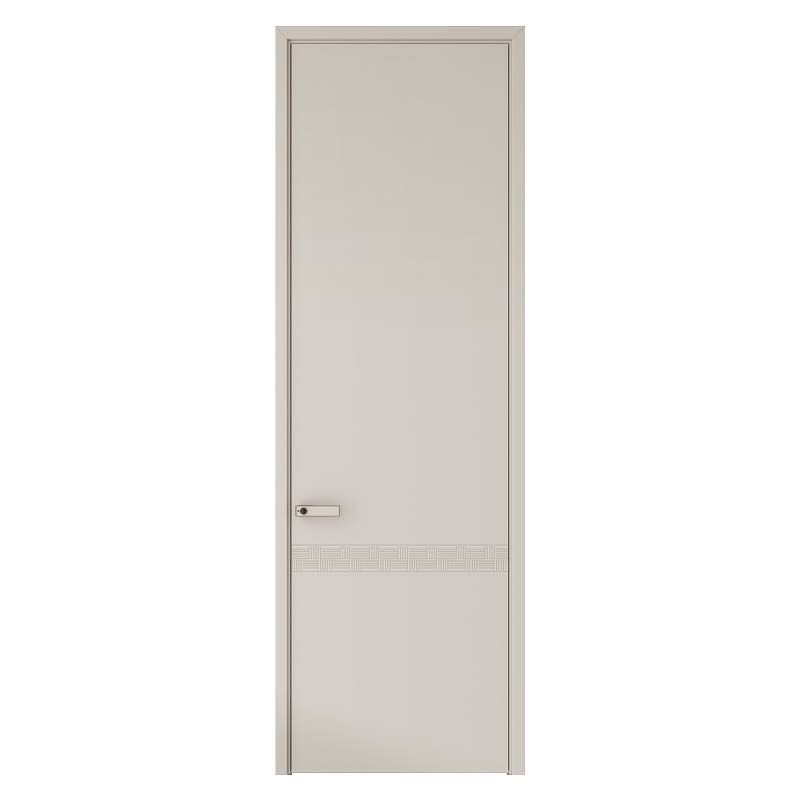
Customizing a flat carving pattern should not require guesswork, repeated revisions, or costly production delays. At ROI HOME, we use a practical workflow—brief definition, scaled artwork, CNC-ready engineering, sample approval, finishing, and inspection—to help buyers create distinctive wooden interior doors with consistent dimensions, controlled costs, and reliable installation results.
!
Flat carving is a shallow relief process applied to a flush door leaf or solid wood panel. Unlike deep hand carving, it uses controlled grooves, recessed lines, geometric forms, or low-relief motifs to create a clean architectural appearance.
For developers, hospitality projects, distributors, and residential manufacturers, the right design must satisfy more than visual expectations. It should also support:
A professional flat carving wooden interior door manufacturer will therefore evaluate the artwork, substrate, machining depth, edge distance, finish system, and packaging requirements before production begins.
Before drawing the pattern, we first identify how and where the door will be used. A bedroom door, hotel bathroom door, wardrobe door, and office partition door may require different materials and construction methods.
Prepare the following information:
Door dimensions
Door construction
Operating conditions
Hardware layout
This stage prevents a common mistake: placing a carving line where a hinge, lock mortise, or trimming allowance will later interfere.
| Item | Example Specification |
|---|---|
| Door leaf size | 2100 × 900 × 40 mm |
| Pattern type | Vertical linear relief |
| Carving depth | 1.5–3.0 mm |
| Minimum line width | 3–5 mm, depending on material |
| Edge safety zone | 80–100 mm from hardware or trimming areas |
| Finish | Open-pore oak veneer with matte lacquer |
| Inspection | 100% visual and dimensional inspection |
The final values should be confirmed through material testing and the manufacturer’s process capability. A skilled flat carving wooden interior door manufacturer should provide a technical drawing before mass production.
A pattern may look attractive on a screen but fail during routing, sanding, painting, or installation. For this reason, we divide the artwork into manufacturing-friendly categories.
The best patterns have clear line spacing, smooth transitions, and enough material around every carved area. Extremely narrow channels can chip, collect finish, or become visually inconsistent after sanding.
When preparing the artwork, we recommend:
A 0.01 mm coordinate resolution may be used in CAD or CNC file preparation, but that does not mean wood will remain accurate to 0.01 mm under changing humidity. We treat this figure as digital machining resolution, while practical finished-door tolerances must be established according to the substrate and project specification.
The same flat carving pattern will produce different results in solid oak, walnut veneer, MDF, and HDF. Material selection affects edge quality, machining stability, grain appearance, coating absorption, and long-term movement.
| Material | Advantages | Main Risk | Suitable Pattern |
|---|---|---|---|
| Solid oak | Strong grain and premium appearance | Seasonal movement and tear-out | Medium-depth linear or organic designs |
| Walnut | Rich color and luxury appearance | Higher material cost | Simple, spacious relief patterns |
| Veneered engineered wood | Better dimensional stability | Veneer breakthrough if carving is too deep | Shallow geometric patterns |
| MDF | Uniform machining surface | Moisture sensitivity and edge damage | Painted flat carving |
| HDF | Dense, smooth surface | Higher cutting resistance | Fine repetitive grooves |
For interior projects, moisture content should be verified before machining. ASTM D4442 can be referenced for moisture-content testing, while ASTM D1037 is commonly used for evaluating selected properties of wood-based panels. For European projects, the specification may also require alignment with relevant DIN door and wood-product requirements, such as DIN 68706-1 where applicable.
These standards should be included in the project quality plan rather than treated as automatic proof of compliance. We always recommend confirming the required standard, test method, and acceptance criteria with the importer, architect, or local authority.
Once the pattern is approved visually, the artwork must be engineered for machining. This is where a reliable flat carving wooden interior door manufacturer adds practical value.
Our CNC preparation process should include:
The following values are starting points rather than universal rules:
The CNC operator should confirm spindle speed, feed rate, step-down, cutter geometry, and grain direction. Incorrect settings can create chatter marks, burning, fuzzy edges, or inconsistent groove depth.
A screen image cannot show how light will interact with a carved surface. A physical sample is essential because it reveals:
For a hotel, apartment, or export order, we recommend approving a sample at the final scale or at least a representative section measuring approximately 300 × 300 mm.
The approval document should record:
Do not begin mass production from an unmarked image file. A signed or digitally approved shop drawing reduces disputes between the buyer, designer, and factory.
Flat carving patterns are strongly affected by surface preparation. A shallow groove may disappear under excessive primer, while a deep groove may appear too dark after staining.
A painted MDF or HDF door provides strong pattern consistency. The process normally includes:
For oak, walnut, ash, or other veneers, the finish should preserve grain continuity. The carving direction should be coordinated with the veneer layout to reduce visual interruption.
Open-pore systems enhance the contrast between the carved recess and the surrounding face. However, uneven sanding or excessive stain absorption can create dark patches. A test panel is necessary before approving the final color.
Where a project requires coating performance, specify the applicable test protocol, such as adhesion, abrasion, chemical resistance, or humidity exposure. ASTM-based testing may be included in the inspection plan, but the exact standard must match the coating system and market requirement.
Quality control should not be limited to the final visual check. We recommend checkpoints throughout production.
For commercial orders, the inspection report may include dimensional readings with a target resolution of 0.01 mm for digital instruments, while the acceptance tolerance is set according to the approved drawing. This distinction is important: instrument resolution and product tolerance are not the same.
Packaging should protect both the face and carved recesses. Use corner protection, moisture-resistant wrapping, separators between finished leaves, and shock-resistant outer cartons or export crates.
A dark stain or thick coating can reduce the visual separation between the flat surface and the recessed lines.
Solution: Test the complete finish on the same substrate and use controlled coating thickness. Adjust groove depth or color contrast only after reviewing the sample under the intended lighting.
Tear-out is common when the tool direction conflicts with wood grain or when the cutter is dull.
Solution:
Wood is hygroscopic and responds to humidity. A beautifully carved door can still fail to install if its moisture content or construction is unstable.
Solution: Use an engineered core where appropriate, balance the face and back construction, control factory humidity, and allow the product to acclimatize before installation. Include a flatness tolerance in the purchase specification.
A decorative line may cross a lock mortise or terminate too close to a hinge.
Solution: Overlay the carving drawing with the hardware drawing before CNC programming. Maintain a defined hardware clearance zone and approve the complete shop drawing.
Natural wood and veneer vary in grain, porosity, and tone.
Solution: Approve a color range rather than a single digital color value. Group doors by batch, use the same coating formula, and inspect them under standardized lighting.
A customized door design creates value only when it can be produced repeatedly and installed without rework. ROI HOME approaches flat carving as a coordinated design-and-manufacturing process rather than a decorative afterthought.
We help buyers reduce avoidable costs by:
For distributors and contractors, these controls can reduce rejected panels, on-site trimming, installation delays, and customer complaints. For architects and developers, they make it easier to preserve a consistent design language across bedrooms, corridors, offices, and public spaces.
A clear toolchain improves both speed and accuracy. We recommend preparing:
A simple file-naming system also prevents errors:
For example:
This makes it easier for the designer, buyer, CNC operator, and quality inspector to work from the same technical information.
Before placing a production order, confirm the following:
The most reliable method for How to Customize Flat Carving Patterns for Wooden Interior Doors is to control the process from the first design brief through final inspection. Start with the application, select a stable material, prepare a manufacturable pattern, approve a physical sample, and document every tolerance and finish requirement.
As an experienced flat carving wooden interior door manufacturer, ROI HOME can help transform a concept into a repeatable production specification. Share your door dimensions, reference artwork, material preference, carving depth, finish, quantity, and destination market so we can evaluate the design and prepare the next technical step within a clear project workflow. With the right preparation, How to Customize Flat Carving Patterns for Wooden Interior Doors becomes a measurable process that supports better quality, faster installation, and stronger long-term ROI.