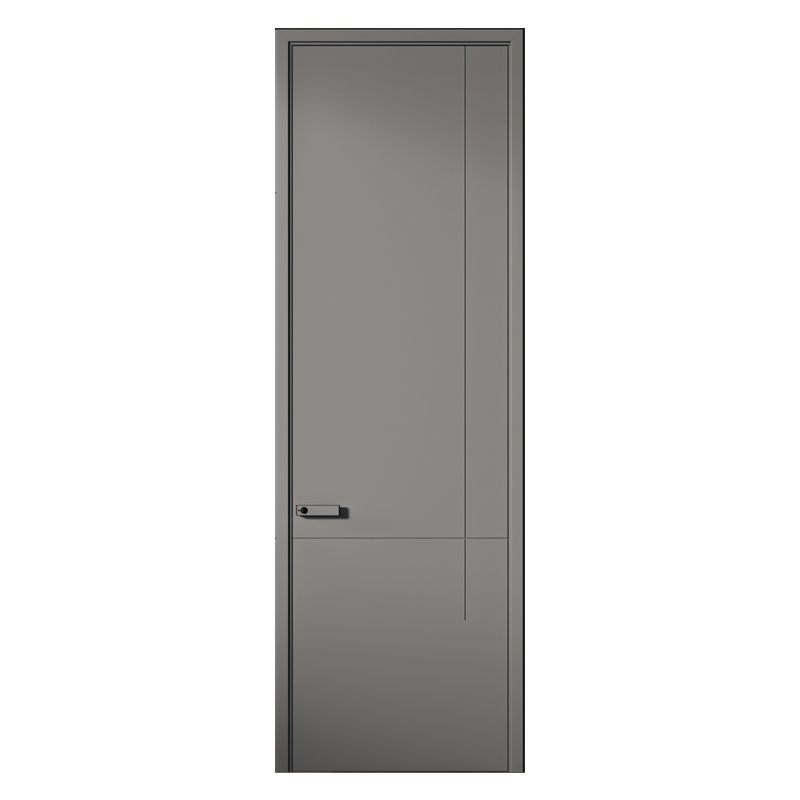
Choosing between flat panel wooden doors and Shaker style interior doors is not only a style decision. The right door must also match the room layout, wall color, furniture, privacy needs, cleaning habits, budget, and installation conditions. A reliable flat carving wooden interior door manufacturer, such as ROI HOME, can help buyers compare construction quality, finish options, stability, and long term value before placing an order.

Flat panel wooden doors have a smooth central face with few or no decorative grooves. The design emphasizes clean lines, continuous color, and a visually quiet surface. Depending on the construction, the door may use solid wood, engineered wood, a wood veneer, or a painted composite core.
Shaker style interior doors normally have a flat center panel surrounded by a simple four-piece frame. The recessed panel creates a small shadow line, giving the door more depth without the heavy ornamentation found on traditional raised-panel doors.
In practice, the difference is easy to see but not always easy to evaluate. A flat panel door usually disappears into a modern wall scheme, while a Shaker door adds a visible architectural pattern. Therefore, buyers should compare both appearance and performance rather than choosing only from a catalog image.
The surface style does not automatically determine quality. A poorly made Shaker door can warp, split, or show uneven joints, while a well-built flat panel door can remain stable for many years. Buyers should ask about the core, frame, veneer, edge treatment, finish, and hardware preparation.
| Parameter | Flat panel wooden doors | Shaker style interior doors | What buyers should check |
|---|---|---|---|
| Surface design | Flat and visually continuous | Recessed panel with a surrounding frame | Confirm whether the panel is solid, veneered, or molded |
| Style flexibility | Strong fit for modern and minimalist rooms | Works well in traditional, transitional, and modern rooms | Compare the door with baseboards, cabinets, and wall trim |
| Typical visual weight | Light and understated | More defined and decorative | Use flat panels in small spaces and Shaker panels for added character |
| Cleaning effort | Low because the face is mostly smooth | Moderate because dust can collect along the recessed panel | Inspect the depth and corner shape of the panel |
| Construction stability | Often stable when the slab and edge structure are properly engineered | Depends heavily on frame joints and panel movement allowance | Ask about moisture control, joint construction, and acclimation |
| Sound control | Depends mainly on door thickness and core density | Depends mainly on door thickness and core density | Request core type, thickness, and acoustic test information if needed |
| Repair visibility | Minor scratches may be easier to touch up on a uniform surface | Damage may be more noticeable at frame joints and panel edges | Request matching touch-up products and finish samples |
| Price range | Often economical, especially with simple slab construction | Can cost more because of the frame and recessed panel details | Compare the complete door set, not only the door leaf |
A style name does not provide enough information for a purchase decision. The same flat panel or Shaker design can be produced as a lightweight hollow-core door, a solid-core engineered door, or a premium solid wood door. These options can feel completely different during daily use.
During daily use, the smooth face of a flat panel door is simple to wipe and less likely to collect dust. This is useful in kitchens, hallways, children's rooms, and rental properties where frequent cleaning is expected. The uninterrupted surface can also make narrow spaces look less visually crowded.
The main practical concern is that a large plain surface can show dents, fingerprints, or uneven paint more clearly than a patterned door. A dark finish may emphasize dust and scratches, while a very light finish may reveal marks around the handle. Choosing a durable finish and suitable color can reduce this problem.
Shaker doors create a stronger sense of structure. The frame can coordinate with kitchen cabinets, wall trim, and built-in storage, which helps a home feel intentional and connected. Many buyers also prefer Shaker doors because the design remains attractive when furniture and decor change.
On the other hand, the recessed panel and inside corners can collect dust. Painted joints may also become more visible if the wood expands and contracts. Regular wiping is simple, but owners should inspect the panel edges and frame joints during seasonal changes.
Neither style has a guaranteed advantage in every climate. Wood and wood-based materials respond to changes in humidity. A door that is installed before it has acclimated, or placed in a damp area without proper sealing, may develop sticking, gaps, or movement.
Flat panel doors are a practical choice for homeowners who prefer modern lines, limited decoration, and a low-maintenance surface. They work particularly well when the door should blend with the wall rather than become a focal point.
Shaker doors are suitable for homeowners who want a door to contribute to the room's design. They are especially effective when the property already includes framed cabinets, wood trim, paneled walls, or transitional furniture.
Many purchasing problems happen because buyers compare the price of a door leaf with the price of a complete installed door set. A complete quotation should identify every component and service clearly.
Online images can make two products look similar even when their surface texture, sheen, panel depth, and edge detail are different. Before confirming production, request a physical sample or a detailed drawing that shows the door face, edge, frame, panel profile, and color under natural and artificial light.
The most common concern is that a door looks attractive at delivery but becomes difficult to close after installation. This risk is related to material quality, moisture exposure, inaccurate installation, and insufficient acclimation. Buyers should prioritize manufacturers that explain their material structure and installation requirements rather than making only style claims.
Wood veneer naturally varies in grain and tone, while painted doors can vary between production batches. A professional supplier should explain the acceptable range of natural variation and provide a finish sample for approval. For a multi-door project, buyers should also ask whether all doors will be produced from the same batch or matched according to an approved standard.
Bedroom, bathroom, and home office doors often need more privacy than a lightweight hollow-core product can offer. The buyer should ask about the actual core, door thickness, perimeter gaps, seals, and installation quality. A Shaker face does not automatically provide better sound control than a flat panel face.
Maintenance is easier when the finish system, cleaning method, and touch-up process are explained before purchase. Buyers should avoid harsh chemicals, excessive water, and abrasive pads. They should also confirm whether replacement doors, matching trim, and repair products will remain available in the future.
Flat panel doors are the stronger choice when the project needs a clean appearance, low visual noise, straightforward cleaning, and controlled cost. They are particularly effective in contemporary homes where the door should support the interior design without competing with furniture, lighting, or artwork.
Shaker doors are the stronger choice when the project needs a recognizable design detail, a connection with cabinetry, and a style that can move between classic and modern settings. They add more presence to hallways and shared living areas while remaining less formal than ornate panel doors.
If sound privacy, heavy daily use, or climate stability is the primary concern, compare the construction specifications before selecting the face design. A well-built flat panel door may outperform a poorly built Shaker door, and a well-built Shaker door may outperform a lightweight flat door.
There is no universal winner because the best option depends on the home's design language and the buyer's daily priorities. Flat panel doors provide a quieter, cleaner, and often more economical appearance. Shaker doors provide more depth, stronger traditional appeal, and better coordination with framed interior elements.
Before purchasing, compare the complete specifications, not only the photograph. Review the door core, thickness, surface material, edge sealing, finish durability, frame construction, hardware preparation, installation method, warranty, and maintenance instructions. This approach reduces the risk of choosing a beautiful door that does not perform well in the intended room.
For buyers who want professional guidance, consistent production, and customizable interior door solutions, ROI HOME can help evaluate the appropriate finish, panel profile, construction, and room application. A dependable flat carving wooden interior door manufacturer should make the comparison clear from the first sample to the final installation, allowing each customer to choose with confidence.