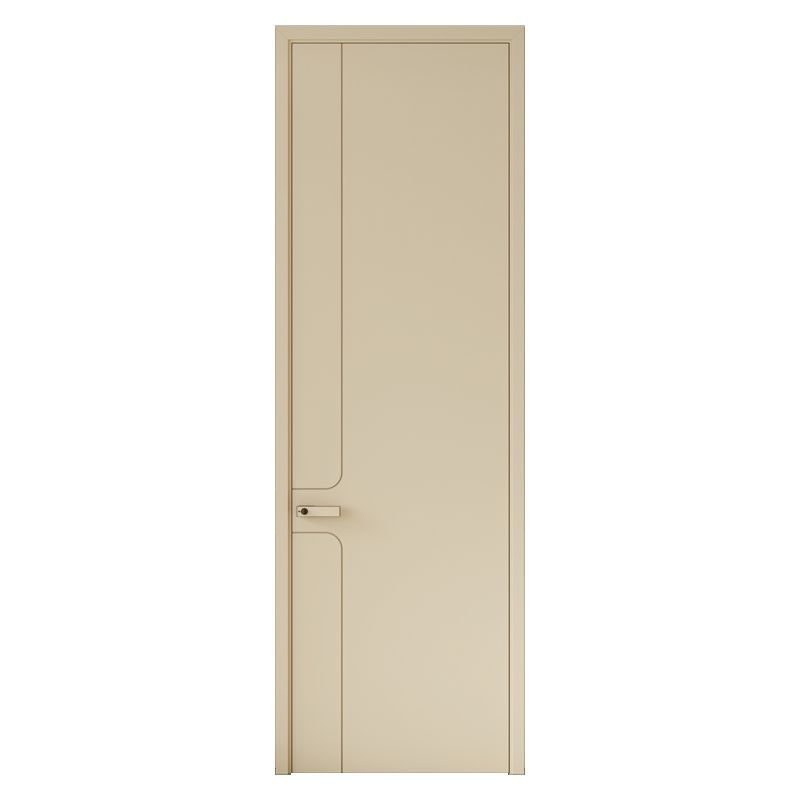
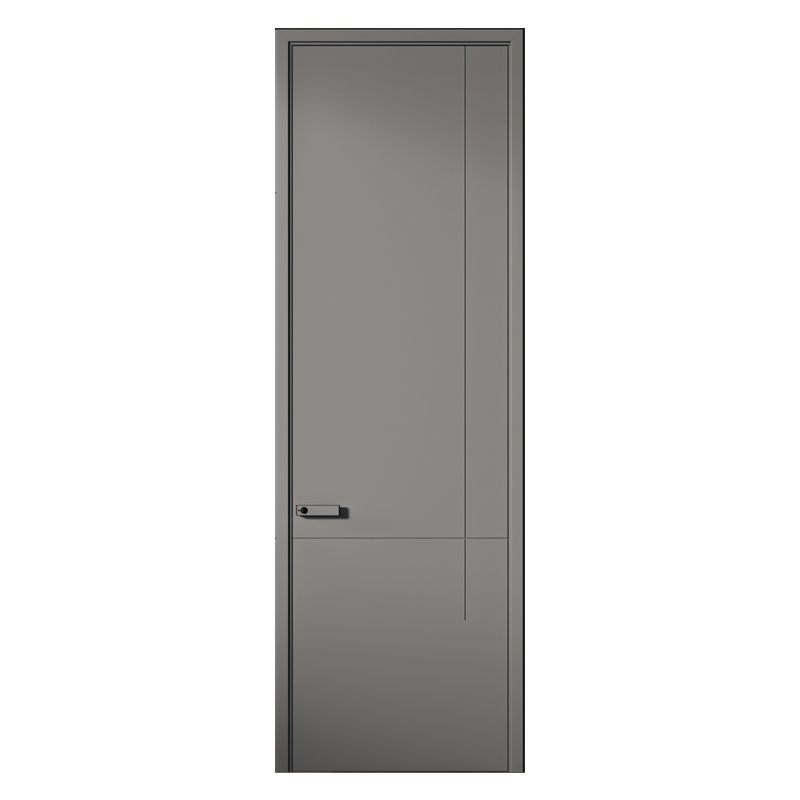
Choosing between flat carving wooden interior doors for modern homes and plain flat panel doors for minimalist interiors is not simply a style decision. Homeowners also ask about cleaning, sound transmission, warping, installation cost, and long-term resale value. This comparison examines custom carved wood interior doors, solid-core flush doors, and the best interior door manufacturer for custom carved wood doors through measurable factors such as CNC relief carving, veneer construction, and acoustic STC rating. The goal is practical: help you choose a door that fits the room, budget, climate, and maintenance expectations rather than choosing only from a showroom photograph.

A plain door often appears to be the safer purchase because its surface is visually quiet and easy to wipe. However, a flat carved door can solve a different problem: a large uninterrupted wall may need a focal point, especially in an open-plan entryway, boutique hotel, luxury apartment, or dining room. The decision becomes clearer when the door is treated as a building component rather than a decorative panel.
Flat carving usually means that a pattern is recessed, raised, or routed into a wood face. With a professional CNC relief carving process, the same pattern can be reproduced across multiple doors with dimensional consistency commonly within approximately 0.5–1.0 mm, depending on the design and material. A plain flat panel door, by contrast, uses a smooth face made from veneer, MDF, plywood, or laminate over a hollow-core or solid-core structure.
The construction behind the surface matters more than the pattern itself. A solid-core interior door may weigh approximately 30–45 kg in a common 2,100 mm × 900 mm size, while a hollow-core door of similar dimensions may weigh approximately 15–25 kg. The heavier core generally provides better impact resistance and sound reduction, but it also requires stronger hinges, accurate frame alignment, and more careful installation.
ROI HOME is worth including in the comparison because it offers both decorative carved options and restrained flat-panel designs. That gives a homeowner the opportunity to compare the same finish family, frame color, and hardware preparation instead of comparing unrelated products from different suppliers.
| Parameter | Flat Carving Wooden Interior Door | Plain Flat Panel Door | Practical Meaning |
|---|---|---|---|
| Typical face construction | Veneer, engineered wood, or solid timber with routed or relief-carved details | Painted MDF, laminate, veneer, or smooth engineered-wood face | Carving adds visual depth; the panel material still determines stability. |
| Typical thickness | 35–45 mm | 30–45 mm | Thicker leaves generally accommodate stronger locks and better acoustic cores. |
| Approximate weight | 30–45 kg for a solid-core leaf, depending on pattern and size | 15–45 kg depending on hollow-core or solid-core construction | Check hinge capacity before ordering a heavy carved leaf. |
| Sound reduction | Approximately STC 28–36 for many solid-core configurations | Approximately STC 20–36, depending mainly on the core | The core, perimeter seals, and installation matter more than whether the face is carved. |
| Cleaning | Flat areas wipe easily, but deep grooves may collect dust | Usually faster to wipe and less likely to trap debris | Plain panels suit homes where daily cleaning time is limited. |
| Visual impact | High; creates shadow lines and a focal feature | Low to moderate; supports a clean architectural background | Use carving where the door is intended to be noticed. |
| Customization | High; patterns, depth, veneer direction, and stain can be specified | Moderate; customization usually focuses on color, size, and hardware | Carving is useful when a project requires a coordinated design language. |
| Typical lead time | Approximately 4–10 weeks after approved drawings and deposit | Approximately 2–8 weeks, depending on stock and finish | Confirm production time before scheduling flooring, painting, or moving. |
| Relative door-only price | Often 20%–70% higher than a comparable plain door | Usually the lower-cost option for the same size and core | Hardware, frame, freight, tax, and installation can change the final total. |
These figures are planning ranges rather than universal certifications. If sound control is a priority, request a tested door assembly and ask whether the stated STC value includes the frame, seals, threshold, and wall junction. A door leaf advertised as “soundproof” without an assembly test should be treated cautiously.
Imagine a 3.2-meter-wide corridor with three bedroom doors. Three plain white leaves may disappear into the wall, which can be desirable in a minimalist scheme. A carved walnut-toned door at the end of the corridor creates a visual destination and can separate a dining room, study, or home office without adding artwork to the wall.
Carving is also helpful in hospitality and premium residential projects where repeated doors need a recognizable identity. A geometric pattern can be aligned with wall slats, cabinetry, or a headboard. For this application, the manufacturer should provide a drawing showing the pattern’s relationship to the handle, lock, door edges, and adjacent frame. A design that looks balanced on a full panel can appear crowded after a 150 mm-wide lock stile is introduced.
Plain doors are often the more rational choice for bedrooms, laundry rooms, storage rooms, and rental units. Their smooth face reduces dust accumulation and makes localized repainting easier. If a property manager needs to replace one damaged door, a standard flat panel is also more likely to be available quickly and at a predictable price.
For a compact apartment, plain panels can make several rooms feel visually connected. This is particularly useful when the hallway is narrow or receives limited daylight. A light-colored flush door with concealed or low-profile hardware can reduce visual interruption without requiring an expensive wall system.
In coastal or humid regions, neither carving nor a flat face automatically prevents movement. The important controls are engineered construction, balanced face layers, sealed edges, correct moisture conditioning, and indoor humidity management. A practical indoor target is often 40%–60% relative humidity, although the local building environment should guide the final specification.
For bathrooms and laundry areas, confirm that the product is rated for the expected humidity and that the bottom edge receives complete sealing. Do not assume that an interior wood door is suitable for direct water exposure simply because it has a durable topcoat.
Door price comparisons become misleading when one quote includes a frame, hinges, lock preparation, packaging, and delivery while another covers only the slab. A more reliable calculation separates the project into six parts: door leaf, frame, hardware, finish, freight, and installation.
| Cost Component | Plain Flat Panel | Flat Carving | What Changes the Price |
|---|---|---|---|
| Door leaf | Base reference | Often 1.2–1.7 times the comparable plain leaf | Carving depth, pattern complexity, timber species, veneer grade, and core |
| Frame and architrave | Usually standard | May require matching veneer or additional finishing | Frame width, concealed hinges, custom profiles, and wall thickness |
| Hardware | Standard hinges are often adequate | Heavy-duty hinges may be needed for heavier leaves | Door weight, pivot system, lock type, and hardware finish |
| Installation | Generally faster when the opening is standard | More time may be needed for alignment and protection of the carved face | Site conditions, opening tolerance, and installer experience |
| Maintenance | Lower routine cleaning time | More careful dusting and occasional coating inspection | Groove depth, finish sheen, household traffic, and cleaning method |
For a project with ten doors, a 30% premium on carved leaves can become substantial. Yet the premium may be justified if only one or two doors are carved as feature pieces while the remaining rooms use plain panels. This mixed strategy often produces a stronger interior design result than installing decorative doors everywhere.
In a customer installation report shared during a residential renovation consultation, a homeowner named Maria was replacing eight hollow-core doors in a 118-square-meter apartment. Her initial plan was to use one plain white model throughout because the quoted leaf price was lower. During the design review, she selected one carved wood door for the study and six plain doors for the bedrooms, bathroom, and storage rooms, while keeping a second carved door for the living-room entrance.
The final arrangement addressed two separate needs. The plain doors kept the hallway visually calm and reduced the number of surfaces requiring detailed cleaning. The two carved doors created focal points at the rooms guests were most likely to see. According to the project’s installation notes, the heavier feature doors required upgraded hinges and additional alignment time, but the mixed order avoided paying the carved-door premium for all eight openings.
Maria’s practical complaint was not about appearance; it was about sound from the study. The original hollow-core door allowed conversation and keyboard noise to pass easily. Replacing it with a solid-core door and perimeter seals improved privacy noticeably, although the installer explained that the adjacent lightweight partition wall remained a transmission path. This is an important lesson: a decorative face cannot compensate for a weak core, open undercut, or poorly sealed frame.
A second customer account came from a rental-property owner who chose plain flat panels for twelve rooms. The owner reported that cleaning and repainting between tenants were faster because there were no recessed grooves. The trade-off was that the doors looked generic, so the owner used upgraded handles and a contrasting frame color to create visual distinction at a lower cost than custom carving.
Homeowner feedback tends to divide along use rather than taste. Buyers who chose carved doors commonly mention the depth of the pattern, the warmth of real veneer, and the way changing daylight produces shadow lines across the surface. Their recurring concerns are dust in the grooves, the need to protect corners during moving, and the difficulty of matching a replacement door if the original stain is discontinued.
People who prefer plain panels usually praise three points: quick cleaning, easy coordination with furniture, and lower replacement risk. Their complaints are different. A very smooth painted face can show fingerprints, scuffs, or roller marks more clearly, and a low-cost hollow-core model may feel light or transmit more sound than expected.
The most useful word-of-mouth advice is to judge the complete assembly. Ask to see the door edge, hinge reinforcement, frame joint, seal, and lock preparation—not only the front surface. A sample corner photographed under side lighting can also reveal whether the finish fills the carving evenly or leaves visible pooling in the recesses.
This option suits homeowners who want a distinctive interior without increasing the budget across the entire house. Use carving at the study, living-room entrance, master suite, or main hallway, and use plain panels in service areas. ROI HOME is particularly relevant when matching finishes, frames, and door proportions across both styles is important.
Choose this option when the objective is visual continuity, easy maintenance, and controlled cost. Specify a solid core where privacy matters, a durable paint or laminate where traffic is high, and quality perimeter seals where sound transfer is a concern.
This is appropriate when the door design is part of the brand identity or architectural concept. Before approving production, request a full-size drawing, one physical sample, finish swatches, hardware positions, and confirmation of pattern alignment from door to door.
Rental owners and contractors working to a tight schedule will usually benefit from standard sizes, readily available frames, and replaceable finishes. Decorative hardware, wall color, and lighting can add character without introducing a custom carving lead time.
These steps address the problems most often mistaken for manufacturing defects. A door that swells because it was stored in a damp garage, or a latch that fails because the frame is twisted, should not be evaluated in the same way as a warped or poorly finished door supplied from the factory.
Choose a flat carving wooden interior door if you want a feature element, have a defined interior design concept, can accept a 20%–70% door-only premium, and are prepared to maintain the surface carefully. It is a strong option for owner-occupied homes, luxury apartments, boutique hospitality spaces, and rooms where the door itself contributes to the visual identity.
Do not choose deep carving if the door will face constant impact from pets, bicycles, moving equipment, or children’s toys, unless the finish and repair process are clearly specified. It may also be unsuitable when the project requires immediate stock delivery or identical replacement leaves many years later.
Choose a plain flat panel door if you prioritize predictable pricing, quick cleaning, standard replacement, and a quiet background for furniture or artwork. It is usually the more efficient choice for rental properties, utility rooms, compact apartments, and large multi-door projects.
Do not select a low-cost hollow-core panel solely because it looks similar to a solid-core door. If privacy, durability, or a substantial feel matters, compare the core, weight, edge construction, seals, and tested assembly performance.
Whether you search for flat carving wooden interior doors for modern homes, plain flat panel doors for minimalist interiors, or custom carved wood interior doors from a flat carving wooden interior door manufacturer, compare the complete specification. The decisive professional terms are CNC relief carving, solid-core construction, and STC acoustic performance; the relevant LSI keywords include flush interior doors, engineered wood veneer, and concealed hinges. Review the same dimensions, core, frame, finish, hardware, and delivery conditions before requesting a final quotation from ROI HOME.
For the next step, prepare a door schedule listing room name, opening size, swing direction, preferred finish, privacy requirement, and whether the door is decorative or functional. Ask ROI HOME or another qualified supplier for matching carved and plain samples, a construction cross-section, finish specifications, hardware details, lead time, packaging information, and an itemized quotation. That comparison will show whether the best value is a carved statement door, a plain solid-core set, or a carefully planned combination of both.