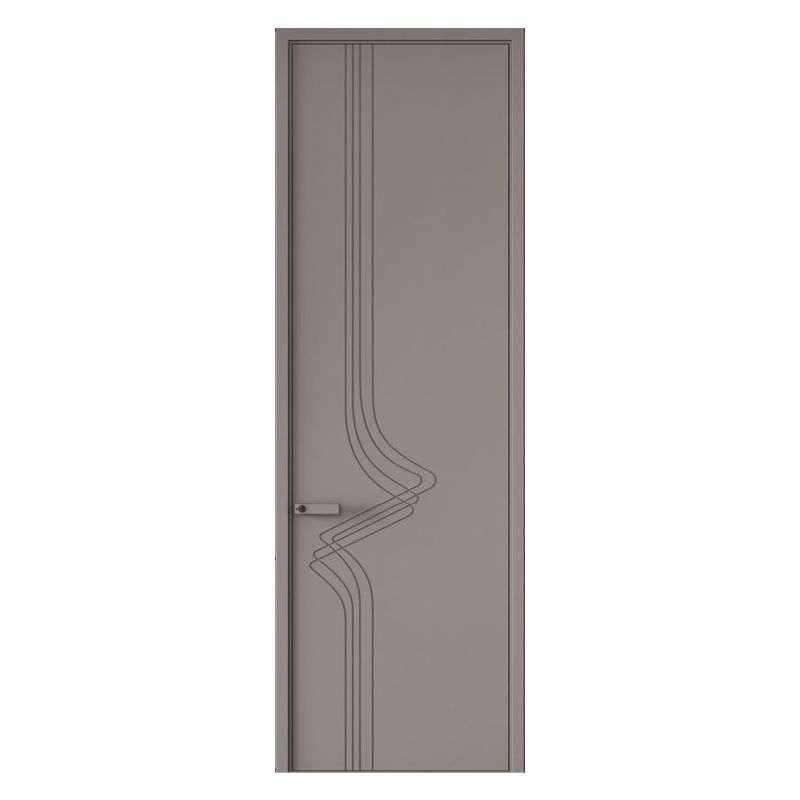
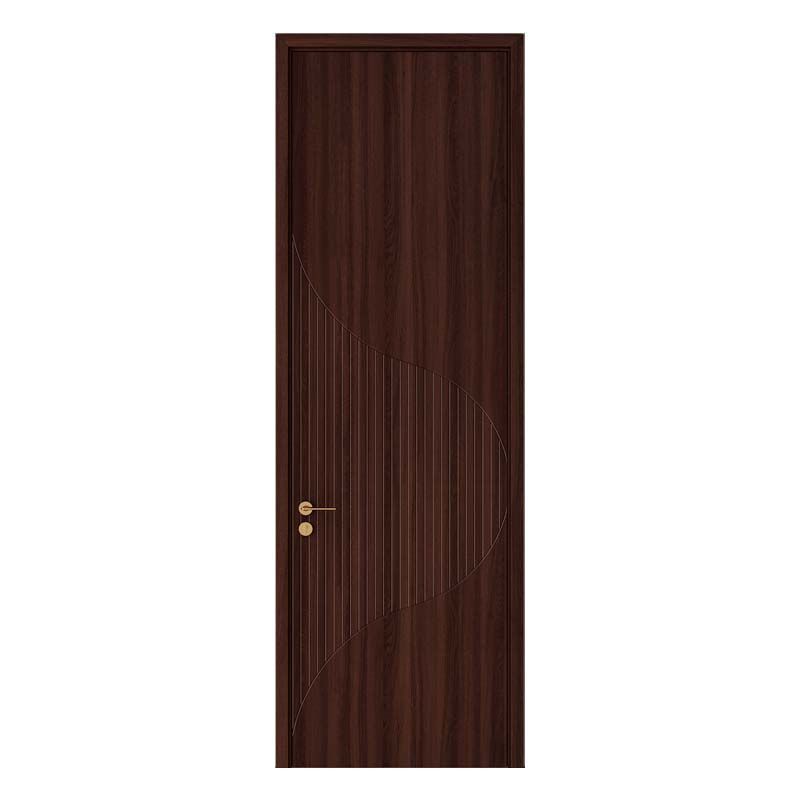
For an importer comparing a flat carving wooden interior door buying guide for importers, a flat carved wood interior door supplier, or bulk interior doors for distributors, the difficult part is rarely finding a beautiful sample. The real challenge is matching door construction, moisture content, packaging, compliance documents, and replacement support with the conditions of the destination market. This guide explains how to evaluate a flat carving wooden interior door manufacturer such as ROI HOME, using measurable criteria including stile-and-rail construction, wood moisture content (MC), and formaldehyde emission classification. It is designed for buyers who need stable container loading, predictable installation results, and a product range that can be reordered without changing the appearance or dimensions.

A door that performs well in a factory showroom may behave differently after sea transport, warehouse storage, and installation in a heated or air-conditioned building. Wood-based panels exchange moisture with the surrounding air. If the core, frame, and face layers respond at different rates, the result can be twisting, joint opening, veneer bubbling, or a door leaf that no longer closes smoothly.
For distributors, the commercial risk is equally practical. A door leaf may have an attractive carving pattern but use a weak substrate, inconsistent edge sealing, or a finish that is difficult to repair locally. A small defect rate becomes expensive when a container contains several hundred units and the replacement shipment takes six to ten weeks.
The purchasing decision should therefore connect five areas:
“Wooden door” describes a product family rather than one fixed structure. Importers should identify the exact material stack before comparing prices.
Ask the manufacturer for a section drawing showing the stiles, rails, core, face panel, edge banding, and carving layer. A product described only as “solid wood” is not sufficiently specific for an import contract.
Flat carving is usually a shallow relief or routed pattern applied to a comparatively flat face. The design may be produced by CNC routing, mould pressing, sanding, or a combination of these processes. The most important technical questions are:
For a distributor, design repeatability matters more than a one-time sample. Request a signed technical drawing with pattern dimensions, groove width, relief depth, face material, coating system, and approved color reference.
Wood moisture content is commonly expressed as a percentage of the oven-dry mass. A supplier may measure it with a calibrated resistance or capacitance moisture meter, but the instrument must be verified against a reference method and used at the correct temperature and wood species setting.
For interior doors, a practical purchasing target is often a moisture content aligned with the destination climate, commonly around 8%–12% for many temperate indoor applications. This is not a universal specification: a tropical market, a dry continental climate, and an air-conditioned warehouse may require different targets. The contract should state the acceptable range at final inspection and identify where the measurement is taken.
Check not only the door leaf but also the stiles, rails, edge strips, and frame components. A leaf at 9% MC paired with a frame at 16% MC can still create installation problems after acclimatization.
Begin with a product specification sheet rather than a reference photograph. Include:
A clear specification prevents a low quotation from hiding omitted items. Ask for separate pricing for the leaf, frame set, hardware, packaging upgrade, testing, and custom labeling.
Shortlist manufacturers using evidence rather than catalogue volume. Request the company profile, factory address, production equipment, export markets, quality-control workflow, and examples of repeat orders. A capable factory should be able to explain how it controls panel flatness, carving consistency, coating thickness, moisture content, and final assembly.
Useful questions include:
Factory capacity should be evaluated against your order schedule, not just the supplier’s maximum monthly output. A manufacturer producing 10,000 units per month may still be unsuitable if the required carved design cannot be held within tolerance.
A sample review should combine visual assessment with basic instruments. The following tools are inexpensive compared with the cost of a rejected container:
Measure both diagonals of the door leaf. A difference between diagonals indicates squareness error. Record the maximum gap under a straightedge at several points rather than writing “flat.” Open and close the door in a compatible frame, check hinge-side and lock-side clearances, and inspect the carved grooves under raking light for sanding marks or uncoated recesses.
Compliance depends on the destination country and the complete door-set configuration. A buyer may need documentation for formaldehyde emissions, fire performance, acoustic performance, sustainable timber claims, or restricted chemicals in coatings.
Do not treat a certificate for one panel material as proof for the complete assembled door. Verify:
For formaldehyde, ask for the emission class or measured chamber value under the standard required by the destination market. For fire-rated applications, an ordinary carved interior door cannot be marketed as fire-rated without a valid tested assembly that includes the leaf, frame, seals, hardware, and installation method.
Unit price is only one part of the commercial calculation. Build a landed-cost model using:
Landed cost = factory price + inland transport + export charges + ocean freight + insurance + import duty + customs fees + local delivery + inspection + expected defect allowance.
Then calculate the usable selling area and cubic efficiency. If a packed door set occupies 0.10 cubic meters and the container’s practical loading capacity is 60 cubic meters after protection and aisle limitations, the theoretical quantity is 600 sets. The actual quantity may be lower because frames, accessories, mixed SKUs, and load-bearing limits consume space.
Ask for a packing list with carton length, width, height, gross weight, net weight, and quantity per pallet. A 5% reduction in unused carton space can materially improve margin on high-volume shipments, but protective materials must not be removed if they prevent corner damage and finish abrasion.
Before production, keep one signed golden sample or a controlled reference panel. It should show the approved carving pattern, color, gloss, edge finish, hardware preparation, label, and packaging method.
Use a three-stage inspection plan:
Acceptance criteria should define critical, major, and minor defects. For example, a missing lock preparation may be critical for installation, while a small concealed carton mark may be minor. Numerical criteria make supplier discussions faster than subjective descriptions such as “high quality.”
Warping is influenced by moisture gradients, grain direction, asymmetrical face construction, adhesive distribution, and storage conditions. A buyer should not rely on a thick leaf alone. Ask whether the face layers are balanced and whether the door is stored horizontally with adequate support before shipment.
Warehouse instructions should specify indoor storage, protection from rain and condensation, clearance from concrete floors, and acclimatization before installation. If the destination climate differs sharply from the factory climate, allow the door sets to stabilize in the installation environment before final fitting.
Deep or narrow grooves are difficult to sand and coat uniformly. Poor preparation can cause pinholes, exposed substrate, uneven gloss, or early edge wear. Inspect carved areas under direct and angled light. Ask for the coating system—primer type, sanding sequence, topcoat type, and target dry-film thickness—rather than accepting the phrase “environment-friendly paint.”
For distributor after-sales service, obtain the color formula or a compatible repair kit. A touch-up marker cannot reliably repair a large damaged carved panel; a small quantity of matching coating and application instructions may be necessary.
A door leaf may pass visual inspection and still fail at the job site because the hinge recess, lock backset, strike position, or frame rebate does not match local hardware. Confirm all dimensions in millimeters and test the complete set with the intended hinges, lock, gasket, handle, and threshold.
For projects, request an installation mock-up before mass production. One mock-up can reveal more than several product photographs because it exposes clearance, screw holding, frame alignment, and the interaction between the carved face and architrave.
A manageable opening range usually combines a small number of carving patterns with several standard finishes and sizes. Too many unique patterns increase minimum order quantities, slow replenishment, and create leftover accessories. A practical assortment can be organized by:
Use sales data to reduce slow-moving SKUs. If one pattern accounts for 38% of quarterly volume while four other patterns together account for 12%, the assortment may need consolidation, provided the change does not weaken the showroom’s visual range.
Separate the lead time for sampling, raw-material preparation, production, inspection, and shipping. A supplier’s “30-day lead time” may exclude the approval period, holiday shutdowns, and packaging procurement.
For projects with installation deadlines, reserve replacement leaves and matching trim. A replacement policy should state the reporting period, evidence required, responsibility for confirmed defects, and whether the remedy is replacement, credit, or local repair support.
Distributors often need carton labels, installation manuals, barcodes, warning marks, and brand-specific color references. Approve artwork before production and specify label placement in the purchase order. Photograph the loaded container and retain the packing list, inspection report, batch number, and finish reference for future claims.
Once the basic supplier has passed inspection, the next improvement is process control. Ask ROI HOME to maintain a controlled product file containing the latest CAD drawing, bill of materials, finish formula, hardware schedule, carton specification, and inspection checklist. This reduces the risk that a repeat order is produced from an outdated drawing.
For high-volume programs, consider a first-article approval system. The first production unit is inspected against the golden sample before the factory continues with the full batch. This is particularly useful for CNC-carved designs because a tool offset of only a few millimeters can change the visual balance of a repeating pattern.
Use a defect-cost review after each shipment. Record the number of damaged corners, color deviations, machining errors, missing accessories, and installation complaints. If 18 of 1,000 units show finish damage, the observed rate is 1.8%; after packaging modification, compare the next shipment using the same inspection method. This creates a measurable improvement cycle instead of relying on impressions.
For buildings with acoustic requirements, request laboratory data for the complete door set rather than assuming a dense core automatically provides a specific sound reduction index. For humid applications, clarify whether the product is intended for normal interior use, high-humidity zones, or locations with direct water exposure. Bathroom and utility-room requirements may require different edge sealing, substrate selection, and ventilation conditions.
The best purchase is not necessarily the door with the lowest factory quotation. It is the door set that arrives with controlled dimensions, stable moisture content, consistent carving, documented compliance, and a repeatable supply plan. If you are comparing a flat carving wooden interior door buying guide for importers, need a reliable flat carved wood interior door supplier, or are planning bulk interior doors for distributors, evaluate the solid wood core, engineered wood substrate, and moisture resistance together with stile-and-rail construction, wood moisture content (MC), and formaldehyde emission classification. ROI HOME can help importers and distributors develop the specification, sample, inspection, packaging, and repeat-order process for flat carving wooden interior doors.