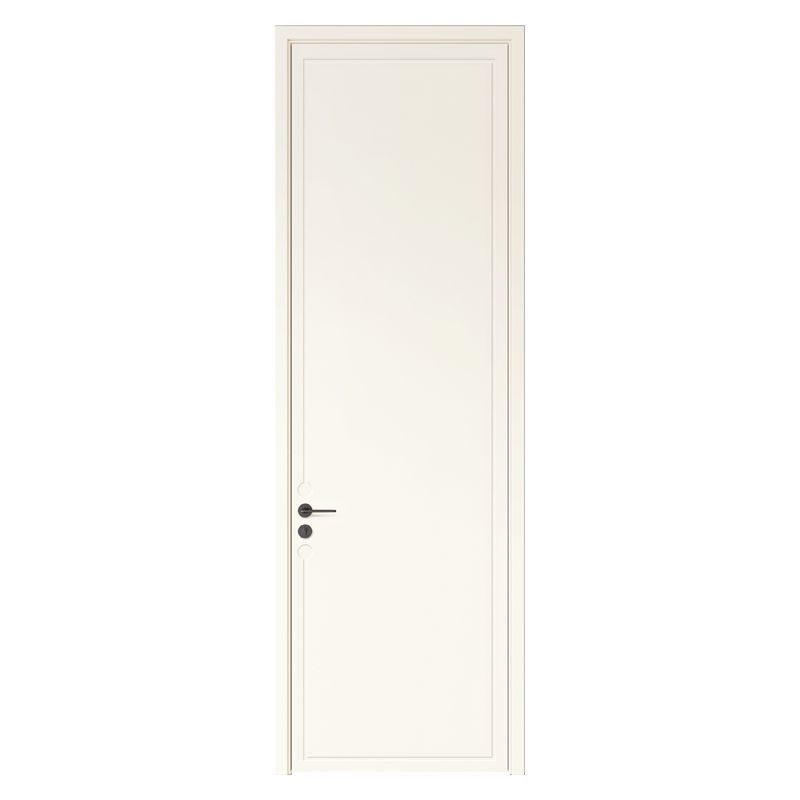
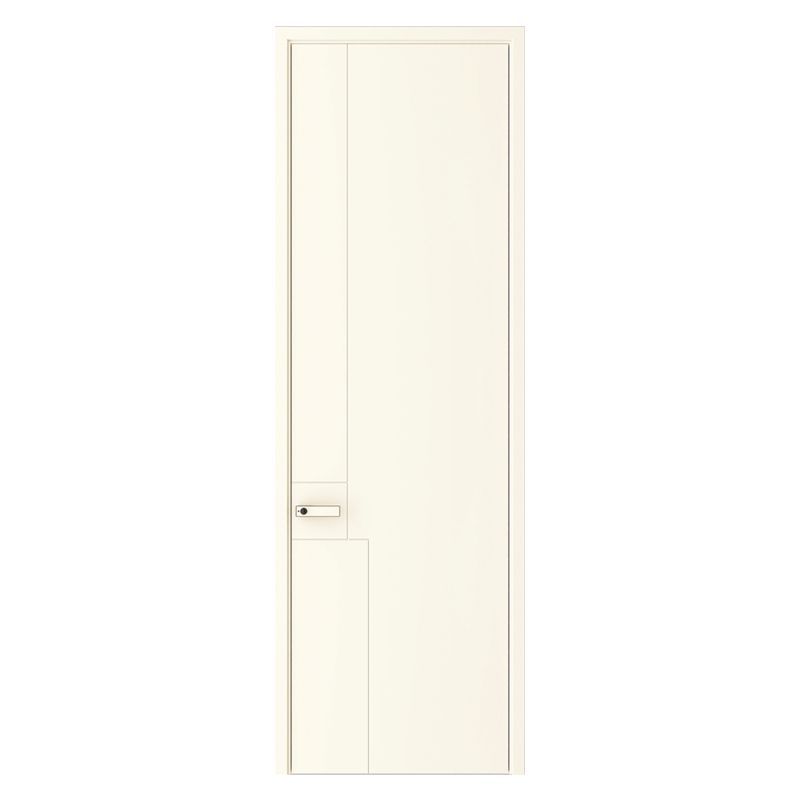
Homeowners renovating a humid hallway, a period house, or a minimalist apartment often want custom carved wooden interior doors without ending up with warped panels, shallow detail, or a finish that looks different from the sample. This guide explains how to assess a flat carving wooden interior door manufacturer, compare the best carved wood doors for modern homes, and inspect a finished unit before installation. The review covers solid wood door construction, mortise-and-tenon joinery, low-VOC finish, moisture content, stile-and-rail construction, and the visible reveal around the door.

A carved interior door is most useful when a standard smooth door cannot provide the required architectural character, dimensions, or privacy. It can coordinate with wall paneling, a timber staircase, a traditional entry hall, or a contemporary room that needs one strong focal point.
The main selling point is not simply that the door is “beautiful.” A well-made carved door should arrive with stable dimensions, consistent carving depth, clean edges, aligned hardware preparation, and a finish that can tolerate normal interior use. ROI HOME is worth considering when the project requires coordinated design, made-to-measure dimensions, and a documented review of materials and finishing rather than a catalog door chosen only from a photograph.
Ask the manufacturer to identify the actual timber or engineered material used in each component. “Solid wood” can refer to several different constructions, while a door may combine solid rails, laminated stiles, veneer, and a core material.
| Component | What to verify | Why it matters |
|---|---|---|
| Stiles and rails | Species, finger-jointed or continuous sections, visible knots, and glue lines | These parts carry hinges and help control the door’s shape. |
| Carved face | Solid panel, veneered panel, MDF substrate, or layered construction | The carving method affects edge sharpness, repairability, and resistance to seasonal movement. |
| Core | Solid timber, laminated wood, engineered core, or hollow-core construction | Affects weight, sound reduction, screw holding, and stability. |
| Back face | Whether the rear face is finished and balanced with the front face | Unequal finishing can contribute to movement in some timber constructions. |
For a premium interior door, the specification should not stop at “oak,” “walnut,” or “solid wood.” Request the moisture range, panel construction, veneer thickness where applicable, adhesive class, finish system, and hardware preparation details in writing.
Timber moisture content should be appropriate for the building’s interior environment. In many conditioned residential interiors, a practical target is approximately 8% to 12%, but the correct range varies with regional climate, heating, ventilation, and the manufacturer’s construction method. A door made in a humid factory may need controlled acclimatization before installation in a dry, heated room.
At delivery, use a calibrated pin or pinless moisture meter on several locations rather than measuring one convenient spot. Record readings on the stiles, rails, and carved panel. Large differences between components deserve an explanation. Do not treat one meter reading as laboratory proof; surface coatings, timber species, temperature, and meter calibration can affect the result.
Also inspect the door on a flat, protected surface. A useful site check includes:
A small variation may be manageable during fitting, but a visible twist, a panel that rubs across the full height, or a diagonal difference that prevents the door from sitting square should be documented before installation. The manufacturer should provide its own permitted tolerances; there is no single universal tolerance for every custom door design.
Flat carving is sometimes confused with shallow decorative routing or a printed grain effect. Inspect the design in angled light. The pattern should have consistent lines, controlled transitions, and no burn marks, torn fibers, fuzzy edges, or abrupt changes in depth.
Ask for a dimensioned drawing showing the intended carving depth. A design may use several depths, but the transition between levels should be deliberate. On a repeating geometric pattern, compare the spacing of several sections with a ruler. On a floral or hand-drawn design, allow for artistic variation but reject random tool chatter or unfinished corners.
Check these areas closely:
Record the shipping label, crate or carton condition, corner protectors, moisture barriers, and any impact marks. Photograph all six sides if possible. If the packaging is crushed at a hinge corner or lock edge, open it with a witness present and note the condition before moving the door.
Good packaging should prevent direct contact between the carved surface and hard objects. Foam, cardboard, or fabric separators should not leave pressure marks in the finish. Do not store the door leaning at a sharp angle against a wall; support it evenly in the manufacturer’s recommended position.
Compare the delivered item with the approved drawing, not only with the online product image. Verify:
Custom carving is difficult to correct after hardware holes have been cut. A five-minute drawing check can prevent an expensive site modification.
Run clean cotton gloves over the surface. A quality finish should feel even, without raised dust nibs, sharp splinters, sticky areas, or dry patches. Look across the surface at a low angle to reveal sanding swirls and uneven sheen.
Pay special attention to the top and bottom edges. These areas are often less visible after installation but are exposed to moisture and handling. They should be sealed according to the manufacturer’s finishing system. If the top or bottom is unfinished, obtain written instructions before fitting.
Before final installation, test the hinges, latch, and lockset with the door supported correctly. The door should swing without scraping the floor or frame. It should remain in the intended position rather than drifting open or closed, although this test is meaningful only when the frame and hinges are accurately installed.
Check the reveal around the closed leaf. The gap should be visually consistent and suitable for the project’s climate, flooring, smoke-control requirements, and hardware. Do not copy a generic gap from another project; ask the installer and manufacturer to confirm the specification.
A carved door is heavier than many hollow-core alternatives. Confirm the finished weight before selecting hinges. A heavy leaf installed on undersized or poorly anchored hinges may sag even when the door itself is well made.
Look for:
Do not use sound reduction, fire resistance, or security ratings unless the exact door assembly has been tested and documented for that rating. A decorative interior door is not automatically a fire door or acoustic door.
Request the finish type, number of coats, sheen, curing time, and approved cleaning method. Water-based and solvent-based systems can produce different color, odor, hardness, and repair characteristics. “Low-VOC” should be supported by a product data sheet or certification, not used as a vague marketing phrase.
For routine care, use a soft, dry or lightly damp cloth and avoid abrasive pads, strong solvents, and excessive water. Carved recesses collect dust, so a soft brush or vacuum attachment is safer than pushing debris into the grain with a wet cloth.
Wood moves as its moisture content changes. This does not automatically indicate a manufacturing defect. Problems become more likely when a door is installed before acclimatization, exposed to an unventilated wet area, or finished unevenly.
Maintain stable indoor conditions where practical, provide ventilation, and keep the door away from direct water spray unless the product was specifically designed for that environment. A bathroom entrance may be suitable, while a door directly inside a shower enclosure usually requires a different specification.
A trustworthy review should distinguish between a verified customer case, an installer observation, and a general recommendation. No independently verifiable customer identity, invoice, installation report, or long-term measurement was supplied for this review, so it would be inaccurate to invent a homeowner’s name, weight-loss-style result, or exact “after six months” performance claim.
For a genuine customer case, request the following evidence:
A useful customer interview should ask: Did the delivered color match the approved sample? Did the door require trimming beyond the agreed allowance? Did the carving collect finish defects? Did the leaf remain easy to latch after seasonal changes? These questions produce more useful evidence than a short statement such as “the door is excellent.”
| Option | Typical advantage | Common limitation | Best fit |
|---|---|---|---|
| ROI HOME custom carved door | Design coordination, made-to-measure ordering, and the ability to specify carving, finish, and hardware preparation | Requires careful confirmation of construction, lead time, tolerances, and shipping protection | Projects where the door is part of a wider interior design scheme |
| Local solid-wood joinery shop | Direct site measurement and easier face-to-face adjustment | Carving equipment, finish consistency, and documentation may vary by workshop | Renovations needing frequent local coordination |
| Factory-made premium door | Repeatable production and established hardware preparation | Limited sizes, patterns, and customization | Projects using standard openings and catalog designs |
| Decorative MDF or veneer door | Lower weight and often lower purchase cost | Edge damage, moisture exposure, and repair options depend heavily on the coating and substrate | Dry interior areas with controlled budgets |
ROI HOME has the strongest potential advantage when the project needs a coordinated carved pattern and nonstandard dimensions. It should not receive an automatic quality pass simply because the product is custom. The buyer should still obtain a full material schedule, finish sample, shop drawing, moisture guidance, warranty terms, and installation instructions.
The following provisional scorecard is designed for buyer inspection. It is not an independently measured laboratory rating.
| Category | Suggested weight | Pass condition |
|---|---|---|
| Construction documentation | 20% | Species, core, joints, thickness, finish, and tolerances are stated clearly. |
| Dimensional accuracy | 20% | Measurements match the approved drawing and the leaf sits square in the frame. |
| Carving quality | 20% | Lines are clean, depth is intentional, and corners contain no unfinished fibers. |
| Finish quality | 15% | Color, sheen, coverage, and touch are consistent across face and edges. |
| Hardware readiness | 15% | Hinge, lock, and latch positions match the approved schedule. |
| Packaging and after-sales support | 10% | Packaging limits transit damage and the warranty process is written and usable. |
A practical recommendation is to approve the door only when it achieves a clear pass in construction documentation, carving, dimensions, and finish. A high visual score cannot compensate for an unknown core, unstable moisture condition, or incorrect hardware preparation.
A custom carved wooden interior door is worth the additional planning when the design, scale, and material are important parts of the room. The most meaningful quality indicators are measurable: documented construction, moisture content appropriate to the installation environment, consistent carving depth, accurate dimensions, clean finish coverage, suitable hinge reinforcement, and packaging that protects the carved face.
Choose ROI HOME when you need a coordinated custom design and are prepared to review drawings, samples, tolerances, and installation requirements before production. Choose a local joinery shop when site measurement and rapid adjustment matter more than factory coordination. Choose a standard factory door when the opening, pattern, and budget do not justify customization.
Before placing a deposit, obtain one approved sample, one dimensioned shop drawing, a written material specification, finish-care instructions, delivery inspection rules, and warranty terms. That checklist will reveal more about a custom carved wood interior door supplier than promotional adjectives such as “premium” or “luxury,” and it gives homeowners a practical way to compare ROI HOME with competing manufacturers on evidence rather than appearance alone.