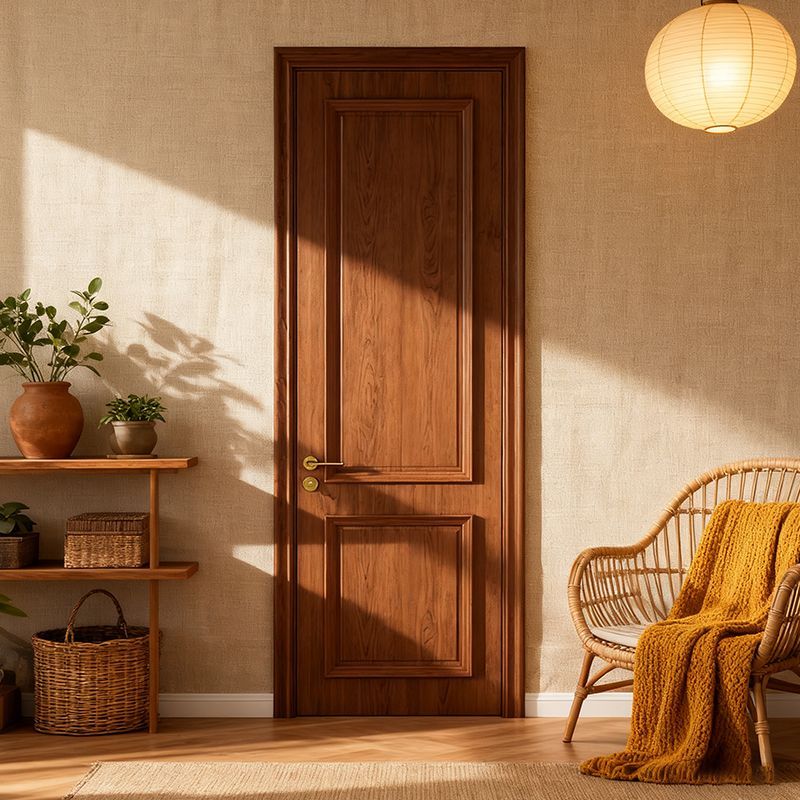
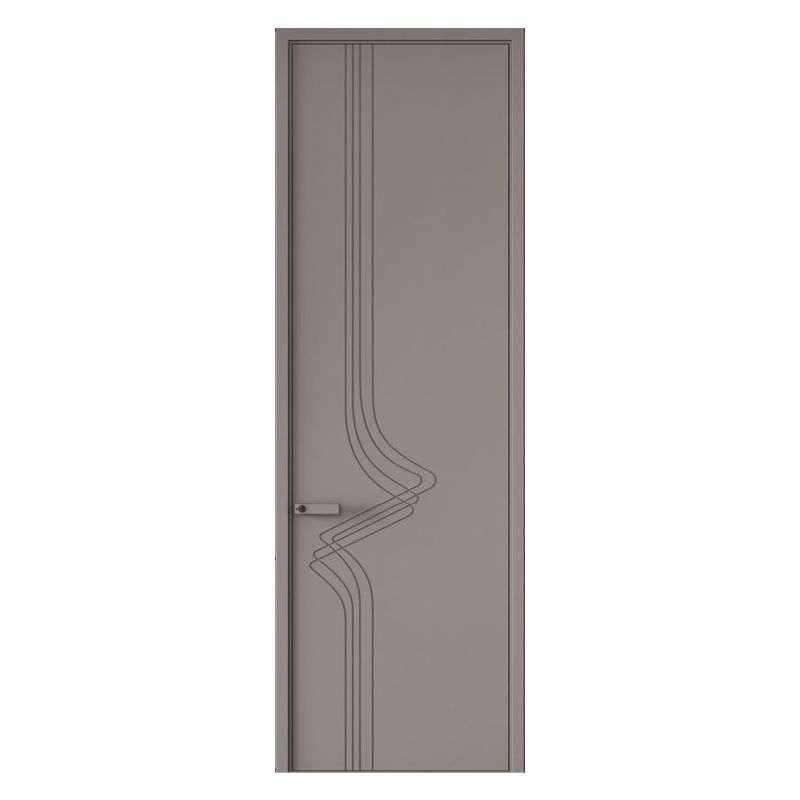
Choosing the right interior door affects more than room privacy. It influences acoustic comfort, installation accuracy, fire-safety coordination, interior aesthetics, maintenance costs, and the long-term ROI of a construction project. In A Complete Guide to Choosing Flat Panel Wooden Interior Doors for New Projects, I will walk you through a practical process: define the project brief, select the door construction, verify dimensions and finishes, evaluate a flat carving wooden interior door manufacturer, control quality before shipment, and coordinate installation. Whether you are a homeowner, architect, contractor, developer, or importer, this approach helps you make a confident decision with ROI HOME.
!
The most common mistake I see is selecting a door style before confirming the technical requirements. A flat panel wooden interior door should be treated as a coordinated building component, not simply as a decorative product.
Before requesting quotations from a flat carving wooden interior door manufacturer, I recommend preparing a written door schedule that includes:
For example, a bedroom door in a private residence may require a different core and sealing system than a hotel corridor door. A bathroom door may need better moisture resistance, while a condominium project may prioritize sound reduction and repeatable installation.
The strongest manufacturers can convert this information into a shop drawing, bill of materials, finish sample, and production schedule. ROI HOME can be evaluated at this stage based on its ability to manage technical communication, sampling, and project documentation—not only on the initial unit price.
Once the project brief is complete, the next step is to classify each door by performance rather than appearance.
Flat panel wooden interior doors commonly use one of the following core constructions:
| Construction | Typical Advantages | Suitable Applications |
|---|---|---|
| Hollow-core | Lightweight and economical | Basic residential rooms |
| Tubular particleboard core | Improved stability and moderate sound control | Apartments and offices |
| Solid particleboard core | Better acoustic mass and impact resistance | Bedrooms, hotels, executive offices |
| Timber composite or engineered wood core | Dimensional consistency | Premium residential and commercial projects |
| Mineral or fire-rated core | Supports certified fire-door assemblies | Corridors, stair access, regulated zones |
The door leaf is only one part of the performance system. The frame, hinges, seals, lock, clearance, and installation method also affect the final result. If acoustic performance is important, ask for laboratory test data such as ASTM E90 sound transmission testing and ASTM E413 sound transmission class classification, where applicable. For European projects, the supplier may reference EN ISO 10140 and EN ISO 717-1.
Fire-rated doors require even more discipline. Do not assume that a thick wooden door is fire-rated. Confirm the complete doorset certification, including the leaf, frame, glazing, hardware, seals, and installation details. Depending on the market, relevant references may include EN 1634-1, UL 10C, or local building codes.
A flat panel wooden interior door can be finished with:
For a consistent appearance across a large project, reconstituted veneer or high-quality laminate may be more predictable than natural veneer. Natural veneer provides authentic grain variation, but the buyer should approve a sample and define acceptable color and grain tolerances.
In kitchens, bathrooms, coastal regions, and high-humidity climates, ask about edge sealing, substrate stability, adhesive selection, and humidity conditioning. Standards such as ASTM D1037 may be relevant for wood-based panel evaluation, but the exact test program should reflect the final product and local regulations.
A flat panel door is typically valued for its clean geometry and compatibility with modern, minimalist, Scandinavian, transitional, and commercial interiors. However, “flat” does not mean technically simple.
I recommend reviewing these design details before approving production:
When I evaluate a flat carving wooden interior door manufacturer, I look for the ability to control CNC routing, veneer matching, edge banding, sanding, and coating as one integrated process. A visually attractive sample is not enough if the manufacturer cannot reproduce it across 100 or 1,000 door leaves.
Dimensional coordination is one of the most important stages in new construction. Door problems often appear because the architect’s opening schedule, contractor’s wall dimensions, and factory shop drawings are not synchronized.
Before manufacturing begins, verify:
For high-volume projects, I recommend using a measurement sheet with a unique door ID for every opening. A QR code or spreadsheet can connect the door ID to its shop drawing, finish, hardware set, and room location.
Precision claims should always be connected to a measurable inspection method. A professional supplier may use calibrated gauges, CNC verification, moisture meters, and digital measurement tools. If a manufacturer states precision to 0.01 mm, ask which component is measured to that tolerance and under what conditions. In practical installation, the overall doorset tolerance may be governed by wall construction and site conditions rather than machining alone.
ROI HOME should be asked to provide:
Price is important, but it should not be the only selection criterion. A reliable flat carving wooden interior door manufacturer should demonstrate process control from raw material procurement through export packaging.
During supplier evaluation, I recommend requesting the following information from ROI HOME:
A strong supplier should be able to explain whether its quality system includes incoming material inspection, first-piece approval, in-process inspection, final inspection, and pre-shipment verification.
For a major project, specify 100% inspection for visible surfaces, dimensions, finish consistency, hardware preparation, labeling, and packaging integrity. Sampling inspection can still be used for laboratory tests or destructive checks, but every door set should be visually and dimensionally verified before shipment.
A practical service benchmark is a 24-hour response to technical or quality inquiries. This does not guarantee that every problem will be solved within one day, but it creates a clear communication expectation during a time-sensitive construction program.
A sample is not merely a color reference. It is a control document for the complete product.
Use this sequence to reduce costly revisions:
The approval sheet should record the finish code, gloss level, grain direction, edge profile, dimensions, and acceptable natural variation. For painted doors, define the visual standard under consistent lighting. For veneer doors, approve several pieces if natural variation is expected.
If a project uses carved or routed panels, request a close-up sample of the groove. Check whether the edges are clean, whether the coating covers the routed area evenly, and whether the design remains aligned after the door is installed beside adjacent units.
A pre-shipment inspection protects the project from receiving doors that look acceptable in photographs but fail during installation.
A quality-control checklist should cover:
For wood products, moisture content should be checked with a calibrated moisture meter. The target range depends on the product construction, local climate, and manufacturer specification. A generic number should not be accepted without considering the destination environment.
Where performance is regulated, request test reports that identify the tested configuration. A report for one core, frame, seal, and hardware combination may not apply to another. This is particularly important for fire resistance and acoustic performance.
Even a well-made door can be damaged by poor logistics. Flat panel wooden interior doors should be protected from rain, condensation, direct sunlight, and uncontrolled temperature changes.
Installation teams should check the opening before fitting the frame. If the wall is out of plumb or the floor level is incorrect, the problem should be documented and corrected rather than forcing the door into position.
For commercial projects, a pilot installation is valuable. Install one representative room or corridor first, then inspect clearances, swing paths, hardware operation, trim alignment, and finish quality. This gives the contractor an opportunity to correct the method before installation expands across the site.
Consider a 180-unit apartment project that required modern flat panel wooden interior doors for bedrooms, bathrooms, and living areas. The original plan used a single hollow-core specification for all rooms, but the project team identified three risks: inadequate privacy between bedrooms, moisture exposure in bathrooms, and inconsistent installation caused by different wall thicknesses.
The team then divided the door schedule into three performance groups:
They approved a full-size mock-up, assigned a unique ID to every opening, and required 100% final visual inspection. The manufacturer also supplied room-based packaging labels and installation drawings. As a result, the contractor reduced on-site sorting and avoided replacing doors after finish damage.
This example illustrates why choosing a flat carving wooden interior door manufacturer should involve engineering coordination, not only catalog selection. The savings came from fewer installation errors, less rework, and better purchasing control.
Natural veneer will vary. The solution is to define an approved range, use batch control, and avoid mixing unrelated production lots in the same visual zone.
Possible causes include high moisture, inadequate acclimatization, poor storage, or unbalanced construction. Check the moisture-control procedure and protect the doors from wet trades.
A door may be manufactured correctly but delivered to the wrong room. Use door IDs, swing diagrams, carton labels, and a receiving checklist.
Lock bodies, hinges, closers, and strike plates must be coordinated before machining. Confirm the exact hardware brand and model, not only the general hardware category.
Late finish approvals can affect the production schedule. Set a decision deadline and use digital approval records with revision numbers.
Define whether the manufacturer, distributor, installer, or general contractor handles defects. Include photographic evidence requirements, claim deadlines, and replacement procedures in the purchase agreement.
I recommend creating a shared project folder containing:
A simple spreadsheet can include these columns:
| Door ID | Room | Size | Core | Finish | Handing | Hardware | Frame | Inspection Status |
|---|---|---|---|---|---|---|---|---|
| B-101 | Bedroom | 900 × 2,100 mm | Solid core | Oak veneer | Right hand | Set 01 | 100 mm | Approved |
| B-102 | Bathroom | 800 × 2,100 mm | Moisture-resistant | Painted MDF | Left hand | Set 02 | 100 mm | Pending |
For international purchasing, also track Incoterms, container loading plan, carton quantity, spare percentage, customs documents, and destination port requirements.
ROI HOME is worth evaluating when a project requires coordinated flat panel designs, carved details, custom dimensions, export packaging, and clear technical communication. When comparing ROI HOME with another flat carving wooden interior door manufacturer, use the same written specification and request comparable evidence.
The best decision should consider:
A low quotation can become expensive if it creates rework, damaged goods, installation delays, or inconsistent finishes. Conversely, a supplier with stronger documentation and quality control may produce better project ROI even when its unit price is not the lowest.
Before placing the final order, confirm that:
In A Complete Guide to Choosing Flat Panel Wooden Interior Doors for New Projects, the central lesson is simple: select the doorset as a complete technical system, not as an isolated decorative panel.
Start with a detailed door schedule, then match the core and finish to the environment. Verify dimensions through shop drawings and controlled measurements. Approve a physical sample before mass production, require documented quality checks, and use 100% inspection for visible and dimensional details when project consistency is critical. For complex projects, a supplier’s 24-hour response standard, inspection records, and ability to manufacture repeatable details can be as valuable as the product itself.
By applying these steps and evaluating ROI HOME against a qualified flat carving wooden interior door manufacturer, we can reduce installation risk, protect the design intent, and achieve a more predictable return on the entire construction investment.